
Iran sets conditions for restoring Strait of Hormuz security
 3 Min Read
Iran sets conditions for ending the war as Tehran and Oman agree on safe Strait of Hormuz routes and prepare to notify an international authority.
-
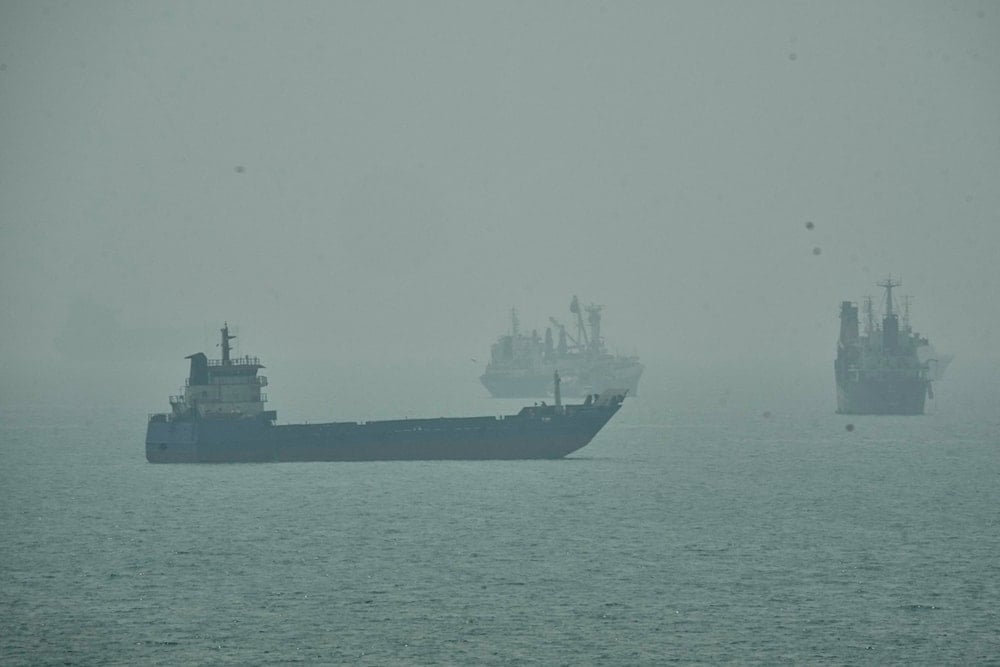
Commercial vessels anchored amid haze in the Strait of Hormuz off Bandar Abbas, Iran, Monday, Sept. 7, 2026 (AP)
Iran has conveyed its conditions for ending the war and restoring security in the Gulf and the Strait of Hormuz, Iranian Foreign Ministry spokesperson Esmaeil Baghaei said Wednesday, adding that Tehran will deliver its response to US proposals through mediators.
Baghaei said messages continue to be exchanged between Iran and the United States through intermediaries, while stressing that shifting responsibility onto others cannot obscure demands to hold those responsible for the war to account.
He added that Iran has also been consulting with Oman on restoring navigational security in the Strait of Hormuz, arguing that Tehran has a greater interest in securing the strategic waterway than any other party.
Iran and Oman agree on safe routes
Baghaei attributed the disruption of navigation in the strait to US “acts of sabotage” and said Iran had spared no effort, in coordination with Muscat, to restore security.
According to Baghaei, consultations between Iran and Oman have resulted in an agreement on the geographical coordinates of safe routes through the Strait of Hormuz.
The two countries have also reached an understanding on presenting the arrangement to the relevant international authority, which Baghaei said would soon be formally notified of the agreement.
US economic warfare to fail
The Secretary of Iran’s Supreme National Security Council, Major General Mohsen Rezaei, said Tuesday that Washington’s economic war against Iran will end in failure, stressing that Tehran would not yield to US threats or pressure over the Strait of Hormuz.
“You lost the military war. You will fail in the economic war, too,” Rezaei wrote in an English-language post on X addressing Washington.
“Hormuz will not be opened by threats or pressure. Iran will not back down.”
His remarks came a day after US Treasury Secretary Scott Bessent claimed that Washington’s economic pressure campaign against Tehran was delivering results.
Washington expands economic pressure
Bessent pointed to the rial’s fall to record lows and claimed Iran had loaded no crude oil onto tankers in September. He also cited an Iranian security official’s acknowledgment of the country’s severe economic difficulties as evidence that Washington’s “Operation Economic Outcast” was succeeding.
In an interview for The Axios Show published October 3, Bessent predicted Iran would have “no oil on the water this week,” adding, “They will have no revenues.” He presented military attacks, the maritime blockade, and economic isolation as successive stages of Washington’s strategy against Tehran.
The US Treasury expanded sanctions on October 1 to target Iranian automotive, railway, manufacturing, and steel networks, alongside foreign suppliers. Bessent said the measures would help Washington and its partners “drain the regime’s revenue once and for all.”


