
US officials criticism mounts over US tariffs against India
 3 Min Read
Congressman Brad Sherman criticizes US tariffs on India over Russian oil imports, warning of risks to US-India relations amid pressure from Washington.
-
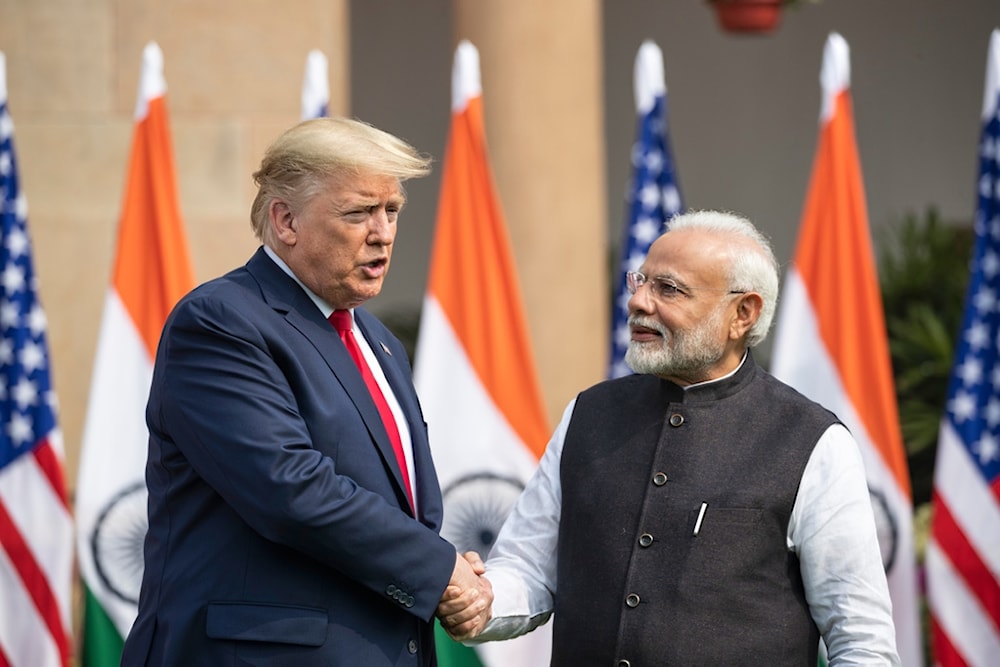
US President Donald Trump and Indian Prime Minister Narendra Modi shake hands before their meeting at Hyderabad House, Feb. 25, 2020, in New Delhi, India (AP)
Congressman Brad Sherman (D-CA) sharply criticized the Trump administration on Wednesday, accusing the White House of “unfair play” in its approach to trade penalties linked to energy ties with Russia. Sherman, a senior member of the House Foreign Affairs Committee, argued that the administration is “grasping for excuses” to maintain high tariffs on India while leaving other nations with deeper Russian oil dependencies untouched.
The dispute centers on a 25% tariff the administration has imposed to pressure India into reducing its energy imports from Russia. Sherman contended that the focus on India, which sources only 21% of its crude oil from Russia, is inconsistent.
In a post on X, he wrote: “President Trump is grasping for excuses to slap outrageous tariffs on India. Hungary imports 90% of its crude from Russia with no tariffs, and China, Russia’s largest oil buyer, hasn’t been penalized for its purchases. Our ally India is being singled out and the President should reverse this policy immediately.”
President Trump is grasping for excuses to slap outrageous tariffs on #India.
— Congressman Brad Sherman (@BradSherman) February 18, 2026
He claims it’s about importing Russian oil — yet Hungary imports 90% of its crude from Russia with no tariffs. And China, Russia’s biggest oil buyer, hasn’t been hit with sanctions tied to purchasing…
US was a bad bet for India: Former US diplomat
The criticism follows similar warnings from former US diplomat Lindsey Ford, who cautioned Washington against pressuring India too heavily.
Speaking to a congressional commission, Ford, a former top South Asia official under President Joe Biden, emphasized that India’s reliance on Russian defense equipment limits its flexibility. “America needs to understand that if we ask India to diversify away from Russia, it will create a real vulnerability for India. If America does not step up to provide things militarily, we should have no expectation that India will walk away from Russia,” she said.
Ford also noted that rising tensions over the past year have raised questions in India about US reliability. “There has long been a debate in India about how much it could rely on America. The last year has amplified those voices who always argued that the US was a bad bet for India,” she said, underscoring the potential risk to the bilateral partnership.
US bullies India over Russian energy imports
In August 2025, the United States increased tariffs on Indian imports, imposing up to a 50 % duty to penalize India for buying discounted Russian crude amid the war in Ukraine. The Trump administration said the penalties were aimed at pushing New Delhi to reduce its purchases from Moscow.
India criticised the US action as “unfair, unjustified and unreasonable,” with its officials insisting that energy decisions are made based on national interest and security needs rather than external pressure.
Following sustained US tariff pressure and shifting import patterns, by January 2026, Russia’s share of India’s oil imports fell to the lowest level since late 2022, at about 21 % amid broader efforts to secure a trade deal with the United States.
In February 2026, the United States revoked the earlier punitive 25 % tariffs on Indian imports after concluding a bilateral trade agreement, with India stressing its energy security priorities while diversifying sources.
US Secretary of State Marco Rubio later announced that India had committed to halt future purchases of Russian oil, though Indian officials reiterated they would base energy decisions on “strategic autonomy” and national interest.


