
US reportedly angered by Israeli strikes on Iran fuel depots
 4 Min Read
Israeli strikes on Iranian fuel depots in Tehran spark tensions with the US, which fears the attacks could rally Iranian support and drive global oil prices higher.
-
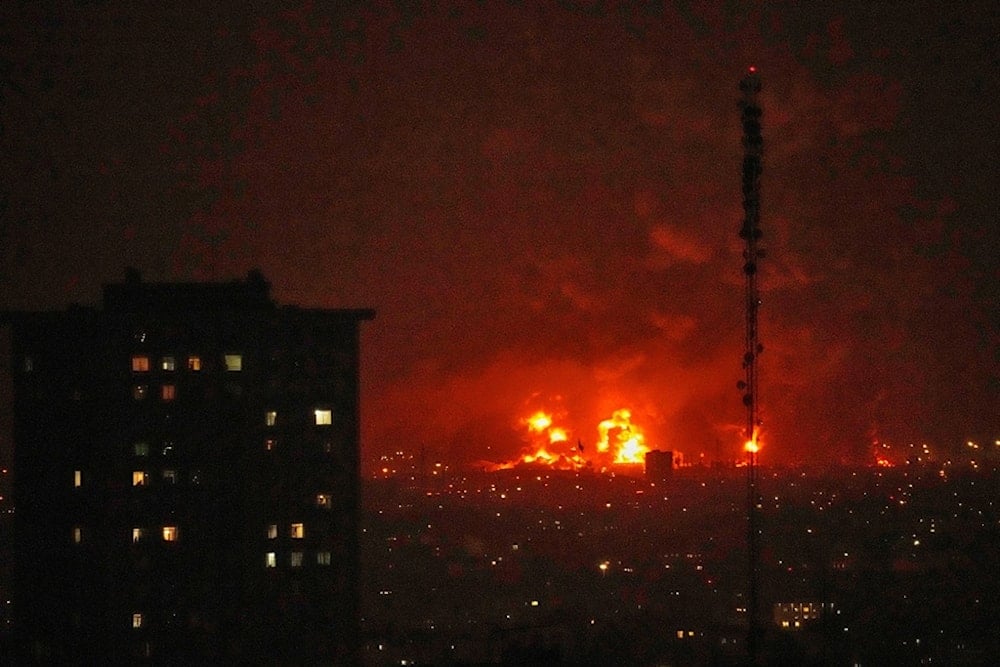
Flames rise from an oil storage facility south of the capital Tehran as strikes hit the city during the US–Israeli aggression, Iran, Saturday, March 7, 2026 (AP)
Israeli airstrikes targeting Iranian fuel depots have triggered the first major disagreement between the United States and the Israeli occupation since the two waged the war on the Islamic Republic eight days ago, according to US and Israeli officials, as reported by Axios.
Around 30 fuel depots across Iran were struck on Saturday, including sites in the capital Tehran, producing massive fires and thick smoke visible for miles across the city.
The oil is flowing into the sewers and the streets are on fire in Tehran pic.twitter.com/00vKSORe5D
— Conflict Radar (@Conflict_Radar) March 7, 2026
According to officials familiar with the matter, the scale of the strikes went far beyond what Washington expected after the Israeli occupation notified the United States in advance.
A US official said American military officials were surprised by how extensive the attacks were, with one senior official stating that Washington did not view the operation as a good idea.
US warns strikes could backfire strategically
US officials are concerned that attacks on infrastructure used by ordinary Iranians could have strategic consequences, potentially rallying Iranian public opinion around the government and increasing global energy prices.
Apocalyptic scenes from Tehran tonight. I’ve never seen something like this.
— kev joon (@never_oppressed) March 7, 2026
pic.twitter.com/PDeoaf9w62
The Israeli occupation forces claimed in a statement that the fuel depots were used by the Iranian government to supply fuel to different sectors, including military units.
However, the images of burning fuel depots circulating globally could alarm energy markets and contribute to rising oil prices, US officials warned.
A Trump adviser told Axios that the US president opposes attacks that destroy oil infrastructure, saying he wants to avoid actions that could push fuel prices higher.
Oil prices rise sharply
Global oil prices surged more than 20% in early trading Monday, reaching their highest levels since 2022, as the expanding US-Israeli war on Iran fueled fears of severe supply disruptions and instability across the energy market.
Brent crude jumped as much as $18.35, or 19.8%, to $111.04 per barrel, while US West Texas Intermediate (WTI) rose $20.34, or 22.4%, to $111.24 per barrel, reflecting mounting concern over disruptions to shipments through the strategically vital Strait of Hormuz.
The latest surge follows sharp gains last week, when Brent climbed 27%, and WTI surged 35.6%, underscoring the rapid escalation of energy market volatility as hostilities in West Asia intensify.
Strait of Hormuz disruptions fuel supply fears
The spike in oil prices has been driven largely by fears of prolonged disruptions to shipments through the Strait of Hormuz, a key global energy chokepoint through which a large portion of the world’s oil and gas exports transit. Shipping activity through the waterway has reportedly been affected as tankers grow increasingly reluctant to navigate the area amid the ongoing conflict, raising the risk of supply shortages for global markets.
Although Saudi Arabia has reportedly increased shipments from ports along the Red Sea, the additional volumes remain insufficient to compensate for the potential loss of supplies transiting the Strait of Hormuz.
Economists warn that even a short-lived conflict could leave consumers and businesses worldwide facing weeks or months of higher fuel prices, as damaged infrastructure, disrupted logistics, and heightened shipping risks weigh on supply chains.
Global markets react to energy shock
The surge in oil prices triggered a broad sell-off in global equity markets, with investors increasingly concerned about rising inflation and the economic consequences of sustained energy price increases.
Asian markets led the decline, with Japan’s Nikkei index dropping 6.2%, while South Korea’s market fell 7.3%. Futures tied to US stocks also slid, with S&P 500 futures falling around 1.8% and Nasdaq futures dropping more than 2%.
European markets showed similar weakness, with EUROSTOXX 50 and DAX futures both declining about 2.5%.
Currency markets reflected the heightened uncertainty, as the US dollar strengthened against several major currencies amid increased demand for liquidity.


