
US responsible for current regional tensions: Araghchi
 3 Min Read
Iran’s Foreign Minister Abbas Araghchi blames Washington for regional tensions and says negotiations with Oman have made significant progress toward establishing a temporary maritime route through the Strait of Hormuz.
-
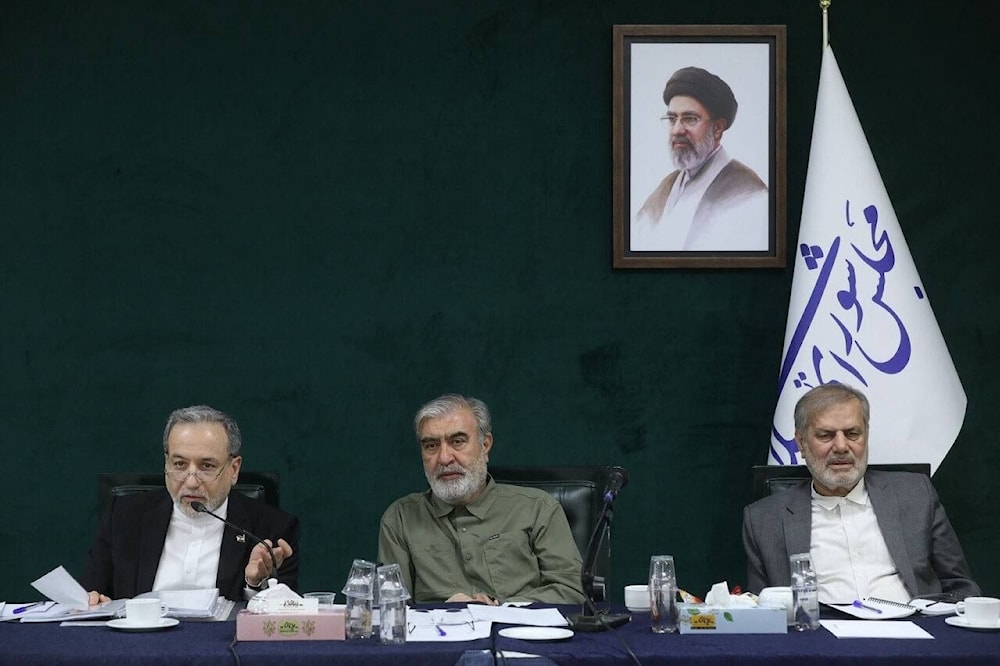
Iran's Minister of Foreign Affairs Abbas Araghchi, left, speaks during a meeting of the Parliament's National Security and Foreign Policy Commission on September 7, 2026. (Fars News Agency)
Iranian Foreign Minister Abbas Araghchi has held the United States responsible for the current tensions in the region, saying Washington’s “regrettable violation of its commitments under the Islamabad understanding” is behind the situation.
Araghchi made the remarks during a phone call with Japanese Foreign Minister Toshimitsu Motegi on Tuesday. He said the solution was “simple” and would require the US to return to its commitments and obligations and sign the memorandum of understanding.
He added that “the return of the United States to its commitment to what it signed in the Islamabad understanding would create the conditions for a return to normalcy in the region.”
Iran, Oman make progress on temporary Strait of Hormuz route
Araghchi also discussed the latest developments in negotiations between Iran and Oman over the Strait of Hormuz, announcing “significant progress” in talks aimed at establishing a temporary route for maritime traffic through the strategic waterway.
He stressed that consultations between Tehran and Muscat were continuing to reach an agreement on mechanisms for the future management of the Strait of Hormuz.
The Japanese foreign minister, for his part, expressed his country’s concern over rising tensions in the region and stressed the need to continue consultations and diplomatic coordination among regional states and other concerned countries, “with the aim of enhancing regional security and ensuring freedom and safety of navigation in the Strait of Hormuz.”
Separately, Iranian Foreign Ministry spokesperson and negotiating delegation member Esmail Baghaei said on Monday that negotiations with Oman over the Strait of Hormuz were “ongoing and witnessing significant progress.”
Baghaei maintained that Washington bears responsibility for the war, warning countries against joining the US war on Iran, and cautioning South Korea specifically against the consequences of aligning with the US campaign.
Shipping traffic through the strait has fallen to its lowest level since May, averaging 10 vessels a day over the past 10 days, according to Kpler data, after US forces bombed three Iranian oil tankers on Saturday and Iran's IRGC Navy retaliated by striking three tankers along with three additional US-linked vessels.
'Strike our assets and you get struck'
On his end, Iranian Parliament Speaker Mohammad Bagher Ghalibaf warned Washington on Monday that any attack on Iranian assets would draw retaliation, responding directly to a threat from US War Secretary Pete Hegseth to sink Iran's oil tankers.
Hegseth said on Saturday that the US Navy would destroy and sink Iranian oil tankers if Iran fired on US ships, claiming that Iran's tanker fleet was defenseless since Iran has no navy or air force, and that US aircraft, ships, and submarines under CENTCOM and USPACOM could strike them all.
Ghalibaf replied in a post on X that the region's oil and gas production chain "is sprawling, accessible, and exposed," noting that US oil and gas companies operating in the same waters and facilities share that exposure.
It’s simple: the oil and gas production chain here is sprawling, accessible, and exposed. American oil and gas companies across these waters and facilities share that exposure. Strike our assets and you get struck. We’ve already proven it. Ask the bases that are no longer viable. https://t.co/XiHAf6KzqV pic.twitter.com/0wBf40K4D3
— محمدباقر قالیباف | MB Ghalibaf (@mb_ghalibaf) September 7, 2026
"Strike our assets and you get struck," he said. "We've already proven it. Ask the bases that are no longer viable."


