
US sees Netanyahu Gaza roadmap rejection as election politics: Axios
 5 Min Read
The Trump administration does not seem troubled by Netanyahu's rejection of a long-sought US roadmap for Gaza and sees it as election-driven rhetoric.
-
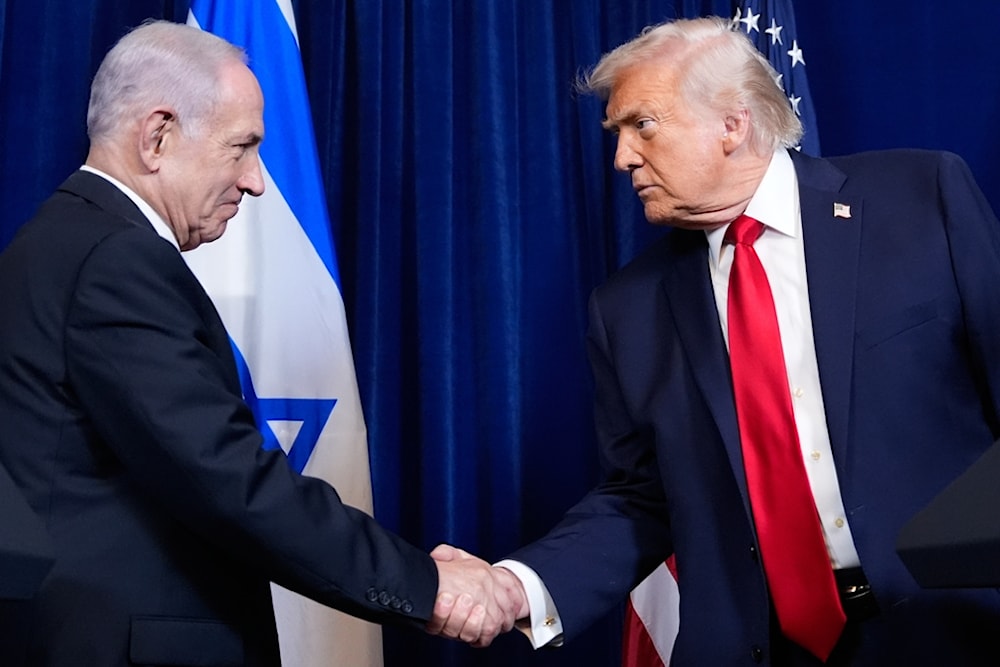
US President Donald Trump shakes hands with "Israel's" Prime Minister Benjamin Netanyahu during a news conference at Mar-a-Lago, Monday, Dec. 29, 2025, in Palm Beach, Fla. (AP)
The White House is playing down Israeli Prime Minister Benjamin Netanyahu’s public rejection of parts of a US-backed Gaza roadmap, viewing his position largely through the lens of "Israel’s" election campaign as Washington simultaneously presses Israeli officials to wind down military operations in Gaza, Lebanon, and Iran.
Axios reported Sunday that a senior US official said the White House “is not bothered” by Netanyahu’s latest comments on the Gaza plan and considers them part of the Israeli election season.
“We understand Bibi's political needs. We have no problem with it as long as he continues to do what we ask - especially regarding restraining attacks in Gaza,” the US official told Axios.
The remarks suggest Washington is drawing a distinction between Netanyahu’s public rhetoric and "Israel’s" actions on the ground, with the administration appearing prepared to tolerate his opposition to elements of the plan provided Israeli forces comply with US demands for restraint in Gaza.
Netanyahu rejects 15-point Gaza roadmap
Netanyahu said Sunday that "Israel does not accept the 15-point document" endorsed by US President Donald Trump’s "Board of Peace," maintaining that Israeli forces would not withdraw from Gaza until Hamas had been fully disarmed.
The position puts Netanyahu at odds with the roadmap, which envisages Hamas disarmament and an Israeli withdrawal taking place gradually and alongside one another.
According to Axios, Netanyahu spoke last week with Trump’s envoy and son-in-law Jared Kushner and expressed skepticism that Hamas would surrender its weapons. Nevertheless, he reportedly agreed to give the 15-point initiative an opportunity to proceed while limiting Israeli attacks and keeping troops from advancing beyond the "Yellow Line".
The "Yellow Line" separates Israeli-controlled territory from areas where Palestinians are permitted to move and currently encompasses around 70% of the Gaza Strip.
Washington focuses on Israeli actions, not rhetoric
US officials believe "Israel" has adhered to those commitments over recent days and now intends to use the reduction in attacks as leverage to pressure Hamas into beginning the disarmament process.
Channel 12 similarly cited a senior US source as saying Washington was unconcerned by Netanyahu’s rhetoric.
“We are not troubled by those comments from Netanyahu,” the source said.
“We understand his political needs [in this election period]. We have no problem with that, as long as he continues to do what we ask — especially as regards reining in the strikes in Gaza,” the source added.
Washington presses to ‘close the three fronts’
The dispute over Gaza comes amid a broader US effort to curb Israeli military operations across the region.
Israeli broadcaster Channel 13 reported that US Central Command chief Adm. Brad Cooper used a visit to "Israel" on Saturday to urge Israeli officials to move toward “closing the three fronts” of Gaza, Lebanon, and Iran.
According to political sources cited by the broadcaster, Washington is seeking progress toward ending or significantly reducing military confrontation across all three theatres, exposing differences with Israeli officials who want to preserve wider freedom to launch attacks.
In Gaza, the US is seeking further progress on the next phase of Trump’s plan, including the deployment of a multinational stabilization force. Channel 13 reported that hundreds of troops from Morocco and Uganda are already involved in the force.
Israeli security officials have meanwhile complained to the political leadership about US pressure to halt targeted killings and reduce attacks in Gaza, according to the report.
A senior Israeli military officer cited by Channel 13 said the message conveyed by Washington to the Israeli security establishment was to “move toward closing the three fronts.”
US seeks Israeli pullback in Lebanon, restraint on Iran
In Lebanon, the United States is reportedly pressing "Israel" to withdraw from additional positions it continues to occupy in the south.
The differences are particularly pronounced over Iran, where Israeli officials have insisted that they retain the ability to launch new attacks should Tehran continue advancing its nuclear program or restore ballistic missile capabilities damaged during the war.
Trump, however, indicated Sunday that Washington is for now pursuing a less aggressive course toward Tehran.
“We are low keying it,” Trump told Axios, adding that the United States is “only semi-negotiating” with Iran.
“We are just watching Iran with its huge inflation and the fact they have no money,” he said.
The remarks point to Washington relying for the moment on economic pressure and negotiations rather than immediately returning to direct military action.
Hamas says it remains committed to roadmap
Meanwhile, Hamas said Sunday that it remained committed to the roadmap negotiated with mediators and the "Board of Peace" for implementing the second phase of the Gaza agreement.
The disagreement now centers largely on sequencing: Netanyahu insists Hamas must surrender its weapons before Israeli forces withdraw, while the US-backed roadmap accepted by Hamas calls for disarmament and withdrawal to proceed gradually and in parallel.
Read more: Netanyahu rejects Trump's 15-point Gaza plan


