
US sees record protests under Trump’s second term, surging 133%
 3 Min Read
Trump's second presidency was marked by over 10,700 demonstrations in 2025 alone.
-
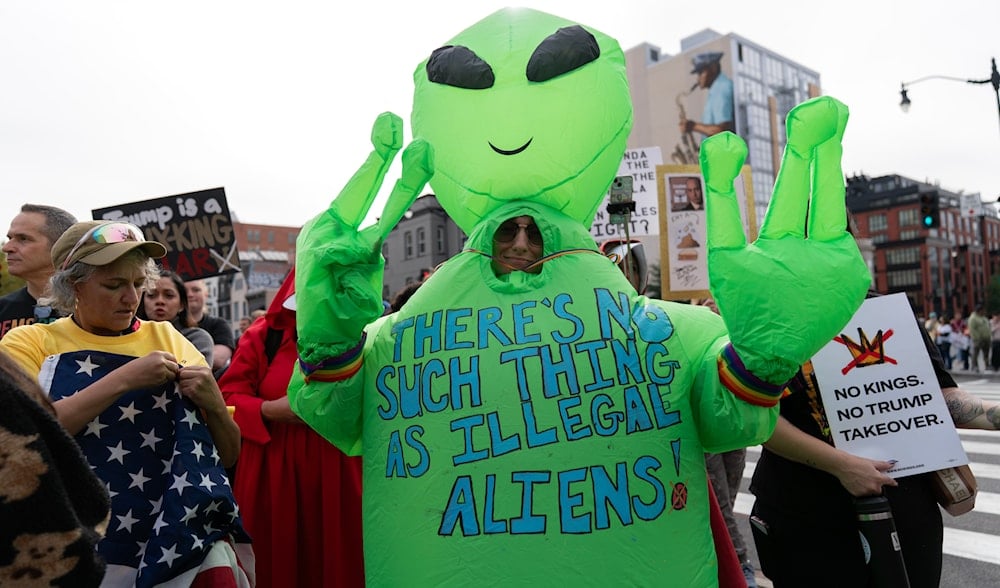
Demonstrators in inflatable costumes rally on Pennsylvania Avenue during a No Kings protest in Washington, Saturday, Oct. 18, 2025 (AP)
The United States has entered a period of unprecedented civic unrest, with protest activity under US President Donald Trump's second term far outpacing his first. According to the Crowd Counting Consortium, the country saw more than 10,700 demonstrations in 2025, a 133% increase compared to 2017, the first year of his first term.
The breadth and scale of these demonstrations signal a deeply mobilized public. By March 2025 alone, protest numbers had already tripled those of the same timeframe in 2017. Events were no longer confined to coastal cities or liberal strongholds; over 60% of US counties, including 66% that voted for Trump in 2024, hosted at least one protest during the year.
Significant actions like the "No Kings" protests in June and October 2025 drew millions. October's events, in particular, were labeled the largest single-day protest in US history, with participation estimates ranging from 5 to 7 million nationwide.
Largest protest mobilizations in US history
Trump's presidencies sparked largest protests in US history
Estimated Participants (millions)
Source: Crowd Counting Consortium, ACLED, various news reports
Diverse motivations behind the protests
Unlike previous waves of protest, the current anti-Trump movement is fueled by a wide range of grievances. Immigration enforcement, especially aggressive ICE raids in major cities, led to a massive uptick in demonstrations. By mid-2025, immigration-related protests accounted for 27% of all actions, a sharp rise from just 3% the previous year.
Other major issues driving Trump second term demonstrations include federal job cuts, economic uncertainty tied to global tariffs, rollbacks in environmental policy, and widespread concerns over democratic backsliding.
Protester demographics
Survey data from events like the October 2025 "No Kings" protests revealed a majority of participants were white, middle-aged, and progressive, with a noticeable increase in first-time demonstrators. Many cited personal impacts from administration policies, such as family job losses or witnessing immigration raids firsthand.
Tactics have also evolved. Traditional marches have been supplemented by more disruptive actions like labor walkouts, school absences, and blockades. The January 2026 "Free America Walkout" marked a significant shift, prioritizing civil disobedience over symbolic protest.
Government response
The Trump administration's reaction has been markedly more aggressive than during his first term. Federal agents, ICE, and National Guard troops were deployed in operations like "Metro Surge" in Minneapolis following the fatal shooting of Renee Good during an ICE raid. These crackdowns often involved the use of tear gas, pepper spray, and warrantless detentions, even targeting US citizens.
Despite these challenges, the resistance has remained largely nonviolent. According to the Crowd Counting Consortium, more than 99.5% of all events in 2025 occurred without any reported violence or property damage.
The sustained nature of the anti-Trump movement distinguishes it from past protest waves. While Trump's first term saw spikes in activism around specific events, the current wave is broader, more strategic, and more persistent.


