
US Sen. Chris Murphy says 70% of Americans oppose US war on Iran
 4 Min Read
US Senator Chris Murphy says 70% of Americans oppose the war on Iran, warning that President Donald Trump’s planned escalation could deepen public opposition.
-
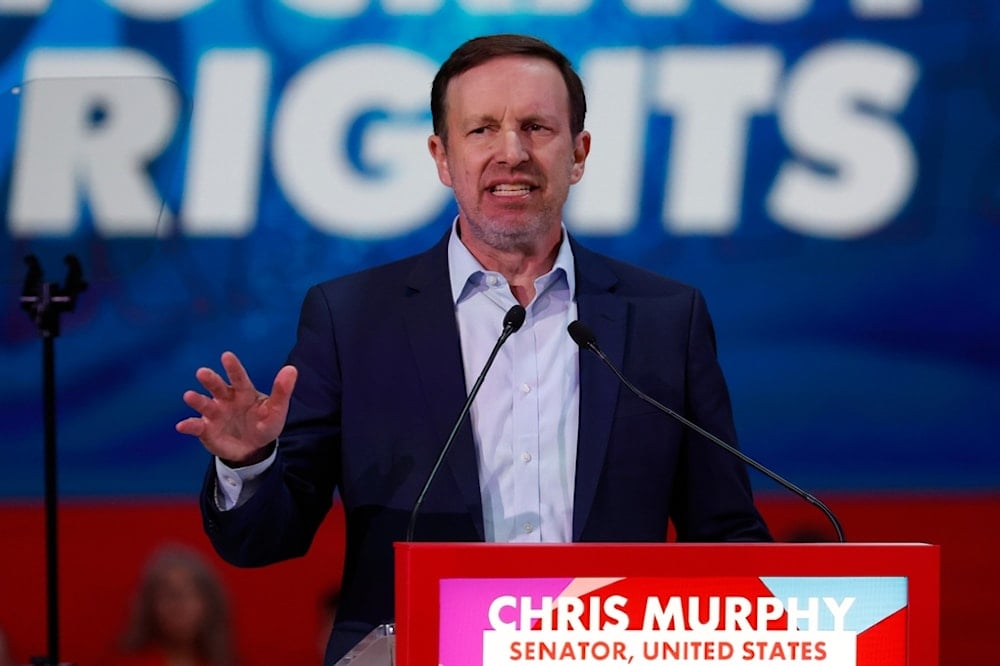
U.S. Sen. Chris Murphy, D-Conn., delivers a speech at the Global Progressive Mobilisation summit in Barcelona, Spain, Saturday, April 18, 2026. (AP Photo/Joan Monfort)
US Democratic Senator Chris Murphy said 70% of Americans oppose the ongoing US war against Iran, describing it as “disastrous” and warning that President Donald Trump is preparing a major escalation involving ground troops and billions of dollars in taxpayer funds.
In a post on X on Thursday, Murphy said Trump's plans would involve deploying ground forces and spending billions of dollars to support a new regime in Iran.
“70% of Americans oppose the existing disastrous war with Iran. Trump has now committed to a massive escalation which would include ground troops and billions of taxpayer money to prop up a new regime. 70% would move to 99%,” Murphy wrote.
70% of Americans oppose the existing disastrous war with Iran. Trump has now committed to a massive escalation which would include ground troops and billions of taxpayer money to prop up a new regime. 70% would move to 99%. https://t.co/kV2aygqkPN
— Chris Murphy 🟧 (@ChrisMurphyCT) October 22, 2026
Murphy accuses Pentagon of concealing war costs
Murphy's remarks follow a report by The Guardian, which cited the senator as saying that US Secretary of War Pete Hegseth was attempting to conceal the costs of the war on Iran and its consequences from the public and Congress.
Murphy also said the Pentagon had prevented him from visiting Al Udeid Air Base in Qatar and speaking with military leadership. A senior Pentagon official told the newspaper that the decision reflected Hegseth's directives on travel restrictions and congressional support.
The senator's comments come amid growing concerns over the economic and security consequences of the US war against Iran, including rising fuel prices and the risk of a wider regional confrontation.
Public doubts extend beyond Trump's war on Iran
Questions over President Donald Trump's handling of the US war on Iran come as a separate nationwide poll points to deep distrust in his willingness to accept an electoral setback. Seven in ten Americans lack confidence that Trump would accept the results of the November 3 midterm elections if Republicans lose, according to a survey by The Washington Post, ABC News and Ipsos. More than one-third of Republican respondents also expressed doubts.
The findings add to signs of public unease over Trump's leadership, even as most respondents expressed confidence in the electoral process itself. Sixty percent said they trusted that the midterms would be administered fairly, while 65% were confident that votes would be counted accurately.
Trust in Democratic leaders to accept defeat was considerably higher: 61% of respondents said they had confidence in them. Among undecided voters and those who do not plan to vote, only 16% trusted Trump to accept an unfavorable result, compared with 37% who said the same of Democratic leaders.
Trump has repeatedly questioned US election results and voting procedures. Asked by NBC News in February whether he would accept the outcome if Republicans lost control of Congress, he said he would do so “if the elections are honest.”
Poll points to possible Democratic gains in Congress
The same survey suggests Republicans could also face electoral consequences in the House of Representatives. Thirty-five percent of respondents expected Democrats to win a House majority, compared with 16% who predicted Republicans would retain control. Another 28% viewed the race as a toss-up, while 21% were unsure.
Conducted from October 9 to 13 among 2,545 US adults, the poll has a margin of error of plus or minus two percentage points. The November 3 midterms will determine all 435 House seats, 33 regularly scheduled Senate seats and two additional Senate seats in special elections. Voters in 36 states will also elect governors.


