
US should prepare troops coffins before approaching Hormuz: MP - Exc.
 2 Min Read
An Iranian MP tells Al Mayadeen that the country is managing the Strait of Hormuz with authority and has prevented enemy oil tankers from transiting the strategic waterway.
-
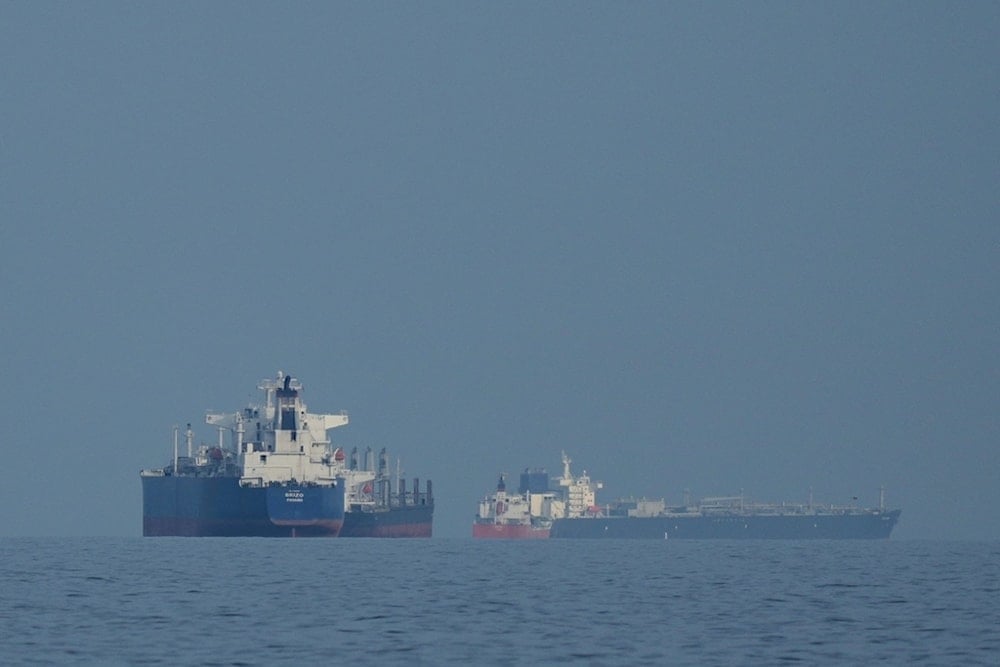
Oil tankers and cargo ships line up in the Strait of Hormuz as seen from Khor Fakkan, United Arab Emirates, on March 11, 2026 (AP)
Iran has been successfully managing the strategic Strait of Hormuz, preventing oil tankers belonging to its enemies from transiting the waterway amid the ongoing war on the country, Iranian lawmaker Ebrahim Rezaei stated.
Speaking to Al Mayadeen, Rezaei, spokesperson for the National Security and Foreign Policy Committee of the Iranian Parliament, stated that Iran has managed the vital maritime corridor “with full authority," adding that Tehran has prevented enemy oil tankers from crossing the strait during the current confrontation.
MP points to evidence of Gulf states’ involvement
Rezaei also revealed that Iran possesses documentation showing that the United States used the territory of several Gulf states to launch attacks against Iran. According to Rezaei, these countries include Saudi Arabia, the United Arab Emirates, Qatar, and Kuwait.
The lawmaker said Iran has not witnessed tangible support from neighboring states, noting that Tehran had expected Islamic countries to stand by it in confronting the aggression.
“Iran is confronting the United States and ‘Israel’ on behalf of the [Islamic] nation,” he added.
Iranian strikes on US bases signal declining hegemony
The Iranian lawmaker further said Iranian forces had carried out strikes against US military bases in the region, describing the developments as evidence of declining American dominance.
Rezaei warned that any attempt by Washington to approach the Strait of Hormuz would be met with a severe response, stating that the United States should “prepare death coffins for its soldiers” if it does so.
Earlier, Rezaei affirmed that security along Iran’s southern coasts remains fully stable, adding that the naval forces of the Islamic Revolution Guard Corps maintain full control over the Gulf and the Strait of Hormuz.
Iran has restricted vessels' transit through the Strait after the US-Israeli aggression was launched on Iran on February 28. Iran's retaliatory operations, as well as the ongoing strikes in the Gulf, led oil prices to skyrocket, while the restricted movement of vessels has also forced oil producers to limit outputs.
Read more: Trump’s inner circle shows 'buyer’s remorse' over Iran war decision


