US skeptical of regime change in Iran despite Khamenei's martyrdom
 3 Min Read
US intelligence officials express skepticism that the assassination of Ayatollah Khamenei will lead to imminent regime change in Iran, despite public calls from Washington for internal upheaval.
-
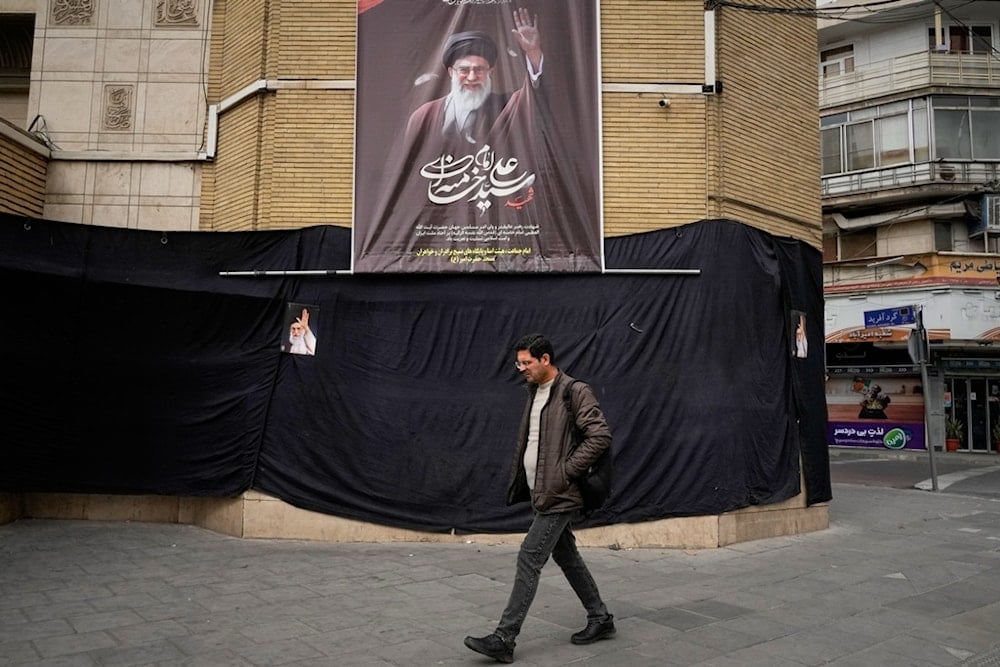
A man walks by a picture of Sayyed Ali Khamenei hanging on a black sheet along the side of a mosque in Tehran, Iran, Monday, March 2, 2026. (AP)
Senior US officials are reportedly expressing skepticism that the assassination of Sayyed Ali Khamenei in joint US and Israeli strikes would result in regime change in Tehran in the near term, according to US intelligence assessments cited in American media.
Although US President Donald Trump publicly called on Iranians to “take back” their country following the strike, internal intelligence evaluations reportedly present a far more cautious assessment of the situation inside Iran.
Intelligence agencies question collapse scenario
Multiple US officials familiar with classified intelligence briefings indicated to Reuters that while Iran has sustained significant leadership losses following sustained US and Israeli air attacks, an immediate collapse of the political system is considered unlikely.
According to Reuters, CIA assessments presented to the White House prior to the operation reportedly concluded that, if Sayyed Khamenei were assassinated, succession would most likely consolidate around figures close to the IRGC or senior clerical figures rather than shift toward Western-backed opposition groups.
Moreover, US intelligence agencies reportedly noted that no defections occurred within IRGC ranks during the January protests, which were met with heavy state force. Officials familiar with the assessments indicated that such defections would be a necessary condition for any successful regime change movement.
In fact, one US official familiar with White House deliberations stated that IRGC leadership structures remain deeply entrenched.
Debate in Washington without clear consensus
US officials have also debated whether his assassination would significantly alter Iran’s approach to nuclear negotiations with Washington, whether it would deter Tehran from rebuilding missile and nuclear infrastructure, and whether it would trigger fragmentation within the state apparatus. No unified conclusion was reached.
Despite his rhetoric asking people in Iran to stand against their government, Trump stated on Sunday that Washington intends to reopen communication channels with Tehran, indicating that US officials do not expect the government to collapse, as once thought.
Iran has already said it will not negotiate with the United States.
US engagement with opposition figures
In the weeks following January’s protests, Trump’s special envoy Steve Witkoff reportedly held discussions with exiled opposition figure Reza Pahlavi, the son of Iran’s former monarch.
However, recent internal deliberations also suggest, according to Reuters, that senior US officials have grown increasingly doubtful that any opposition figure backed by Washington would be a viable candidate.
Former US intelligence official Jonathan Panikoff told Reuters that the success of any uprising would depend on whether Iran's armed forces had defections. In the absence of defections, the government would remain in control.
Read More: Iran will not negotiate with the United States: Larijani