
US stance on Russian proposal will predict NATO's reaction
 3 Min Read
The Russian Deputy Foreign Minister Alexander Grushko contends that the United States is the main predictor for NATO's reaction to Moscow's security proposals.
-
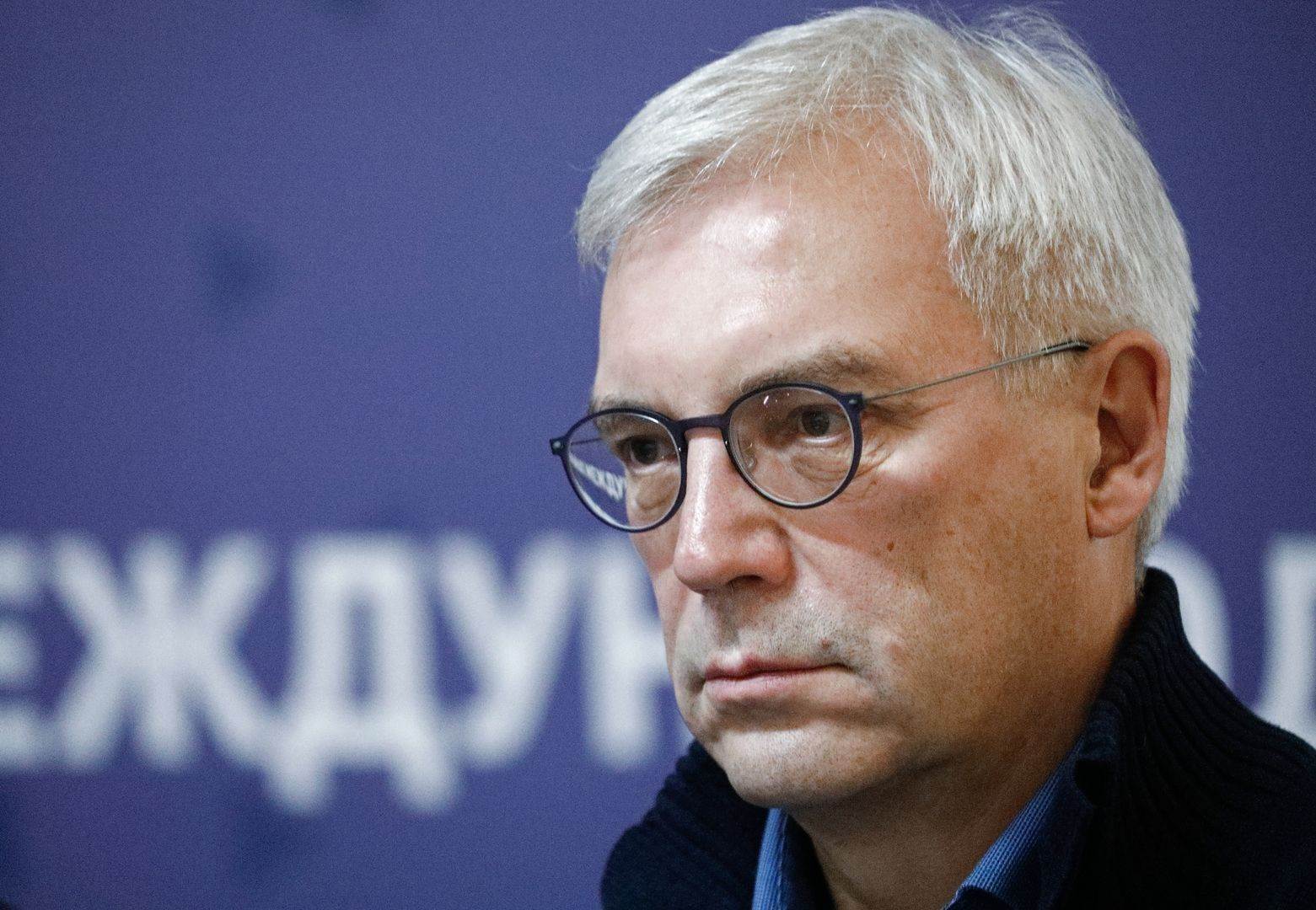
Russian Deputy Foreign Minister Alexander Grushko.
On Sunday, Russian Deputy Foreign Minister Alexander Grushko said that the US position regarding Moscow's proposals on security guarantees will predict how NATO will react to them.
"If we suppose that NATO works on a consensual basis, then, of course, the position of the US will be decisive," Grushko told journalists, explaining that the proposals do not have an ulterior motive or concealed agenda, and that they are written in a clear and honest manner.
Grushko, addressing the European Union's suggestion to discuss security issues within already established formats, said that this suggestion shows that "in the area of military security the EU is under complete control of NATO."
Grushko affirmed that NATO has not contacted Russia to address the proposals, saying "There was a statement. That's it."
Russia's security proposals
The Russian foreign ministry revealed that it proposed a draft regarding security agreement measures.
The proposals would obligate Washington and its allies to suspend NATO's eastward expansion to include other ex-Soviet countries and to renege on a 2008 pledge to admit Ukraine and Georgia.
They would also prohibit the United States and its allies from establishing military facilities on the territory of Ukraine, Georgia, and other ex-Soviet republics that are not NATO members.
The highlights of the document include NATO pledges that it will not offer membership to Ukraine. Russia also demanded NATO removes all its military infrastructure in Eastern Europe after 1997.
The document also included a commitment not to install intermediate-range missiles in locations where they may target the opposing party's territory, a provision that follows the US and Russia's departure from a Cold War-era treaty prohibiting such weapons.
The US pushes back
The United States pushed back Friday at Russia's proposals to negotiate security arrangements with the US and its NATO allies amid rising tensions between Moscow and Kiev.
"There will be no talks on European security without our European allies and partners," White House Press Secretary Jen Psaki told reporters.
The secretary spoke hours after Moscow published security proposals addressed to NATO and Washington, calling for urgent talks with the latter.
The United States had "seen the Russian proposals" and was discussing them with its European allies, Psaki said.
Open skies no more
On Saturday, Russia announced its official withdrawal from the Treaty on Open Skies, according to state media.
The treaty originally came into effect in 2002 and allows involved parties to conduct short-notice, unarmed reconnaissance flights over their territories to collect data on military forces and activities in order to build trust and mutual accountability.
In November 2020, the US announced its withdrawal from the treaty when Trump was in office, accusing Russia of “violating” the treaty. Russia contends that the collapse of the treaty is attributed to Washington.
"Regrettably, our efforts did not allow us to preserve the treaty in the form in which its authors conceived it," the Russian Foreign Ministry said in a statement.


