
US strikes unlikely to force Iran into concessions, intel says
 5 Min Read
A new US intelligence assessment reportedly finds that the aggression is unlikely to force Tehran to soften its position.
-
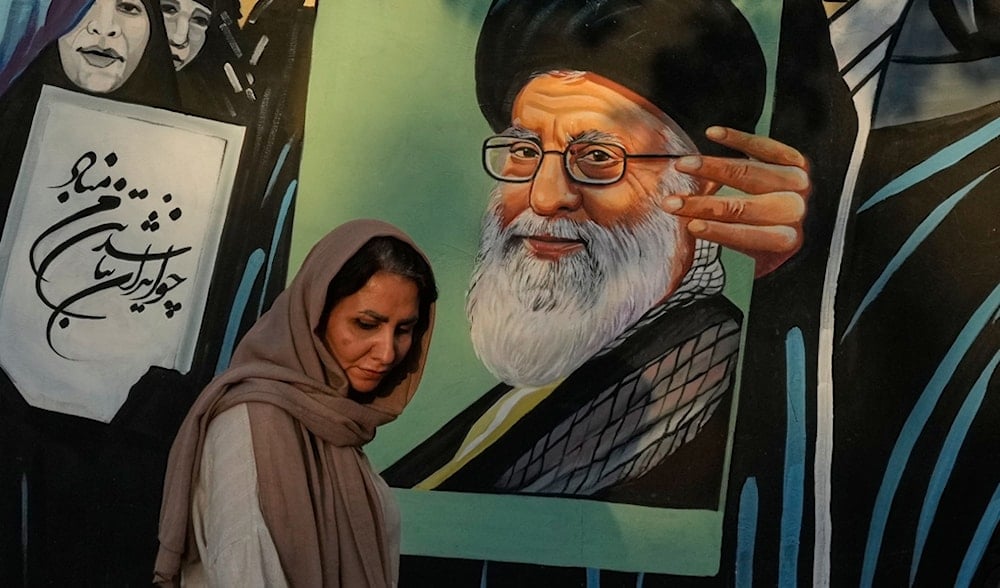
A woman walks past a mural depicting a portrait of the martyred Iranian Leader Sayyed Ali Khamenei, in downtown Tehran, Iran, on July 18, 2026. (AP Photo/Vahid Salemi)
A new intelligence assessment reviewed by current and former US officials suggests that Iran's government is unlikely to feel significant pressure or soften its negotiating position as a result of new rounds of US military strikes.
According to the Wall Street Journal (WSJ), analysts at US intelligence agencies have also concluded that Tehran and Washington are, for now, stuck in an indefinite limbo between "peace" and war, officials said on condition of anonymity due to the sensitivity of the assessments.
The findings, which have been briefed to the administration, appear to underscore the dilemma facing US President Donald Trump as the confrontation between the US and Iran continues to escalate.
Iran holding firm amid strikes
Trump's current course of expanding attacks appears to have led to a stalemate. However, with the war deeply unpopular at home, further US escalation, including the possible deployment of ground troops, could pose political risks for the president without guaranteeing military success.
The US military said last weekend that two American service members were killed in an Iranian operation on an air base in Jordan on Friday, after the US aggression resumed following the collapse of last month's ceasefire between Washington and Tehran.
US Central Command said Monday that it had launched fresh strikes in what Trump claimed was retaliation for the deaths of the troops. It was the ninth consecutive night of US bombing in Iran, while CENTCOM announced Monday afternoon that it had begun a 10th wave of attacks.
Iran retaliated with strikes of its own across the region, targeting US military bases and positions in Kuwait, Bahrain, Jordan, Qatar, and Oman.
On another front in the regional war, Yemen's Ansar Allah has imposed a maritime embargo on Saudi Arabia, threatening the vital Bab al-Mandeb Strait between the Arabian Peninsula and Africa, which leads to the Suez Canal.
Between war and diplomacy
With the prospect of a wider war emerging again, both Iran and the US signaled openness to renewed negotiations, although no progress was reported.
Iranian Foreign Ministry spokesman Esmaeil Baghaei said at a news conference in Tehran on Monday that messages from Washington had reached Tehran through intermediaries in Qatar, according to Iranian media.
“We have received messages, without going into details, but the main point is that the diplomatic apparatus has been active in recent days and ideas have been conveyed to us by certain mediators,” Baghaei said.
Secretary of State Marco Rubio claimed the US remained open to a diplomatic solution with Iran and that parts of the Iranian government were also receptive to such an outcome, but claimed that hardliners had obstructed progress.
“They continue to send signals that they want to talk, that they want to negotiate, but their behavior is what we’re responding to, and their behavior is they’re launching missiles and drones at ships, including tonight,” Rubio told reporters Sunday evening as he departed for the Philippines.
In previous rounds of negotiations, Iranian officials have proven to be resolute negotiators, particularly over key issues such as the country's peaceful nuclear program. At the same time, the administration has repeatedly claimed that Iran had accepted US demands, only for Tehran to deny that any agreement had been reached.
The two sides reached a ceasefire in April to end hostilities and reopen the Strait of Hormuz, with negotiations on key issues deferred. The agreement later collapsed over control of the waterway, a key chokepoint for oil and other exports in the Gulf.
Iranian Army spokesperson Mohammad Akrami Nia warned that Iran's control over the Strait of Hormuz will shape its relations with neighboring states, particularly those cooperating with the United States.
— Al Mayadeen English (@MayadeenEnglish) July 21, 2026
Accusing some countries of having "taken advantage of our geopolitical… pic.twitter.com/oZbacaBCLe
US assessments 'certainly incorrect'
The latest intelligence report was written primarily by the CIA, where analysts have emphasized Tehran's resilience despite the loss of many of its senior leaders and several rounds of US-Israeli aggression.
In May, a CIA analysis concluded that Iran could withstand a US naval blockade for at least three to four months before facing economic hardship. Another report concluded that despite sustained military aggression, Iran still retained the majority of its missile power
Intelligence assessments such as those on Iran are not intended to provide concrete predictions of the future, current and former intelligence officials said. Rather, they offer a snapshot of current and anticipated trends based on available classified intelligence, including human intelligence and technical collection, alongside open-source material.
Jonathan Panikoff, former deputy US national intelligence officer for the Near East, said the Trump administration appeared to believe that continued military pressure would eventually make Tehran more flexible. “That assessment is almost certainly incorrect,” said Panikoff, senior director at the Atlantic Council think tank.
“I’m struggling, because I don’t think there’s a lot of great options for the United States,” Panikoff said, adding that he was skeptical Trump would launch a ground invasion. “You’ll continue to see significant flare-ups in this conflict,” he said, followed by periods of calm and renewed fighting.
Read more: Iran defense industry accelerated despite sanctions: Defense minister


