
US targets Larijani, others with sanctions in new bid to boost riots
 3 Min Read
The move extends long-standing US pressure mechanisms on Iran, with critics arguing that the sanctions bypass international consensus and entrench financial isolation.
-
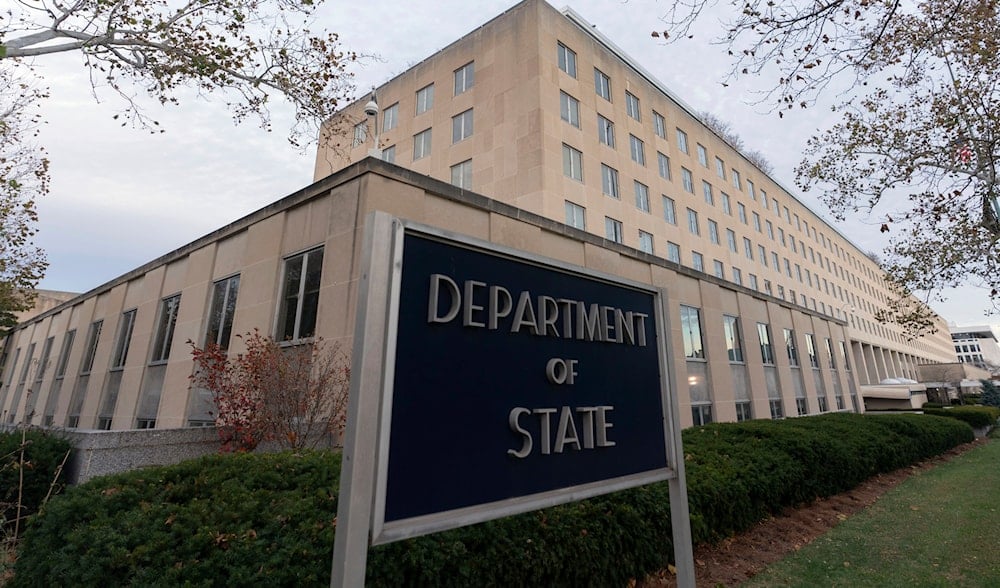
The US Department of State building seen in Washington, Saturday, Dec. 7, 2024 (AP)
The United States has announced a new round of sanctions targeting Iranian institutions and officials, expanding its long-running pressure campaign against Tehran under the pretext of human rights, even as critics argue Washington continues to instrumentalize sanctions to advance broader geopolitical objectives.
In a statement issued on Wednesday, US authorities said they were designating Fardis Prison, along with several Iranian security officials, including Ali Larijani, secretary of Iran’s Supreme Council for National Security.
The US Treasury Department also imposed sanctions on 18 individuals and entities it described as part of Iran’s so-called “shadow banking” networks, accused of facilitating petroleum and petrochemical sales outside Western financial systems.
In a clear bid to boost the dying riots and vandalism in the country, US officials framed the measures as "support for Iranians demanding basic rights," accusing the Iranian state of "repression and abuse."
Collective punishment
Tehran, however, has repeatedly rejected such accusations, arguing that Washington’s sanctions constitute collective punishment, undermining civilians’ access to essential goods while destabilizing Iran’s economy through financial isolation.
The latest sanctions were introduced under several existing executive orders and US legislation, including measures targeting Iran’s financial and energy sectors. Analysts note that these frameworks have been used for years to restrict Iran’s access to global banking systems, despite international criticism that unilateral sanctions bypass multilateral mechanisms and violate the spirit of international law.
Iranian officials have long accused the United States of exploiting human rights rhetoric to justify economic warfare, pointing to Washington’s continued sanctions expansion even during periods of domestic hardship and regional tension. Tehran maintains that US policy prioritizes strategic containment and regional dominance over genuine concern for the welfare of ordinary Iranians.
The new designations come amid heightened regional volatility and renewed US efforts to enforce "maximum pressure" on Iran, a strategy that has drawn skepticism from diplomats and rights advocates who question its effectiveness and humanitarian impact.
It is worth noting that Iran has witnessed several days of armed riots in multiple regions, with incidents involving vandalism of public and private property and the killing of members of the security forces, the Basij, and civilians.
Read more: Iran mourning, lays to rest 300 Iranians killed by armed rioters


