
US troop relocation to civilian hotels in Gulf may violate laws of war
 4 Min Read
A New York Times report reveals that US troop relocations to civilian hotels in the Gulf may violate international humanitarian law, exposing civilians to potential risks.
-
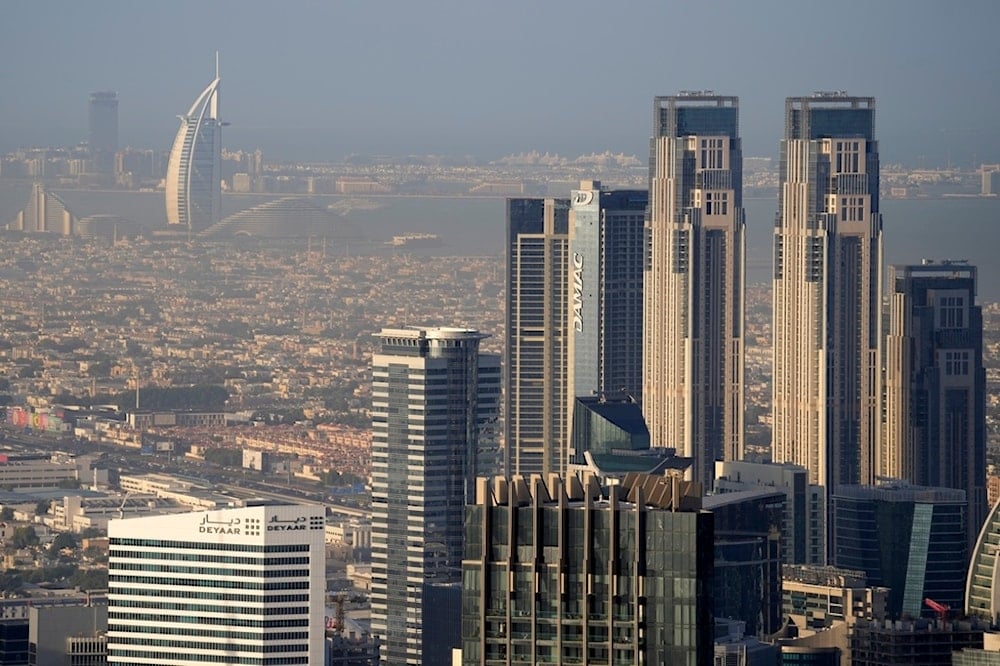
A general view of the Dubai skyline with Burj Al Arab hotel, top left, is seen in Dubai, United Arab Emirates, on November 30, 2023. (AP)
The United States military’s relocation of troops from bases to civilian hotels and office buildings across the Gulf may be violating international humanitarian law and Washington’s own laws of war, according to a report by The New York Times (NYT).
Iran's ability to hit US bases in the Gulf with ease and precision has left thousands of US troops unprotected. Instead of relocating to other military installations, the US military opted to place these troops amongs among civilians from the onset of the unprovoked war it launched on Iran, exposing civilians across the region to deadly risks. the Iranian military command had warned of such tactics, urging residents to expose the hideouts of American troops and evacuate areas where they are located.
Relocation into civilian areas raises legal violations
The issue has been widely reported on by US media, uncovering dangerous shortcomings of the US military posture in the Gulf, which Iran's strikes have severely degraded in a few weeks. US commanders dispersed forces into densely populated urban areas after acknowledging that regional bases lacked adequate defenses against advanced Iranian ballistic missiles and one-way attack drones. By so doing, US commanders knowingly placed civilians in harm's way.
US, Western, and Israeli officials have long made claims of Resistance factions employing "human-shield tactics," a disproven claim that masks their own violations of international law by occupying land, bombing residential areas, massacring families, and in fact using human shields, as seen in Iraq, Afghanistan, and Palestine. Now, the US has again resorted to using civilians as human shields in the Gulf, endangering civilians.
International humanitarian law, including the Geneva Conventions, explicitly requires militaries to separate military objectives from civilian populations wherever feasible. The Pentagon’s own Law of War Manual reinforces this obligation, mandating that commanders take active measures to protect civilians from combat effects.
Hotel rooms turned command rooms
Housing troops in operational civilian facilities, such as occupied hotels or residential buildings, violates these obligations. Legal experts cited in the report state that embedding troops among civilians without defensive necessity breaches “passive precautions”, a core requirement under the laws of armed conflict, the newspaper reported.
It is worth noting that civilian areas are not being used only to house troops, but they are also being appropriated for direct military use, including using hotel rooms for US Air Force operations, as revealed by NYT in a previous report. Additionally, CENTCOM's own admission that six troops were killed in Kuwait's Shuaiba Port, in what was described as fortified tactical operations rooms, another term for modified shipping containers placed in the civilian port.
Human rights organizations demand investigations
Human rights officials have directly called for accountability. Amnesty International warned that relocating troops into civilian centers knowingly exposes noncombatants to attack.
Brian Castner, a crisis researcher at the organization, stated that US commanders who ordered such deployments should be investigated for violating the laws of war, stressing that the decision moved troops “into the heart of civilian populations” rather than away from conflict zones.
Legal exceptions allowing troops to operate within civilian areas typically apply when forces are actively defending those populations from attack. Experts note that this condition is absent in the current US deployment posture. Unlike cases such as urban defense battles, US forces in the Gulf are not positioned within cities to protect civilians. Instead, they relocated to civilian infrastructure to avoid becoming targets, an action that transfers risk from military personnel to surrounding populations.
This distinction eliminates the primary legal justification for co-location with civilians and reinforces the assessment that the deployments violate international law.
Read more: Iran declares hotels hosting US forces as potential targets: Fars


