
US warns of 'consequences' for Iran amid talks
 3 Min Read
US officials say talks with Iran have been productive but warn a nuclear agreement depends on Tehran accepting key demands, while Washington weighs further options.
-
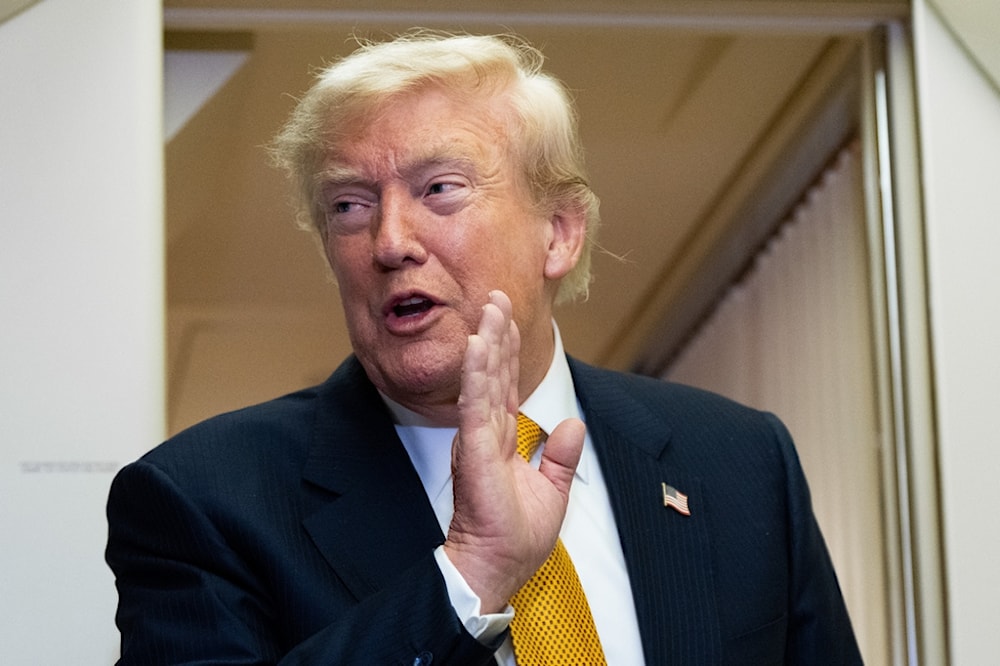
US President Donald Trump speaks with reporters in flight on Air Force One after landing at US Air Force Base at RAF Mildenhall, in Suffolk, Eastern England, Wednesday, July 8, 2026 (AP)
US officials said negotiations between Washington and Tehran have been productive, while stressing that an agreement will only be reached if Iran accepts key conditions related to its nuclear program.
Speaking to Reuters, senior US officials said that “either we reach an agreement or we do not,” adding that Washington is seeking commitments from Tehran as part of the ongoing discussions.
According to the officials, the United States is demanding that Iran issue a statement confirming it will stop targeting ships in the Strait of Hormuz.
They added that Washington would not reach an agreement with Iran unless it obtains what it described as guarantees regarding the nuclear issue.
Trump gives negotiating team limited time for nuclear deal
Meanwhile, Axios, citing US officials, reported that US President Donald Trump has given his negotiating team limited time and flexibility to reach a nuclear agreement with Iran.
The report said plans have already been prepared outlining possible options available to Trump if a deal is not reached.
US officials told Axios that they expect Iran to issue a statement following Saturday’s meeting in Oman, warning that there would be “severe consequences” if Tehran rejects the demand.
Qatar steps up mediation efforts
Meanwhile, diplomatic efforts to ease tensions between Washington and Tehran have continued, with a Qatari delegation arriving in Tehran for direct discussions with Iranian officials, according to a source familiar with the matter cited by Reuters.
The source said Doha's mediation efforts are being conducted in coordination with Washington, with talks focused on implementing the memorandum of understanding reached between Iran and the United States and addressing the disputes that triggered the latest escalation, particularly disagreements over maritime navigation in the Strait of Hormuz.
The Qatari visit follows reports by CNN that Qatar and Pakistan had intensified efforts to revive US-Iran negotiations following the latest wave of military escalation.
The diplomatic push comes after renewed US attacks on Iran, which Tehran stated was the most extensive military aggression since the June 17 memorandum of understanding. The strikes reportedly targeted several areas, including Chabahar Port, where maritime infrastructure was damaged.
While US officials said the ceasefire had "at least temporarily" collapsed, President Donald Trump declared the memorandum "over" while indicating that talks could continue. Iranian officials have warned that any further aggression would trigger an immediate and broader response.


