
Qatari delegation holds talks in Tehran to ease Iran-US tensions
 3 Min Read
A Qatari delegation is holding talks in Tehran to de-escalate Iran-US tensions, coordinated with Washington, as mediation efforts continue.
-
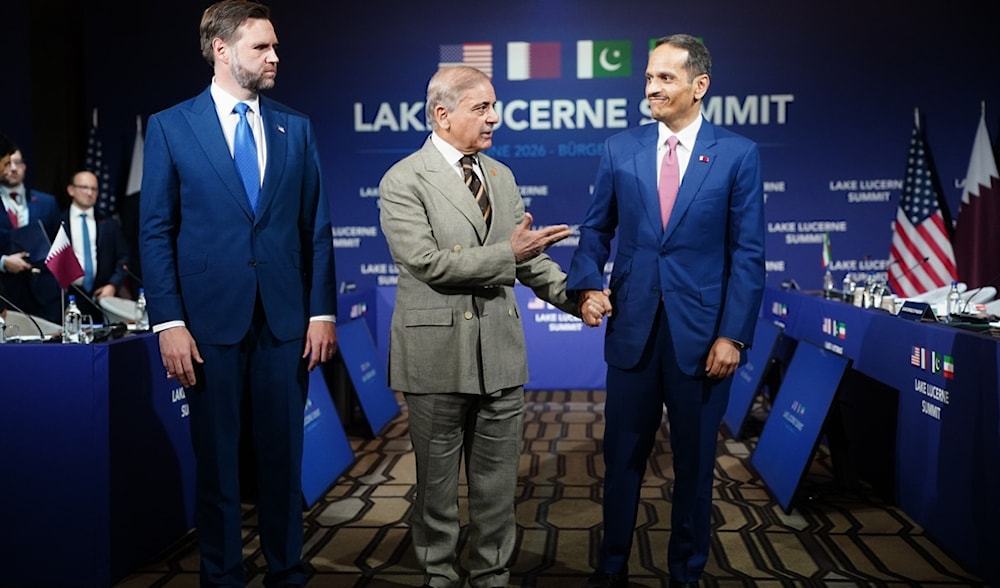
U.S. VP JD Vance looks on as Pakistan PM Shehbaz Sharif speaks, gesturing toward Qatar PM and FM Sheikh Mohammed bin Abdulrahman Al-Thani, at Bürgenstock Resort, Switzerland, June 21, 2026. (Nathan Howard/Pool Photo via AP)
A Qatari delegation has arrived in Tehran for direct discussions with Iranian officials, part of a broader push to de-escalate tensions and pave the way for continued negotiations, a source familiar with the matter told Reuters on Friday.
The source noted that Doha's mediation efforts are being carried out in coordination with Washington.
According to the source cited by Reuters, the discussions center on implementing the memorandum of understanding reached between Washington and Tehran, along with resolving the underlying disputes that fueled the latest round of confrontation, chief among them disagreements over maritime navigation through the Strait of Hormuz.
The Qatari mission follows reports by CNN on Thursday, citing regional sources, that both Doha and Islamabad had stepped up efforts to revive US-Iran talks in the wake of a fresh wave of military escalation between the two sides.
A legal double standard
An analysis by Foreign Policy in Focus argued that the Trump administration has applied an "imperial" reading of international law to the Strait of Hormuz, insisting Iran keep the waterway open to navigation, a response to Tehran's moves to impose transit fees, even as US officials elsewhere reject the notion of a rules-based international order altogether.
The think tank noted that neither Iran nor the US has ratified the UN Convention on the Law of the Sea, the treaty governing passage through international straits, and pointed out that Washington has itself disregarded provisions of that same convention elsewhere, including on freedom of navigation and seabed mining.
FPIF concluded that the administration isn't seeking to restore a rules-based order but is invoking international law selectively as leverage against Tehran, while keeping military and unilateral options open.
This comes as the latest US attacks mark the most extensive military aggression against Iran since the June 17 memorandum of understanding, with the heaviest bombardment hitting Chabahar Port, damaging maritime piers, a navigation control tower, and reaching Imam Ali Hospital.
A US official told CNN earlier this week that the ceasefire had "at least temporarily" collapsed, while Trump declared the memorandum "over," though negotiations could continue. An Iranian security source told Al Mayadeen that Tehran would respond immediately and more broadly to further aggression.


