
Velayati: Resistance command eyes Bab al-Mandeb as second Hormuz
 4 Min Read
Former top Iranian diplomat warns that the Resistance Front's unified command views Bab al-Mandeb with the same strategic weight as Hormuz, as the threat of a double chokepoint grows.
-
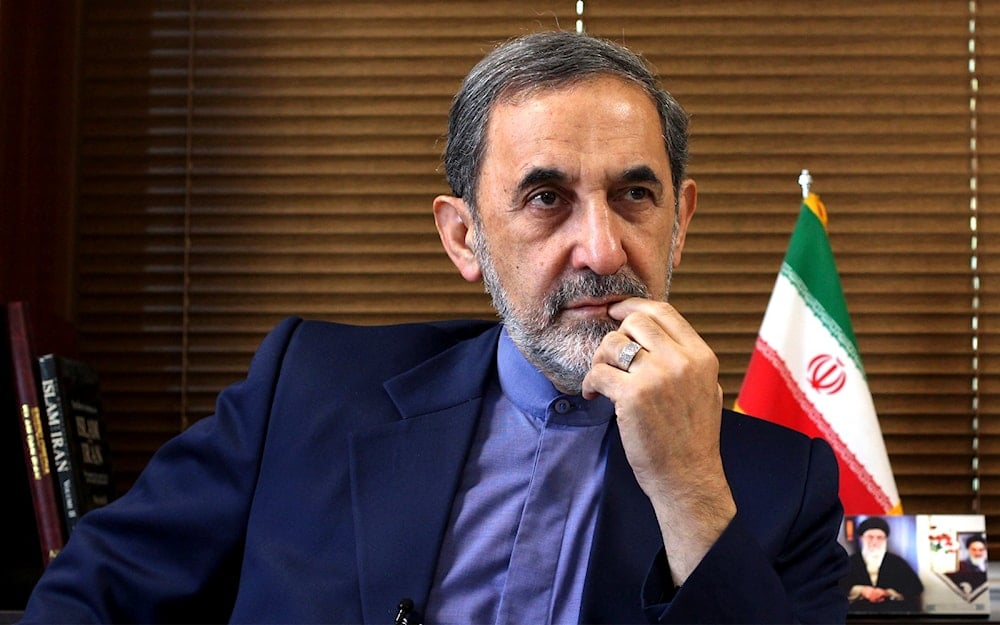
Ali Akbar Velayati, former Foreign Minister of Iran and former top adviser to Martyred Iranian leader Sayyed Ali Khamenei, gives an interview to The Associated Press at his office in Tehran, Iran, August 18, 2013 (AP Photo)
Former Iranian Foreign Minister Ali Akbar Velayati warned that the Resistance Front's unified command headquarters views the Bab al-Mandab Strait with the same strategic weight as the Strait of Hormuz.
In a post on X, Velayati warned that if the United States repeats its foolish mistakes, it could disrupt the flow of global energy and trade, stressing that this could happen "with a single signal."
اتاق واحدفرماندهی جبهه مقاومت،بابالمندب را همچون هرمز میداندوکاخ سفیداگر خیال تکرار اشتباهات احمقانهاش را داشته باشد،خیلی زود خواهد فهمید که جریان انرژی و تجارت جهانی تنها با یک اشاره مختل میشود.
— Aliakbar Velayati (@Drvelayati_ir) April 5, 2026
«آمریکا که تاریخ را از ایران آموخته ، هنوز نتوانسته جغرافیای قدرت را یاد بگیرد»
In another context, Velayati drew on historical symbolism to underscore Iran's civilizational depth, noting that while "the ancestors of the Anglo-Saxons were searching for fire in caves, Darius the Great was linking the Mediterranean Sea to the Red Sea."
He added pointedly that the United States "has learned history from Iran, but has yet to learn the geography of power."
Ghalibaf, Qaani reinforce the warning
Iranian Parliament Speaker Mohammad Bagher Ghalibaf addressed the possibility of a Bab al-Mandab closure in a post on X on Friday, asking: "What share of global oil, LNG, wheat, rice, and fertilizer shipments transits the Bab al-Mandab Strait? Which countries and companies account for the highest transit volumes?"
What share of global oil, LNG, wheat, rice, and fertilizer shipments transits the Bab-el-Mandeb Strait?
— محمدباقر قالیباف | MB Ghalibaf (@mb_ghalibaf) April 3, 2026
Which countries and companies account for the highest transit volumes through the strait? 🤔
Quds Force commander Brigadier General Esmail Qaani was more blunt. Speaking on Saturday, he said the commander of the US aircraft carrier Gerald Ford "did not dare to cross the Bab al-Mandab Strait out of fear of the heroic fighters and the steadfast Yemeni people."
Ansar Allah enters the war
Yemen's Ansar Allah formally entered the war on March 28, launching its first ballistic missile salvo targeting Israeli military sites in southern occupied Palestine, with spokesperson Brigadier General Yahya Saree announcing the operation was conducted in coordination with Iran and Hezbollah.
Since then, Ansar Allah has carried out multiple joint operations, with Saree warning that continued Israeli and US escalation "will only push free Yemen toward further escalation."
Deputy Information Minister Mohammed Mansour had told local Yemeni media that closing the strait "is a Yemeni option that can be implemented should the aggression against Iran and Lebanon escalate savagely, or if any Gulf state becomes directly involved in military operations."
Meanwhile, political bureau member Mohammed al-Bukhaiti, speaking to Al Mayadeen, had confirmed that Yemen is in full coordination with the Resistance axis.
How the previous campaign unfolded
During "Israel's" genocidal war on Gaza, Ansar Allah's Red Sea campaign, without formally closing Bab al-Mandab, caused Suez Canal traffic to fall 70% and cut oil flows through the strait in half. Container freight rates on Asia-Europe routes more than doubled, and insurance premiums tripled.
Two consecutive US military campaigns, Operation Prosperity Guardian under Biden and Operation Rough Rider under Trump, failed to restore normal shipping. US commanders acknowledged that Ansar Allah "have not been deterred," and the Trump administration ultimately accepted a ceasefire brokered by Oman in May 2025 after failing to achieve air superiority over Yemen.
What closure means this time
This time, the stakes are categorically higher. With the Strait of Hormuz already closed to US- and "Israel"-linked vessels, Saudi Arabia has been rerouting up to 5 million barrels per day through its Red Sea port of Yanbu via the East-West pipeline, its last viable export outlet.
That port sits within range of Yemeni missiles. Should Ansar Allah move to restrict Bab al-Mandeb, Saudi Arabia would effectively lose its final maritime export route, eliminating the only buffer currently softening the Hormuz closure's impact on global markets.
Analysts have warned that a simultaneous restriction of both straits would disrupt approximately 30% of the world's seaborne oil, with Goldman Sachs projecting prices could surge toward $120 per barrel. Beyond energy, the strait carries an estimated $800 billion to $1 trillion in annual goods, including food commodities such as wheat, rice, and fertilizers


