
Venezuela gov., opposition hold 3rd round of talks; Machado excluded
 3 Min Read
Venezuela opposition talks enter a new phase with US-backed negotiations to determine the country's fate.
-
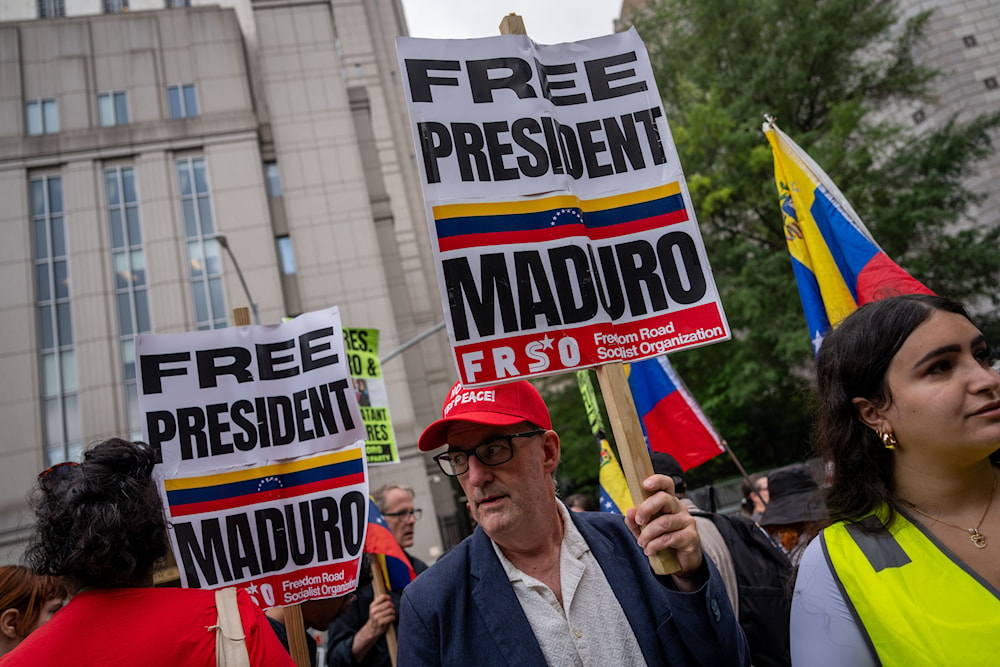
People protest in support of former Venezuela President Nicolas Maduro and his wife Cilia Flores outside of Manhattan federal court, Wednesday, July 22, 2026, in New York (AP)
Venezuela's interim authorities and opposition representatives opened a new phase of US-backed negotiations on Wednesday, with the discussions centered on establishing the political and institutional conditions for future elections, Reuters reported, citing a senior US State Department official.
The latest meetings are the third stage of a dialogue launched in August after former President Nicolas Maduro was abducted. The current session is scheduled to run through the end of next week, with the agenda covering elections, the broader political process, and participation by multiple parties, according to the US official, who spoke anonymously.
Interim President Delcy Rodriguez is participating in the process alongside an opposition delegation headed by Dinorah Figuera. Washington has encouraged Rodriguez, who previously served as Maduro's vice president, to engage with the opposition as the United States faces pressure to establish a path toward democratic elections.
Maria Corina Machado, an opposition leader living in exile, has not been included in the negotiations.
Earlier rounds produced commitments, no action
The US official claimed the first two rounds had delivered "concrete progress" in several areas. Those included changes intended to make the Supreme Court "independent".
The new round is intended to extend that work by "building the structural framework and institutions necessary for elections and a democratic transition," the official said.
Venezuela government, opposition agree on Supreme Court appointments
Venezuela’s government and opposition agreed on September 25 to create a committee responsible for selecting Supreme Court judges, concluding their second round of dialogue in Caracas. The opposition presented the agreement as an initial step toward “comprehensive judicial reform.”
The agreement also commits both sides to “continue analyzing and reviewing the necessary legislative instruments to transform the judicial system.” Interim President Delcy Rodríguez has incorporated the dialogue into a wider political transition process amid pressure from Washington.
The first round of talks in August featured judicial reform and media access, when the parties agreed on the need to overhaul the judicial system and appoint new Supreme Court judges. Discussions also addressed efforts to recover Venezuela’s international reserve assets held by the Bank of England.
US interventionist policy
The United States continues to exert significant political influence over Venezuela’s transition, using its backing of negotiations between interim authorities and opposition representatives to shape the country’s political and institutional future, including the conditions for upcoming elections.
This intervention follows the abduction of former President Nicolás Maduro, an act that has raised serious questions about Venezuelan sovereignty, international law, and Washington’s role in determining the country’s leadership.
By supporting a transition process with officials of its own choosing, Washington risks shaping Venezuela’s political landscape according to its own strategic interests rather than leaving the country’s future entirely to its people.
While US officials describe the talks as a pathway toward democratic elections and institutional reform, the circumstances surrounding Maduro’s removal underscore the broader controversy over foreign intervention and Venezuela’s right to determine its own political future.


