
War on Iran consolidates DPRK's nuclear deterrence strategy: Guardian
 3 Min Read
The DPRK’s missile launch from its newest destroyer signals progress in its naval nuclear deterrence program as the war on Iran reinforces the perceived strategic value of nuclear capabilities.
-
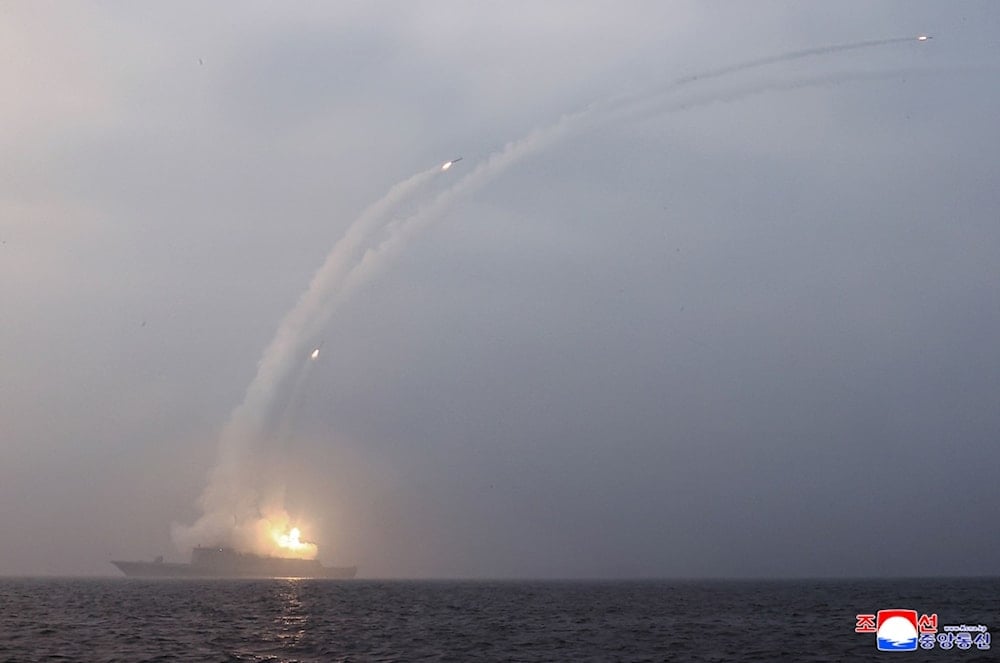
This photo provided by the North Korean government shows what it says is a test of cruise missiles from the new destroyer Choe Hyon on Wednesday, March 4, 2026 (AP)
The war on Iran is likely reinforcing the Democratic People’s Republic of Korea’s (DPRK) conviction that nuclear weapons are essential for national security, The Guardian reported on Tuesday. According to the report, “The widening war in the Middle East – and the existential threat to the Iranian regime – has likely reinforced North Korea’s decision to build a nuclear arsenal.”
The assessment comes as the DPRK recently conducted a missile launch from its newest naval destroyer, part of what officials describe as efforts to strengthen the country’s maritime nuclear deterrence.
The launch took place aboard the 5,000-ton Choe Hyon destroyer, currently the largest warship in the DPRK fleet, during operational trials overseen by leader Kim Jong Un. The vessel has been undergoing sea tests aimed at evaluating its weapons systems and overall combat readiness.
During the inspection, Kim said the development of naval nuclear capabilities was progressing steadily. “The arming of the Navy with nuclear weapons is making satisfactory progress,” he stated.
North Korean leader Kim Jong Un personally oversaw cruise missile launches from the Choe Hyon destroyer on North Korea's west coast Wednesday, marking final testing before the warship enters active service.
— NK NEWS (@nknewsorg) March 5, 2026
By @ColinZwirko: https://t.co/Q6my6X1y3e
Video: KCTV (March 5, 2026) pic.twitter.com/6ksWAvlhR0
Naval modernization drive
The Choe Hyon-class destroyer represents a significant step in the DPRK’s ongoing military modernization program. The warship is designed to carry multiple missile systems through vertical launch cells and is intended to operate as a key platform for maritime defense and strategic deterrence.
State media reports say the destroyer successfully carried out the launch of a sea-to-surface strategic cruise missile during the tests. Analysts note that the DPRK’s reference to “strategic” weapons often implies systems capable of carrying nuclear warheads.
The tests form part of a wider naval development plan that includes expanding shipbuilding capacity and producing additional destroyers in the coming years.
The development also comes amid heightened military tensions on the Korean Peninsula. Over the past year, the DPRK has repeatedly condemned large-scale joint military drills conducted by the US, South Korea, and Japan, which frequently involve nuclear-capable bombers, aircraft carriers, and missile defense systems.
Pyongyang has long described such exercises as rehearsals for invasion, responding with its own missile tests and weapons demonstrations.
Context of the war on Iran
The timing of the launch has drawn attention as the United States and “Israel” continue their aggression on Iran.
Observers say the regional escalation has reinforced the perception among several states that possessing nuclear deterrence capabilities is essential to safeguarding sovereignty.
Within the DPRK leadership, the nuclear program has long been framed as central to the survival of the state and its political system.
The DPRK’s Foreign Ministry also condemned the assaults, labeling the US and Israeli strikes on Iran a clear breach of Iran’s sovereign rights and an unlawful act of aggression.
A spokesperson said the attacks constituted “an illegal act of aggression and the most despicable form of violation of sovereignty,” accusing Washington and Tel Aviv of abusing military force to pursue “selfish and hegemonic ambitions.”
Whether the widening Middle East confrontation will encourage renewed negotiations or push the DPRK toward further military consolidation remains uncertain, analysts say.
Read more: Pyongyang ties dialogue with US to recognition of nuclear status


