
Washington to host first 'Board of peace' meeting on Thursday
 3 Min Read
The US-led "Board of Peace" holds its first meeting in Washington, focused on Gaza’s reconstruction and a potential stabilization force.
-
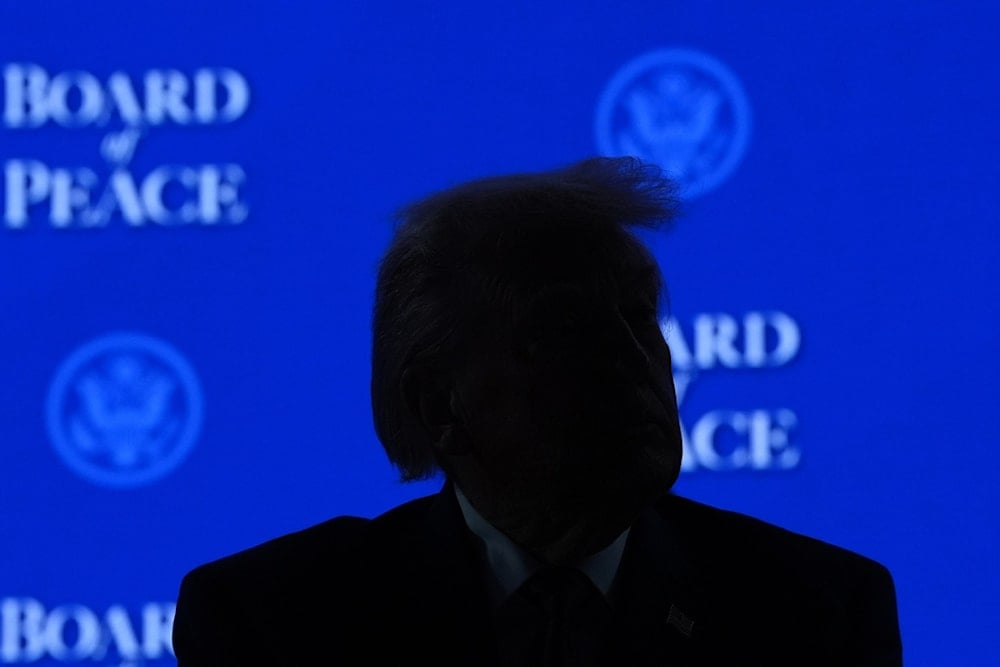
President Donald Trump listens to speakers after the signing of a "Board of Peace" charter during the Annual Meeting of the World Economic Forum in Davos, Switzerland, Thursday, Jan. 22, 2026. (AP Photo/Evan Vucci)
The first meeting of the "Board of Peace," created at the initiative of US President Donald Trump, is set to take place on Thursday in Washington, DC, officially launching a US-led platform centered on Gaza’s post-war future.
The body was reportedly formed in January during the World Economic Forum in Davos, initially framed as a mechanism to coordinate post-ceasefire arrangements in Gaza. Since then, Trump has signaled the structure could expand into a broader conflict-management platform beyond the Palestinian territory.
Reconstruction of the Gaza Strip will dominate the inaugural session. US officials have indicated that member states have pledged more than $5 billion toward humanitarian and rebuilding efforts.
At the same time, participants are expected to examine the possible deployment of an International Stabilization Force in Gaza. Reports suggest thousands of personnel could be committed, although details regarding mandate, oversight, and duration remain undefined.
Legitimacy under question
More than 20 countries are expected to attend, including Turkey, Egypt, Saudi Arabia, Qatar, and Indonesia. However, several major European states have declined participation, reflecting unease about the platform’s structure and legitimacy.
While Washington presents the initiative as a multinational effort to rebuild Gaza, critics argue the Board is being constructed outside established international frameworks, particularly the United Nations. The Vatican declined to participate. Cardinal Pietro Parolin stated: "The Holy See will not participate in the Board of Peace because of its particular nature, which is evidently not that of other States," while stressing that international crises should be handled through the UN.
European officials have also raised concerns that the mechanism sidelines multilateral norms and concentrates authority in a US-led format. Some have described it as a personal diplomatic project that risks weakening established global governance systems.
Gaza without Palestinians
Palestinian voices and regional observers have voiced deeper concerns. They argue that any reconstruction process that excludes meaningful Palestinian political representation risks entrenching external control over Gaza’s future. The absence of clear Palestinian decision-making authority within the Board’s structure has raised fears that rebuilding efforts could proceed without addressing core political rights, sovereignty, and self-determination.
The discussion of an International Stabilization Force has further intensified scrutiny. Critics warn that foreign security deployment without Palestinian consent could formalize international oversight while limiting local agency. In this context, reconstruction is seen not merely as a technical or financial matter, but as a struggle over who determines Gaza’s political future.
Trump is scheduled to open the meeting with remarks and will formally chair the session at its outset. As Washington moves forward with the initiative, the central question remains whether the "Board of Peace" will serve Palestinian self-governance or reshape Gaza through externally designed arrangements that bypass the very people whose lives are most affected.
Read more: Italy rules out joining Trump's ‘"Board of Peace"’, cites constitution


