
World at 'cusp of a new order': Ghalibaf
 2 Min Read
Iranian Parliament Speaker Mohammad Bagher Ghalibaf said the world is "at the cusp of a new order", citing accelerating global changes and stating that the future belongs to the Global South.
-
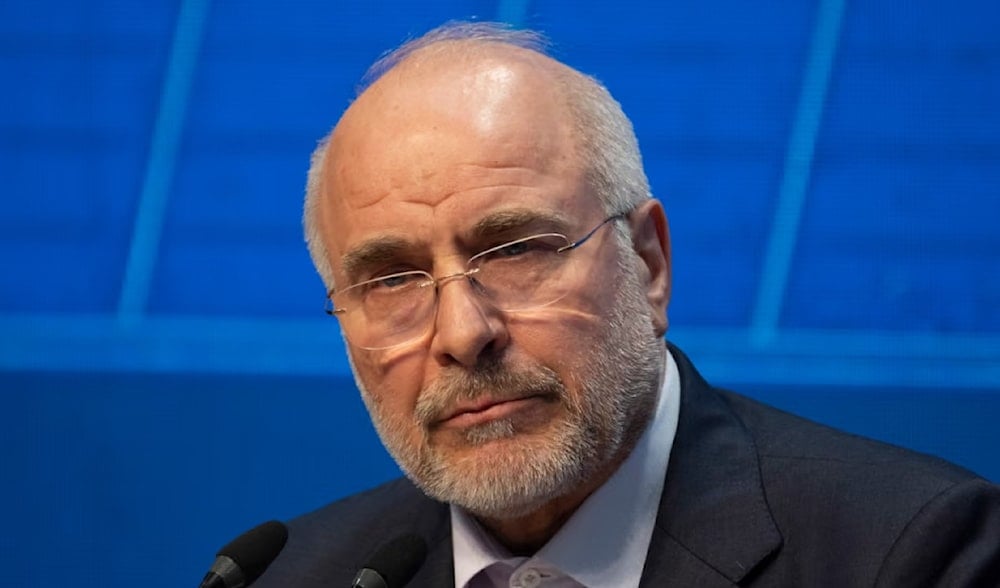
Iranian Parliament Speaker Mohammad Bagher Ghalibaf, undated. (AFP/GettyImages)
Iranian Parliament Speaker Mohammad Bagher Ghalibaf said in a statement on X on Saturday that the world is “at the cusp of a new order", describing accelerating global transformations.
Quoting Chinese President Xi Jinping, Ghalibaf referenced that "the transformation unseen in a century is accelerating across the globe", adding that Iran’s recent "70-day resistance" has contributed to this shift.
The world stands at the cusp of a new order.
— محمدباقر قالیباف | MB Ghalibaf (@mb_ghalibaf) May 16, 2026
As President Xi said “The transformation unseen in a century is accelerating across the globe,” and I emphasize that the Iranian nation’s 70-day resistance has accelerated this transformation.
The future belongs to the Global South.
He added that "the future belongs to the Global South".
Ghalibaf's statement comes after Chinese President Xi Jinping received US President Donald Trump in Beijing on Thursday, where the two discussed improving trade relations, Taiwan, and the risk of strategic rivalry escalating between the world’s two largest economies.
During the US-Israeli war, Iran has proved resilient to the aggression and pressure, maintaining full leverage over the Strait of Hormuz.
Iran's Hormuz leverage reshaping global power balance
In an opinion piece published in The New York Times last month, writer Robert A. Pape argues that the global balance of power is undergoing a structural shift, with Iran emerging as a new center of influence not through economic or military dominance, but through its leverage over critical energy routes.
Pape contends that long-standing assumptions about global power, centered on the United States, China, and Russia, are becoming outdated. Instead, he points to Iran’s position along the Strait of Hormuz as a decisive factor in reshaping geopolitical dynamics. The waterway, which carries roughly one-fifth of the world’s oil and liquefied natural gas, has come under tighter strategic control amid ongoing US-Israeli aggression on Iran, with Iranian retaliatory measures reshaping the terms of access and navigation.
According to the analysis, Iran has effectively established a form of selective control over the strait without fully shutting it down.
The analysis also highlights converging interests among Iran, Russia, and China. While not necessarily forming a formal alliance, each stands to benefit from current conditions, whether through elevated energy prices, strategic positioning, or expanded access to supply.


