Al Mayadeen English

  • Ar
  • Es
  • x
Al Mayadeen English

Slogan

  • News
    • Politics
    • Economy
    • Sports
    • Arts&Culture
    • Health
    • Miscellaneous
    • Technology
    • Environment
  • Articles
    • Opinion
    • Analysis
    • Blog
    • Features
  • Videos
    • NewsFeed
    • Video Features
    • Explainers
    • TV
    • Digital Series
  • Infographs
  • In Pictures
  • • LIVE
News
  • Politics
  • Economy
  • Sports
  • Arts&Culture
  • Health
  • Miscellaneous
  • Technology
  • Environment
Articles
  • Opinion
  • Analysis
  • Blog
  • Features
Videos
  • NewsFeed
  • Video Features
  • Explainers
  • TV
  • Digital Series
Infographs
In Pictures
  • Africa
  • Asia
  • Asia-Pacific
  • Europe
  • Latin America
  • MENA
  • Palestine
  • US & Canada
BREAKING
Trump to Fox News: The US will sink Iranian ships if they attempt to break the blockade
US President Trump tells Fox News he's inclined to resume strikes against Iran after the new year if no deal is reached
More than 12 drone boats intercepted off the coast of Benghazi by Libyan naval and air forces: Two Libyan military sources
Commercial vessel flying Maltese flag targeted by suicide drone boat off the coast of Libya's Benghazi: Two Libyan military sources
IRGC: The US drone shot down by Iranian air defenses was an advanced MQ-1 ER (Extended Range) reconnaissance and combat drone
Iran's IRGC: We shot down a US MQ-1 drone east of the Strait of Hormuz, the 20th of its kind to be downed
Yemeni Armed Forces: We targeted a radar installation in the Al-Dawasir area, south of Riyadh, in two successive waves, successfully achieving the operation’s objective
Yemeni Armed Forces: We targeted the Saudi Aramco refinery in Rabigh on the Red Sea, scoring a direct hit
Saba News Agency in Sanaa: Saudi attacks target the Al-Hussein Medical City project in Saada, northern Yemen
Yemen's Health Ministry: A female doctor and a child injured in a Saudi airstrike near a health center in the Al-Aboos area of Hayfan district, south of Taiz Governorate

Iran's Hormuz leverage reshaping global power balance: NYT

  • By Al Mayadeen English
  • Source: New York Times
  • 7 Apr 2026 17:03
  • 1 Shares
3 Min Read

An NYT opinion piece argues that Iran’s growing leverage over the Strait of Hormuz is reshaping global power dynamics by disrupting energy flows and challenging US dominance.

Listen
  • x
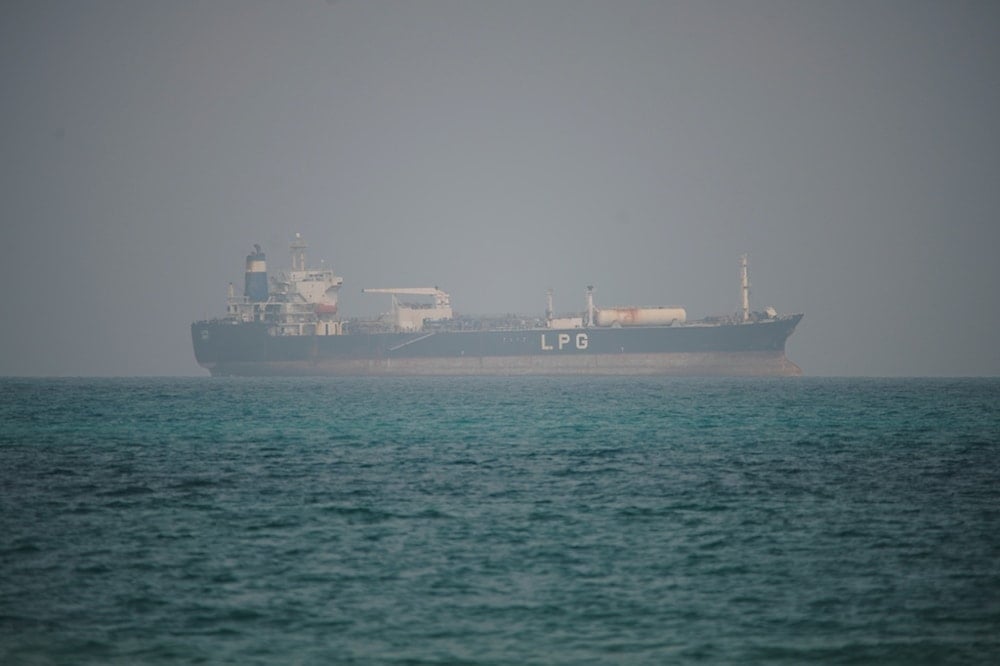
  • An LPG (liquefied petroleum gas) tanker sails in waters north of the Bab el-Mandeb Strait in Mokha, Yemen, Monday, April 6, 2026. (AP Photo/Abdulnasser Alseddik)
    An LPG (liquefied petroleum gas) tanker sails in waters north of the Bab el-Mandeb Strait in Mokha, Yemen, Monday, April 6, 2026 (AP Photo/Abdulnasser Alseddik)

In an opinion piece published in The New York Times on Tuesday, writer Robert A. Pape argues that the global balance of power is undergoing a structural shift, with Iran emerging as a new center of influence not through economic or military dominance, but through its leverage over critical energy routes.

Pape contends that long-standing assumptions about global power, centered on the United States, China, and Russia, are becoming outdated. Instead, he points to Iran’s position along the Strait of Hormuz as a decisive factor in reshaping geopolitical dynamics. The waterway, which carries roughly one-fifth of the world’s oil and liquefied natural gas, has come under tighter strategic control amid ongoing US-Israeli aggression on Iran, with Iranian retaliatory measures reshaping the terms of access and navigation.

Strait control dynamics

According to the analysis, Iran has effectively established a form of selective control over the strait without fully shutting it down. While tankers continue to pass through, traffic has sharply declined due to heightened risks. “You can control the strait without closing it,” Pape notes, explaining that intermittent attacks and credible threats have been sufficient to drive up insurance costs and deter shipping.

The disruption has exposed what the author describes as a fundamental asymmetry: securing uninterrupted maritime flows requires constant military coverage, whereas limited, sporadic strikes are enough to undermine confidence in the route. This dynamic, he argues, places the United States and its allies at a disadvantage.

Pape further suggests that the implications extend beyond immediate military concerns. Energy markets rely not only on supply, but on reliability. As uncertainty increases, insurance premiums rise, freight costs escalate, and governments begin treating energy access as a strategic vulnerability rather than a routine market function.

Shifting energy order

The piece also points to shifting regional calculations. Gulf states, heavily dependent on stable exports, may be compelled to adjust their policies in response to persistent instability, potentially accommodating Iran’s growing influence. At the same time, major Asian economies, including China, India, Japan, and South Korea, face heightened exposure due to their reliance on Gulf energy.

Pape warns that prolonged disruption could trigger broader economic consequences, including inflationary pressures, currency strain, and deteriorating trade balances. He draws parallels to past oil shocks, suggesting that sustained instability could revive conditions resembling the stagflation of the 1970s.

The analysis also highlights converging interests among Iran, Russia, and China. While not necessarily forming a formal alliance, each stands to benefit from current conditions, whether through elevated energy prices, strategic positioning, or expanded access to supply.

Energy crossroads

In a more speculative scenario, Pape raises the possibility of a de facto energy bloc capable of restricting supply to Western markets, a development he says would carry severe consequences for the United States and Europe.

Ultimately, the author frames the situation as a strategic crossroads for Washington: either commit to a prolonged effort to secure the Strait of Hormuz or adapt to a new global energy order in which American dominance is no longer guaranteed. He concludes that the outcome of the current war could have lasting effects, arguing that “this is a transformational war” with the potential to reshape the international system if current trends persist.

Read more: Beyond rescue: The hidden objectives behind the US mission in Isfahan

  • United States
  • global power shift
  • Strait of Hormuz
  • energy security
  • Iran

Most Read

A view of Iran's nuclear enrichment facility in Natanz, Iran, on April, 9, 2007 (AP)

Iran announces first nuclear fusion reactor, set to operate soon

  • Technology
  • 15 Nov 2026
A document that was included in the U.S. Department of Justice release of the Jeffrey Epstein files, photographed Wednesday, Feb. 4, 2026, shows an April 2012 International Driving Permit for Epstein. (AP)

Epstein was strangled, forensic expert says after file review: BBC

  • Miscellaneous
  • 16 Nov 2026
Iranian Professor of English Literature and Orientalist Studies at the University of Tehran, Mohammad Marandi (Al Mayadeen)

Iran will not wait for 'bombs to fall' to retaliate | Excl.

  • Politics
  • 19 Nov 2026
IRGC camera footage shows the moment a US F-16 fighter jet was intercepted by Iran's air defenses over the Persian Gulf, released on Saturday, November 21, 2026 (Screengrab)

IRGC intercepts US F-16 fighter jet over Gulf: Footage

  • Politics
  • 21 Nov 2026

Coverage

All
US Midterm Elections 2026

Read Next

All
Kirsten Davies, then the Pentagon’s chief information officer, poses for an official portrait in Arlington, Virginia, on February 9, 2026. (US Army)
Politics

Trump cyber pick sat on board of former Israeli Unit 8200 chief's firm

Larry Johnson, former CIA analyst, on Al Mayadeen's The Grand Standoff on Saturday, November 22, 2026. (Al Mayadeen English)
Politics

China warned Trump not to touch Iran’s oil tankers: Johnson | Excl.

SOHR logs 97 Israeli incursions in South Syria in 20 days
Politics

Israeli forces bar Syrian farmers from harvesting olives in Quneitra

Iran warns US bases 2,000 km away offer no protection
Politics

Iran warns US bases 2,000 km away offer no protection

Al Mayadeen English

Al Mayadeen is an Arab Independent Media Satellite Channel.

All Rights Reserved

  • x
  • Privacy Policy
  • About Us
  • Contact Us
  • Authors
Android
iOS