
FIFA faces weak demand for some 2026 World Cup matches
 3 Min Read
High ticket prices and FIFA's expanded 48-team format have contributed to weak demand for several early 2026 World Cup matches in the United States.
-
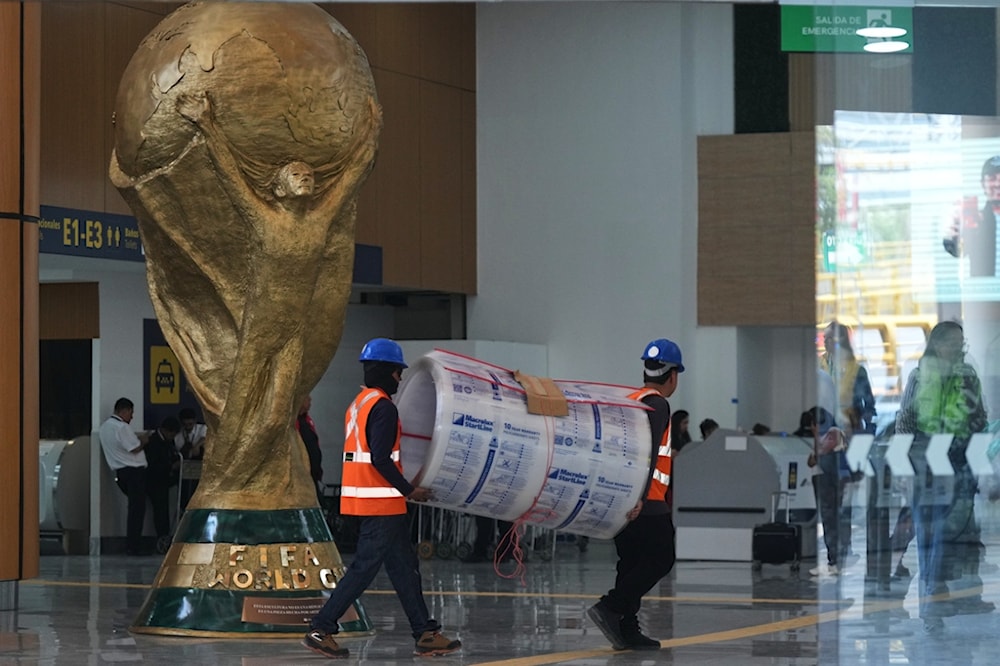
Workers transport a roll of foam next to the FIFA World Cup trophy during a guided media tour of the renovation site at Benito Juárez International Airport, in preparation for the 2026 World Cup, in Mexico City, on Tuesday, May 19, 2026 (AP)
Thousands of seats remain unsold for several early 2026 FIFA World Cup matches in the United States, according to Newsweek, fueling criticism of FIFA’s ticket pricing strategy ahead of the tournament’s June kickoff.
The expanded tournament, scheduled from June 11 to July 19 across the United States, Canada, and Mexico, will feature 48 national teams and 104 matches, making it the largest World Cup ever held.
Under the new competition format, teams will compete in 12 groups, with the top two teams from each group and the eight best third-placed sides progressing to the round of 32.
Despite expectations of record-breaking attendance, a number of group-stage fixtures are still showing large blocks of available seats only weeks before the opening match.
The ticketing controversy has also triggered broader criticism of FIFA over what many supporters and analysts describe as the growing commercialization of the World Cup, with fans accusing the organization of turning the tournament into a luxury event increasingly inaccessible to ordinary supporters.
Rights groups and advocacy organizations have additionally raised concerns surrounding visa restrictions, immigration enforcement policies in the United States, and accessibility issues for disabled fans ahead of the tournament.
World Cup oversupply
Data compiled by FIFA Ticket Scout indicated that at least nine group-stage games currently still have more than 1,000 tickets available, including matches in Los Angeles, San Francisco, Atlanta, Houston, Vancouver, and Philadelphia.
The situation has intensified debate over FIFA’s pricing model after resale values for certain matches fell sharply on secondary markets.
One of the most notable examples involved the June 22 group-stage clash between Jordan and Algeria in the San Francisco Bay Area, where resale tickets were listed for under $100, while TicketData estimated the average lowest resale price across group-stage fixtures at roughly $559.
Analysts and ticketing experts have argued that FIFA significantly overvalued tickets for many matches.
“FIFA priced tickets too high for all 104 games, complete disaster, and they will be forced to drop them all greatly in next 30+ days. A terrible overall ticketing distribution execution for the world’s biggest sporting tournament,” Ticket Talk host Scott Friedman previously told Newsweek.
FIFA: “We are going to drop new tickets!”
— AP Soccer (@AP_Soccer_) May 11, 2026
*5 days later*
FIFA continues to drop tickets unannounced. Way more Cat 3 front rows than on the drop last week.
This isn’t new, but it somehow keeps blowing my mind an organization that did this so well is screwing everyone in 2026. pic.twitter.com/klObbaL4aa
Among the matches still showing substantial availability are the June 12 meeting between the United States and Paraguay in Los Angeles, with 2,249 seats remaining and the cheapest listed ticket at $1,940, as well as Curaçao versus Côte d’Ivoire in Philadelphia on June 25, where more than 3,500 seats were reportedly still unsold.
Other fixtures with large ticket inventories include Austria versus Jordan in San Francisco, Czechia against South Africa in Atlanta, Canada versus Qatar in Vancouver, and DR Congo against Uzbekistan in Atlanta.
Carbon concerns
The 2026 tournament marks the first World Cup under FIFA’s expanded 48-team structure, a move supporters say broadens global participation but critics argue risks diluting demand for certain group-stage encounters, particularly in large North American stadiums.
Environmental groups have also warned that the tournament’s scale and the vast travel distances between host cities could make the 2026 edition one of the most carbon-intensive World Cups in history.
Read more: 'Qualification on pitch': Italy rejects US Iran swap request at WC


