
FIFA under fire over unpaid $1mln to each World Cup host city
 4 Min Read
FIFA faces pressure from 11 US cities that hosted 2026 World Cup matches over unpaid $1 million legacy contributions promised for community projects and mini-pitches.
-
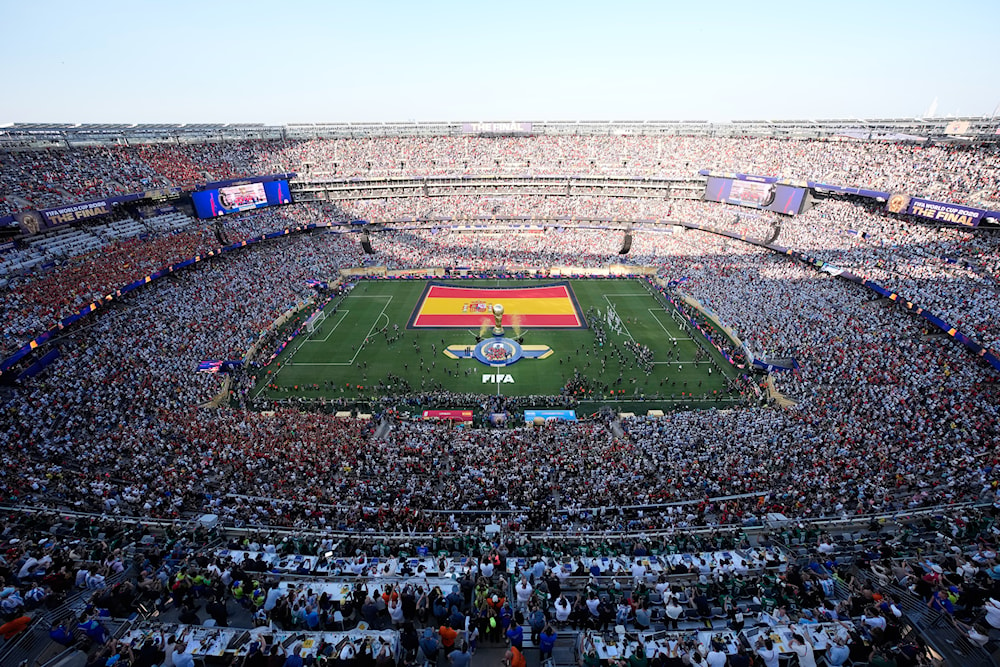
Spain's Rodri lifts the trophy with teammates after the World Cup final soccer match between Spain and Argentina in East Rutherford, N.J., near New York, Sunday, July 19, 2026 (AP)
Multiple US cities that hosted matches during the 2026 World Cup are pursuing FIFA for millions of dollars they say were promised by soccer's governing body but have so far gone unpaid, The Athletic reported.
The dispute centers on $1 million "legacy contributions" that officials from 11 US host cities claim FIFA's senior management verbally assured them they would receive.
The funds were intended for building mini-pitches and supporting community social projects, following a public announcement by FIFA President Gianni Infantino before the 2025 Club World Cup that FIFA would contribute $1 million to each of the 11 cities hosting matches during that tournament.
Host cities say FIFA reneged on million-dollar pledges
According to four executives at US host city committees, all of whom asked to remain anonymous to protect relationships, FIFA management repeatedly assured the cities they would receive the same $1 million contribution toward legacy, despite no public statement ever being made by the organization.
The four executives said this promise was made verbally by members of FIFA's senior management and reiterated to cities in meetings, but it has not been paid, meaning several cities are now asking FIFA staff for updates on the payments.
The World Cup host cities in the US were Seattle, San Francisco Bay Area, Los Angeles, Dallas, Houston, Kansas City, Atlanta, Philadelphia, New York/New Jersey, Miami and Boston.
Winding operations complicate effort to collect payments
The challenge is exacerbated for the cities as some host committees are now winding up operations following the tournament, making it difficult to determine which vehicle would now be best placed to benefit from the payments. Others are seeking to draw up financial reports to their jurisdictions and authorities but do not have certainty over whether to include the payments.
Two host city executives told The Athletic they found it difficult to understand how FIFA, an organization which celebrated revenues in excess of $15 billion for the revenue cycle 2023-26, would be stalling or being non-committal on these relatively minor payments to cities who subsidized their tournament and helped FIFA maximize returns. FIFA's operating budget for the tournament was around $2.7 billion.
The unpaid funds represent one of several mounting issues for Infantino, who is facing pressure from the European confederation UEFA and some of its global counterparts following the collapse of his proposal to sell a stake in FIFA's competitions and events to private investors.
Public footing bill in billions while FIFA reaps revenue
The US taxpayer contributed significantly to the direct and indirect costs of the 2026 tournament, with expenses running into the billions across security, transportation, logistics, and operations. FIFA took the vast majority of the revenue from World Cup ticketing, media rights, sponsorship, concessions, and parking, while cities were responsible for the bulk of the costs.
As a case study, the Kansas City host committee for the World Cup told The Athletic it has received $42.5 million from the State of Missouri, $28 million from the State of Kansas, $14.8 million from Kansas City, Missouri, and a further $1.5 million from other public sources, totalling $86.8 million of public investment.
Host city obligations also included special access traffic lanes and police escorts for FIFA-designated VIPs, six-figure costs of making "clean stadiums" and wiping any signs of non-FIFA branding, as well as the additional $13 million injection to ensure MetLife Stadium had a pitch worthy of hosting the World Cup final on July 19.
The lead-up to the tournament was often a story of mounting costs and mounting frustration at just who was footing the bill for the biggest sports event on the planet, but FIFA and host cities argued there would be a huge return for the US via the economic impact of tourism and events across the country, with FIFA championing a report which claimed $30.5 billion would be injected into the US economy.


