
ICE has eyes locked on World Cup fans during matches
 4 Min Read
Rights groups warn that US visa bans and potential ICE raids could cast a shadow over the 2026 FIFA World Cup hosted across the US, Mexico, and Canada.
-
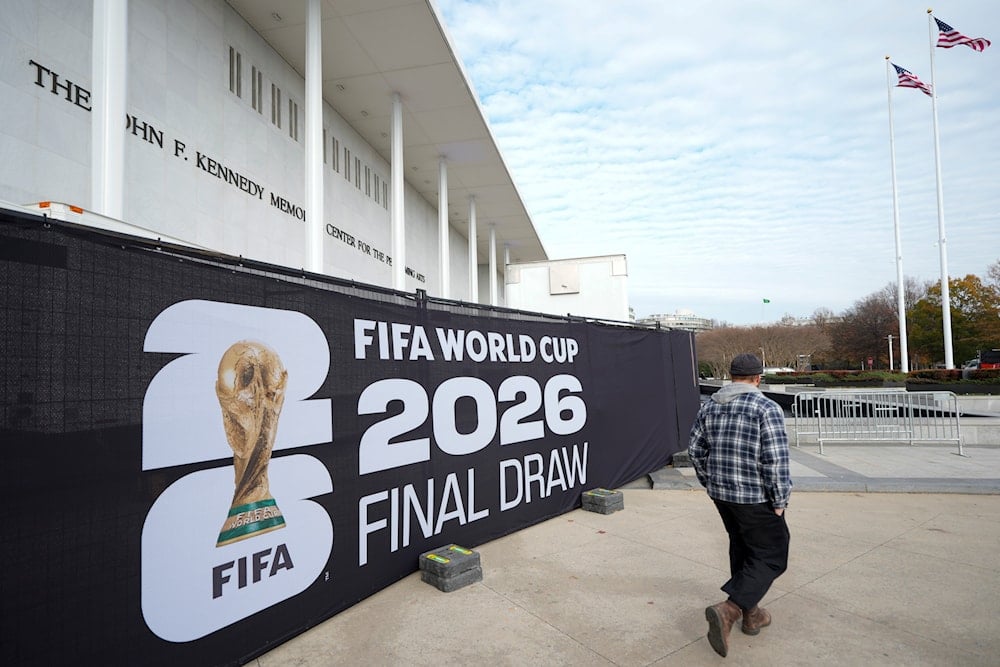
A man walks past signage prior to the final draw for the 2026 soccer World Cup at the Kennedy Center in Washington, Thursday, Dec. 4, 2025 (AP)
US organizers of the 2026 FIFA World Cup are facing mounting criticism after a senior White House official signaled that immigration raids and tightened visa restrictions could form part of the security approach during the tournament.
Andrew Giuliani, who heads the White House task force on the World Cup, told The Times that Immigration and Customs Enforcement (ICE) operations at stadiums or in surrounding areas had not been ruled out. He said supporters considered a “potential threat” would not be granted visas, a stance that appears to contradict President Donald Trump’s assurances that fans would be welcomed “without discrimination".
Giuliani said the administration would consider any measure it believed would enhance public safety, telling the newspaper, “The one thing, and I've known the president for 25 years, the president has not ruled out anything that will make American citizens safer.”
HRW warns of US approach
Human rights advocates warn the proposed approach could cast a shadow over what is expected to be the largest World Cup ever staged, expanding to 48 teams and hosted across the United States, Mexico, and Canada. Minky Worden, director of global initiatives at Human Rights Watch, cautioned in a Newsweek op-ed that international visitors might face interrogation, detention, or visa denials “for their social media posts.”
With US officials projecting between 5 and 7 million foreign fans will travel to the United States alone, the growing tension between the tournament's inclusive marketing and Washington’s stricter migration posture has alarmed immigrant communities, civic groups, and host-city leaders.
Concerns have been particularly acute among Latino residents and fans from countries already affected by US visa restrictions or lengthy processing delays.
Giuliani’s latest remarks have intensified those fears as cities prepare for the global event. The World Cup draw, which will place qualified teams into 12 groups of four, is set for Friday at the Kennedy Center in Washington, DC.
Trump's promises clash with his policies
Trump has repeatedly promoted the 2026 World Cup as both an economic windfall and a soft-power victory for the United States, recently telling the White House World Cup task force that the event would be “the biggest, safest and most extraordinary soccer tournament in history.” Yet the administration’s travel ban continues to bar ordinary visitors from a number of countries, including Iran and Haiti, and imposes strict limitations on several others, even as it grants exemptions for athletes and accredited staff at “major sporting events” such as the World Cup and the 2028 Olympics.
Giuliani, the son of former New York Mayor Rudy Giuliani, told The Times that fans from Haiti and Iran, whose national teams have already qualified, would be blocked from attending because their countries are included on a list of 19 nations subject to a total visa ban. According to the newspaper, Trump is expected to expand that list to 30 following the November 26 shooting of two National Guard members in Washington, DC, potentially shutting out supporters of additional qualified teams.
The fallout is already being felt ahead of Friday’s World Cup finals draw in Washington, DC, Iran announced it would boycott the ceremony after the US denied visas to several members of its delegation, including federation president Mehdi Taj. “The decisions taken have nothing to do with sports,” an Iranian federation spokesperson told state television in declaring the delegation’s withdrawal.
As criticism intensifies, Giuliani has defended the administration’s approach, insisting that “every visa is a national security decision first and foremost” and drawing a stark distinction between visitors he described as welcome and those he labeled risks. “If you are a potential threat, you're not going to get approved. … If you're coming here to enjoy, spend your disposable income, enjoy the United States of America, you're welcome,” he told The Times.


