
Meta halts part of 2Africa subsea cable project amid war on Iran
 4 Min Read
Meta pauses work on part of the 2Africa subsea cable project after the US-Israeli war on Iran disrupted installation of the major Africa-Europe internet link.
-
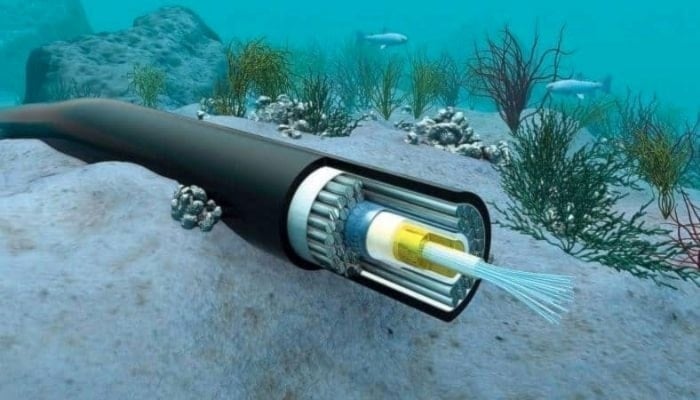
Illustration of the 2Africa subsea cable project, undated (2africacable)
Meta Platforms has paused part of its 2Africa subsea cable project after the US-Israeli war on Iran triggered global unrest, leading to the disruption of work on a key segment of the massive undersea internet system, Bloomberg reported.
The pause affects part of the planned 45,000-kilometre fibre-optic network, which is expected to become the world’s largest submarine internet cable system linking Africa with Europe and West Asia.
The disruption comes less than six months after Meta said another section of the Meta Africa internet cable project had already been delayed due to geopolitical tensions in the region.
The 2Africa subsea cable is being developed by a consortium of companies that includes Meta and Saudi Telecom Co.’s Center3. The system is designed to connect countries along the entire African coastline with Europe and parts of West Asia, significantly expanding internet capacity across the region.
The consortium had planned to launch the Gulf Seasegment of the cable as early as this year, which would pass through landing stations in Oman, the United Arab Emirates, Qatar, Bahrain, Kuwait, Iraq, Pakistan, India, and Saudi Arabia.
War disrupts installation in the Gulf
However, Alcatel Submarine Networks (ASN), the French state-owned company responsible for installing the cable, has halted operations in the area due to security concerns linked to the ongoing war.
People familiar with the matter said ASN issued force majeure notices to customers, stating that it cannot currently fulfill some of its cable contracts due to the war, Bloomberg added.
ASN’s cable-laying vessel, Ile De Batz, which had been operating in the Gulf in recent months, is now stranded near Dammam in Saudi Arabia. Although a large portion of the 2Africa subsea cable has already been laid on the seabed, several sections have not yet been connected to landing stations.
Two segments remain unfinished: the "Pearls" section in the Gulf and another stretch in the Red Sea.
It is worth noting that subsea cables are critical to global communications; they carry more than 95 percent of international internet traffic, making them the fastest and most widely used method for transmitting data between continents.
The disruptions caused by the war highlight the global internet infrastructure risks associated with military confrontations. "Cable ships are not going to operate in areas where active military operations are happening. It’s too risky," said Alan Mauldin, an analyst at telecommunications research firm TeleGeography.
On a similar note, the 2Africa cable delay followed earlier disruptions linked to escalations in the Red Sea, which made it difficult to obtain installation permits at the time. Mauldin said several cables damaged by escalations in early 2025 were repaired only in recent months, underscoring the ongoing Red Sea submarine cable disruptions affecting regional connectivity.
Technology companies reconsider infrastructure routes
Experts warn that the war is forcing technology companies to reconsider how they build and protect subsea internet cables.
For decades, the Red Sea has been one of the most direct and cost-effective routes for connecting Europe with Asia and Africa through submarine cable networks. However, growing security threats have pushed companies to explore alternative routes.
Before the US-Israeli war against Iran, the Gulf had become a preferred alternative corridor for several cable projects, such as the Sea-Me-We 6 cable, a project backed by a consortium that includes French telecom company Orange. Another project, known as FIG, led by Qatari telecom firm Ooredoo, has also been paused.
Industry experts warn that the war could make it harder to repair cables already operating in the region.
For now, internet traffic can still be redirected through other submarine cables and land-based networks across Oman and Saudi Arabia, Mauldin said. However, this rerouting could slow internet speeds in some areas.


