
Russia's GLONASS operator plans IPO to boost tech sovereignty drive
 4 Min Read
Russia's state-run GLONASS operator is preparing an IPO to raise capital for expanding satellite-based navigation, unmanned transport, and broader technological sovereignty projects.
-
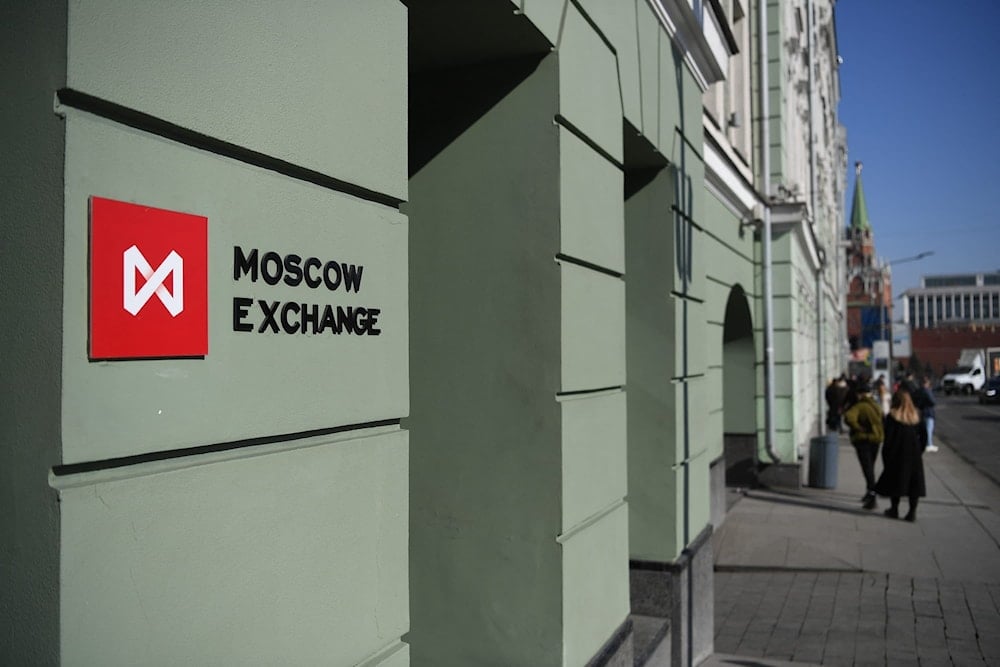
A view of the Moscow Exchange Office in Moscow, Russia, in March 2022. (AFP)
Russia's state-owned satellite navigation company JSC GLONASS is positioning itself for a public listing, aligning with the Kremlin's renewed effort to channel domestic investment into high-priority technological sectors.
CEO Alexey Raikevich confirmed in an interview with RIA Novosti that the firm is preparing the procedural groundwork for its debut on Russia's stock exchanges. "As a company with 100 percent state ownership, we plan to pursue an IPO within the next three years. We are currently preparing the program for approval by the board of directors," he said.
Raikevich explained that equity financing would give ERA-GLONASS the resources needed to scale several projects already underway across Russia's transport and communications infrastructure. "Raising equity capital would accelerate the implementation of technological sovereignty initiatives in communications and navigation tools based on the ERA-GLONASS system, as well as in high precision positioning and unmanned transport," he noted.
A Strategic Asset in Russia's Navigation Ecosystem
ERA-GLONASS, Russia's analogue to the EU's eCall system, is an emergency response and telematics platform built atop the country's GLONASS satellite navigation constellation. It automatically transmits crash data and coordinates to emergency services, but its civilian and commercial uses have expanded dramatically over the past decade.
The platform underpins:
- nationwide vehicle tracking and fleet management tools
- logistics and cargo monitoring systems
- geofencing and hazard-alert mechanisms
- data frameworks for future autonomous vehicle deployment
The Ministry of Industry and Trade has previously emphasized that ERA-GLONASS is a foundational system for Russia's next generation of intelligent transport corridors. Its integration into smart-city initiatives in Moscow, Kazan, and St. Petersburg continues to grow.
Rising Revenues Support IPO Ambitions
JSC GLONASS has been recording strong financial growth. Russian business media report that its revenue more than doubled in 2023, driven by expanded commercial partnerships with automotive manufacturers, large logistics operators, and insurance companies. Industry analysts say the company's balance sheet now positions it as one of the more stable technology-sector candidates for a domestic IPO.
Part of a Bigger Shift in Russia's Capital Markets
The plan emerged shortly after President Vladimir Putin used the VTB “Russia Calling!” investment forum to urge a new wave of listings by state-run enterprises. During his address, Putin directed the government to draw up a systematic timetable for public offerings, describing them as a mechanism to secure long-term funding and broaden Russian retail participation in the market.
The finance ministry and the Federal Agency for State Property Management have both indicated that they expect several major state companies, including those in energy, transport, and digital infrastructure, to follow suit. Analysts say the move reflects Moscow's pivot toward self-financing amid restricted access to Western capital markets.
Expanding the GLONASS Ecosystem
Beyond emergency response, the GLONASS program has been rapidly modernizing. Russia is currently deploying new-generation satellites with improved accuracy and resistance to jamming, a feature highlighted as essential given the increasing use of electronic warfare in global conflicts. The government has also been investing in domestic microelectronics production to reduce reliance on imported components and keep the satellite network resilient.
An IPO for JSC GLONASS would therefore serve two functions: raising capital for expansion and showcasing a flagship example of Russia's drive for technological autonomy.
Outlook
If approved and executed, the offering would be targeted at Russian institutional investors and a growing base of retail traders. For Moscow, the listing would signal confidence in the country's high-tech sector and in the long-term profitability of satellite navigation, intelligent transport systems, and autonomous mobility, all areas central to Russia's broader economic strategy through 2030.
Read more: Russia must increase satellites in orbit fivefold: Roscosmos chief


