
Trump’s AI panic: China must not win the race, he warns
 2 Min Read
Trump frames AI and crypto as a high-stakes contest with China, again casting US leadership as a race America simply cannot afford to lose.
-
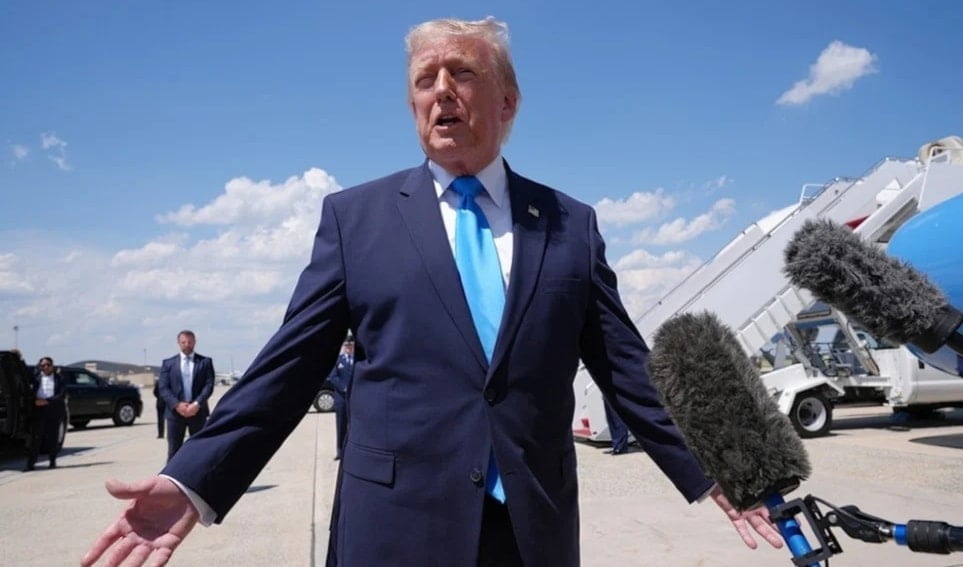
US President Donald Trump speaks to the press at Joint Base Andrews, Maryland, May 20, 2026 (AP)
US President Donald Trump said Friday that the United States cannot afford to let China establish dominance in artificial intelligence and cryptocurrency.
"We don't want to see China take over crypto. I don't want to see China win with AI," Trump told Punchbowl News in an interview published Friday.
"I mean I see it more and more where people are paying with Bitcoin and you know they don't even know about cash anymore," he added.
US holds AI lead, Trump claims
Trump claimed that Washington currently has the advantage over Beijing in the artificial intelligence race.
The president emphasized the stakes of that competition, saying the country that prevails in AI will come out on top.
He described the technology as "by many times" bigger than the internet and said it would exceed anything people had previously imagined.
Trump calls for data center investment
Trump said that, if he were a governor, he would work to attract data centers by lowering taxes, describing the facilities as a significant source of revenue.
"We can't let China beat us at this," he added.
Trump’s remarks come as his administration moves to tighten controls on Chinese technology used in data centers. Four people familiar with the matter told Reuters on Wednesday that Washington is drafting a ban on US imports of new models of Chinese data center components, as the administration seeks to safeguard the infrastructure underpinning the rapid expansion of artificial intelligence.
What you need to know
China’s rapid progress in artificial intelligence is increasingly complicating Washington’s efforts to maintain its lead.
The recent emergence of Chinese open-source models such as Moonshot AI’s Kimi K3, which can compete with some leading US systems, has unsettled Silicon Valley and intensified debate in Washington over how to respond.
In short, the advances come alongside broader progress in China’s AI, chip manufacturing and robotics industries, underscoring the scale of the technological challenge facing the US.


