
Central banks increase gold purchases for third straight month
 4 Min Read
Global central banks bought 51 tonnes of gold in June, with Poland and China leading purchases as demand for reserves continued to rise.
-
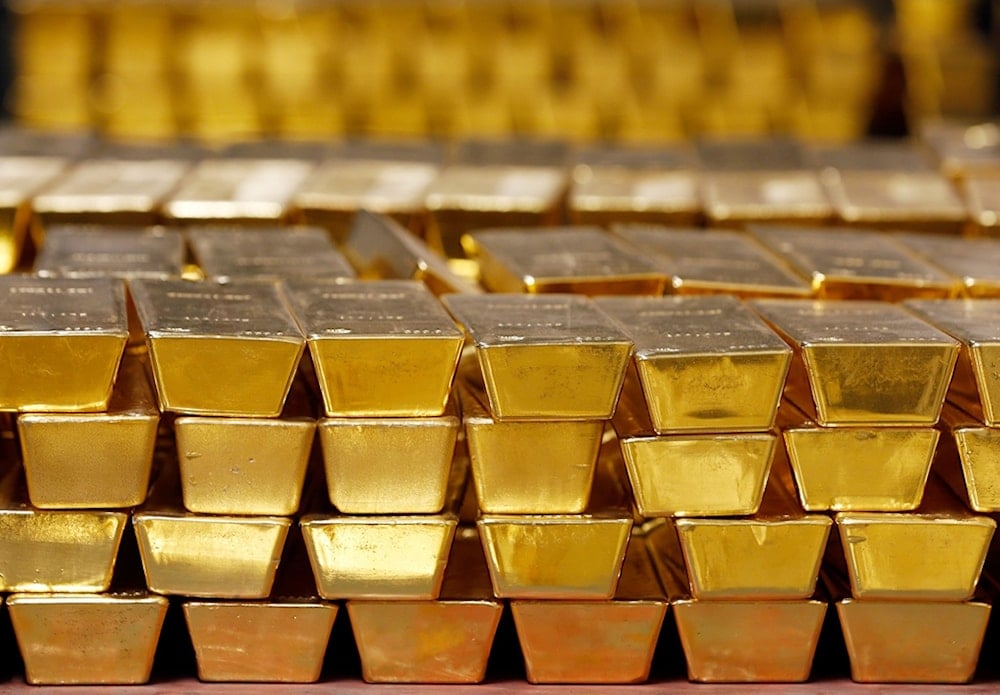
Gold bars are stacked in a vault at the United States Mint on July 22, 2014, in West Point, New York (AP)
Central banks around the world continued increasing their gold holdings in June, marking the third consecutive month of net purchases, according to the World Gold Council (WGC).
Global central banks bought 51 tonnes of gold during the month, with Poland and China remaining the largest buyers, while several emerging market central banks also added to their reserves.
The WGC said buyers in June included Uzbekistan, Kazakhstan, Jordan, Czech Republic, Ghana, and Georgia, while Russia and Turkey recorded net gold sales.
"As of H1 2026, reported central bank buying reached 102t, with purchases spread across a broad cohort of emerging market central banks," the WGC said in its monthly report.
Poland, China lead central bank gold purchases
The National Bank of Poland was the largest gold buyer in June, adding 19 tonnes to its reserves, followed by the People's Bank of China, which purchased 15 tonnes.
China extended its gold-buying streak to 20 consecutive months, while Uzbekistan and Kazakhstan continued their accumulation trend with purchases of 9 tonnes and 7 tonnes respectively.
Jordan, Georgia, and Ghana also returned to the gold market, purchasing 3 tonnes, 1 tonne, and 1 tonne respectively.
The latest figures followed a month in which global central banks recorded 41 tonnes in net gold purchases, according to the WGC.
Turkey, Russia reduce gold holdings
Turkey’s central bank remained the largest gold seller in the first half of the year, with net sales totaling 83 tonnes, most of which occurred during the first quarter.
During the second quarter, Turkey sold 4 tonnes of gold, while the WGC noted a reduction in swap volumes at the end of June.
Russia’s gold net sales reached 44 tonnes since the start of the year, according to the organization.
Turkey’s central bank entered 2026 with record international reserves of $218 billion, according to official data. Governor Fatih Karahan previously said the country’s gold holdings had doubled since 2016, reaching levels where gold accounted for more than 60% of reserves as of March 2026.
Media reports have indicated that tens of billions of dollars in reserves were later used to support the Turkish lira, with foreign exchange interventions and swap operations reportedly reducing international reserves by around $55 billion in March alone.
Why central banks are turning to gold
The acceleration traces back to a single decision. When Washington froze roughly 300 billion dollars in Russian foreign exchange reserves following the onset of the Russia-Ukraine war in 2022, it sent an unambiguous message to governments around the world that assets held in dollars abroad are not beyond reach.
Since that moment, central banks have bought gold at historically elevated rates, exceeding a thousand tonnes per year for three consecutive years before slowing slightly to 850 tonnes in 2025. Gold stored domestically carries no counterparty risk and cannot be frozen through international payment systems.
Price appreciation has also done significant work. Gold has nearly doubled in value over the past two years, hitting more than 5,500 dollars per troy ounce in January, meaning that a large portion of gold's rising reserve share reflects valuation gains rather than new purchases alone.
A geopolitical fault line in the Treasury market
Foreign holdings of US Treasuries tell a similarly divided story, whereby Western allies remain the anchors of demand.
Japan holds 1.2 trillion dollars in US government debt, the United Kingdom holds around 900 billion, and European Union member states collectively account for roughly a quarter of all foreign Treasury holdings.
China, by contrast, has reduced its exposure from a peak of around 1.3 trillion dollars to approximately 650 billion as of March 2026, the lowest level since 2008. Other BRICS members have followed a similar trajectory.
The outbreak of the US-Israeli war on Iran in early 2026 accelerated the retreat further, as Asian central banks sold dollar-denominated assets to defend their currencies against surging energy prices.
Even Tether, the private stablecoin company, purchased more gold in 2025 than most sovereign central banks, a detail that underscores how reserve dynamics are no longer an exclusively government affair.


