
Gold is stuck, but a bond market crisis could flip everything
 3 Min Read
Surging bond yields are squeezing gold despite a backdrop that should, in theory, be strongly bullish for the metal.
-
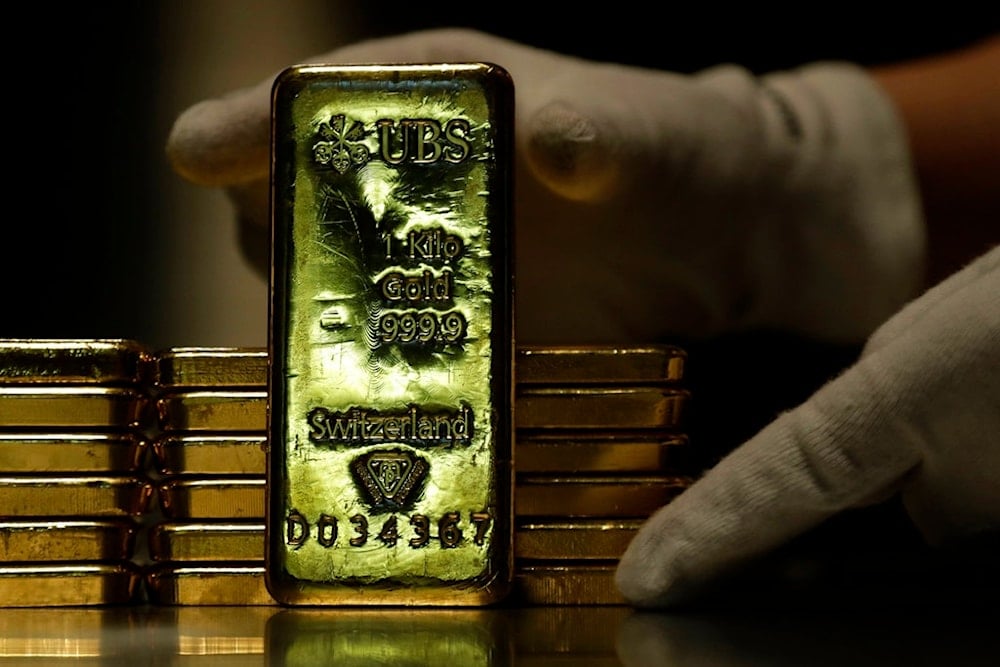
Employees of ProAurum gold house prepares 1 Kg gold bars of 999.9 purity in the safe deposit boxes room in Munich, Germany, Thursday, Dec. 13, 2018. (AP Photo/Matthias Schrader)
Gold is trading at roughly $4,493 an ounce, down more than 16% from its all-time high of $5,595 hit in late January, unable to reclaim the $4,500 threshold as soaring bond yields and a surging dollar drain its appeal as a safe-haven asset.
The US-Israeli war on Iran has led to the closure of the Strait of Hormuz, sending oil prices surging past $100 a barrel and stoking inflation across the global economy. That inflation is pushing bond yields to multi-decade highs, and those yields, in turn, are the very thing keeping gold under pressure.
Ole Hansen, head of commodity strategy at Saxo Bank, explained in a recent market note that "higher energy prices feed directly into inflation and, by extension, government bond yields, while also lending support to the US dollar. This combination has created a challenging environment for bullion."
The result is a paradox. A war that would ordinarily send investors scrambling for safe-haven assets is actually working against the very asset traditionally viewed as the ultimate safe haven.
Why bond yields hurt gold, for now
The logic is straightforward. Gold pays no yield, so when a 30-year US Treasury bond pays over 5%, its highest level since the onset of the financial crisis in 2007, investors have a compelling, low-risk alternative.
Holding gold means giving that income up, and the higher the yields climb, the more expensive that choice becomes.
Writing in a note on FOREX.com, market analyst Fawad Razaqzada warned that this dynamic is approaching a tipping point, with bond markets potentially reaching a breaking point. Treasury issuance is rising rapidly at precisely the moment investors are demanding greater returns to hold long-dated debt.
"When inflation becomes more persistent, lenders demand higher long-term yields to compensate for the erosion of purchasing power," he wrote, warning that mortgage rates and government debt-servicing costs will continue to climb.
The numbers bear this out. The US budget deficit stood at roughly $1.8 trillion in fiscal year 2025. Economic analysts note that with every one basis-point rise in 10-year yields adding an estimated $3.9 billion in annual interest costs, the recent 63-basis-point rise since the war began translates to nearly $250 billion in additional yearly borrowing costs on top of an already strained fiscal picture.
The turn that could change everything
The same bond yields causing gold pain today carry the seeds of gold's next major rally.
Hansen, speaking to Kitco News, explained that "a continued rise in yields may well end up being positive for gold given the fiscal debt worries it raises." He reasons that if yields keep climbing, investors may eventually stop seeing Treasuries as a reliable safe haven and start treating US debt itself as the problem, at which point gold becomes the obvious refuge.
"For gold to regain upside momentum," Hansen said, "the market needs to see some easing in oil-driven inflation concerns, or renewed evidence that growth risks are beginning to outweigh inflation fears."


