
Hormuz crisis fuels global inflation surge as energy prices climb
 5 Min Read
The closure of the Strait of Hormuz following the US-Israeli war on Iran is driving a new global inflation wave, with rising oil prices placing central banks under renewed pressure.
-
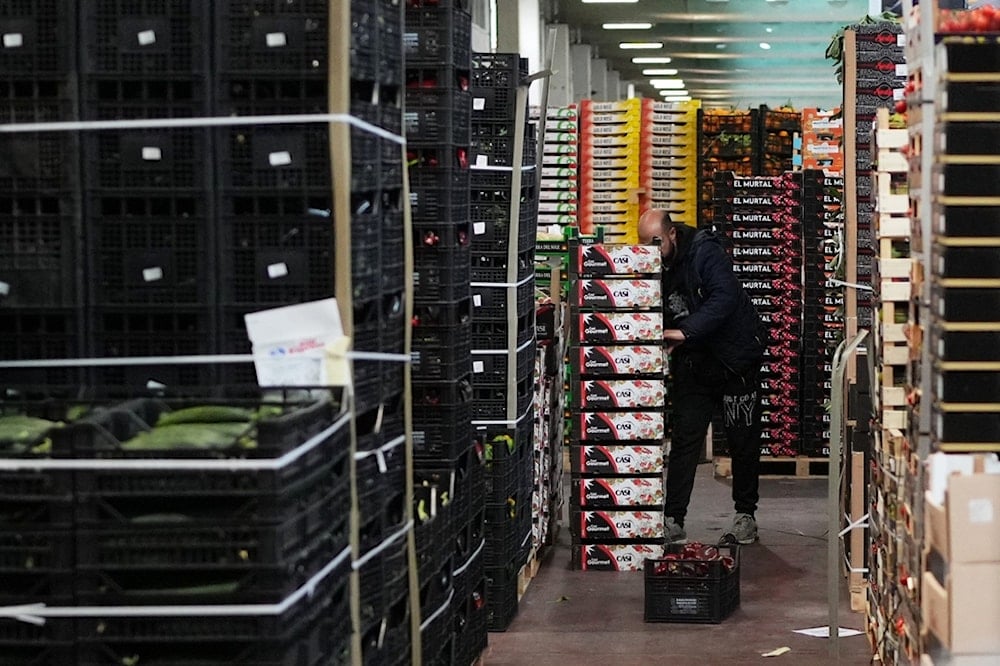
A worker piles up vegetable boxes at the Rome Agro-Food Center in Guidonia Montecelio, on the outskirts of Rome, Tuesday, May 5, 2026. (AP Photo/Alessandra Tarantino)
Global inflationary pressures are accelerating as the economic consequences of the Strait of Hormuz crisis begin filtering through international markets, with energy prices emerging once again as the central driver of rising consumer costs.
David Lubin, in an article for Chatham House, writes that fresh inflation data released across multiple economies in April points to a broad-based surge linked to escalating oil prices following the US-Israeli war on Iran and the subsequent disruption of maritime energy flows through the Strait of Hormuz.
In the United States, the Consumer Price Index rose by 0.6 percent in April, while annual inflation climbed to 3.8 percent, marking the sharpest increase since May 2023.
Elsewhere, inflation in the Philippines jumped to 7.2 percent from 4.1 percent the previous month, while Turkey’s annual inflation accelerated from 30.9 percent to 32.4 percent.
Lubin writes that the inflationary trend comes as global crude markets remain under sustained pressure. Brent crude, which averaged roughly $69 per barrel last year, is now trading closer to $100 per barrel amid continuing geopolitical instability and uncertainty surrounding energy supply routes.
Read more: US consumers paid additional $35bln in fuel costs since war began: FT
Energy prices once again dominate global inflation
The renewed inflation shock has reinforced the central role of energy prices in shaping global economic conditions, Lubin writes.
Historically, major inflationary crises have often coincided with severe disruptions in oil markets, most notably during the 1973 and 1979 oil shocks that pushed US inflation toward 15 percent by early 1980.
The article argues that despite structural changes in the world economy since the 1970s, including lower energy intensity and more disciplined monetary policy, energy costs remain decisive in driving broader inflation trends.
Recent economic cycles appear to support that assessment.
Rising energy inflation played a major role during the inflation surges of 2016–2018 and again after the COVID-19 pandemic between 2021 and 2022. Conversely, the decline in global inflation between early 2023 and the outbreak of war involving Iran in February 2026 was accompanied by prolonged declines in energy price inflation.
During that period, most months recorded falling energy price growth, helping reduce broader consumer inflation worldwide.
Central banks fear second-round inflation effects
While central banks have limited ability to directly lower oil prices through interest-rate policy, policymakers are increasingly concerned about so-called “second-round effects.”
These occur when higher energy costs begin influencing wages, production expenses, transport costs, and consumer expectations, embedding inflation more deeply across the economy.
Lesetja Kganyago, an economist and governor of the South African Reserve Bank, recently warned about these risks, highlighting concerns that inflation expectations may become more entrenched following the painful post-pandemic inflation cycle.
Lubin notes that memories of the 2021–2022 inflation shock remain fresh for households and businesses alike, increasing the likelihood that firms and workers will adjust prices and wage demands in anticipation of continued inflation.
Emerging economies dependent on imported energy are considered especially vulnerable.
Emerging economies face heightened pressure
Countries such as Turkey and the Philippines face compounded economic strain as currency depreciation increases the local cost of dollar-denominated energy imports.
Lubin writes that the combination of rising oil prices and weakening currencies risks intensifying inflationary pressure across food, transportation, and manufacturing sectors.
At the same time, governments are reassessing national energy security policies following the Hormuz crisis, with fears growing over supply-chain vulnerabilities and dependence on maritime oil transit routes.
Iran initially barred hostile forces from passing through the key waterway, utilizing its geographic leverage as a means of economic retaliation against the US and "Israel". Washington would later impose its own blockade on the blockade, further spiraling international economies due to the chokehold on the Strait.
Nations not linked to the aggressions on the Islamic Republic have been allowed by Iran to pass through the Strait, as has been repeated by Iranian officials.
Lubin argues that these pressures could encourage looser fiscal policies as governments increase spending on energy diversification, industrial support, and infrastructure projects.
Such measures may further intensify inflationary risks if they stimulate demand during an already volatile pricing environment.
Read more: IMF warns of severe global fallout if war extends to 2027
US Federal Reserve faces difficult policy choices
Financial markets are increasingly anticipating a tougher path for the US Federal Reserve as inflationary pressures persist.
According to Lubin, markets now price the US policy rate above 3.8 percent by June next year, compared to 2.9 percent before the Iran war began.
Incoming US Federal Reserve chair Kevin Warsh is expected to face competing pressures between political demands for lower borrowing costs and market concerns requiring tighter monetary policy.
Without a major decline in global energy prices, policymakers may struggle to contain inflation while also avoiding an economic slowdown.


