
EU fuel import bill rises €25bn due to war on Iran, says von der Leyen
 3 Min Read
The European Union is facing a €25 billion surge in fossil fuel import costs due to supply disruptions linked to the war on Iran, despite receiving no additional energy.
-
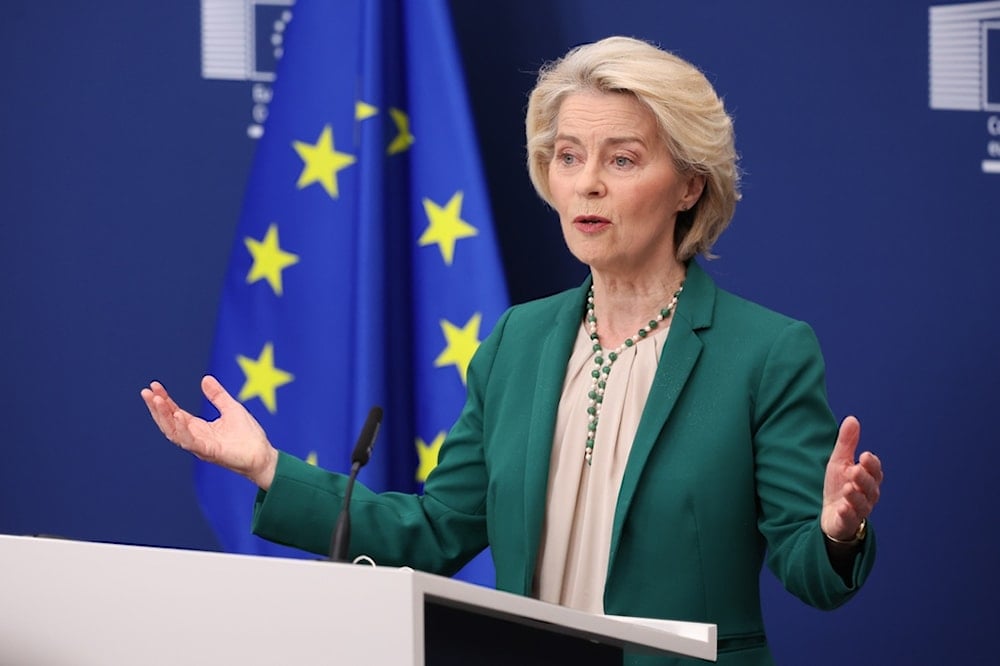
European Commission President Ursula von der Leyen speaks during a media conference at EU headquarters in Brussels, Wednesday, April 15, 2026. (AP Photo/Omar Havana)
The European Union is facing a sharp rise in energy costs as the fallout from the war on Iran continues to ripple through global markets, with officials warning that the bloc is paying significantly more for its fuel imports without receiving additional supply.
Speaking after an informal summit of EU leaders in Cyprus, Ursula von der Leyen said the financial impact of the crisis is already evident, driven by surging prices linked to disrupted energy flows.
"After 55 days of conflict in the Middle East the impact is tangible. Since the beginning of this conflict our bill for imported fossil fuels has increased by over 25 billion euros without a single molecule of energy in addition," von der Leyen told a press conference after the Informal meeting of Heads of State or Government in Cyprus.
EU leaders gathered over two days to assess geopolitical developments, including the situation in the Middle East and Ukraine, as well as to discuss the bloc’s long-term budget framework for 2028-2034.
The surge in costs stems largely from disruptions in the Strait of Hormuz, a vital corridor for global shipments of crude oil and liquefied natural gas. Reduced traffic through the route has tightened supply and pushed fuel prices higher, affecting import-dependent economies such as those in Europe.
Stagflation risk rising
The disruption has triggered a sharp rise in oil and gas prices, with global benchmarks climbing and European gas markets recording rapid gains in the immediate aftermath of the crisis. For an economy heavily dependent on imported energy, the spike has translated into higher costs for transport, electricity, and manufacturing, feeding directly into consumer prices across the bloc.
Economists warn that the shock risks producing a stagflationary effect, where slowing growth coincides with persistent inflation. Energy-intensive industries, including chemicals, steel, and heavy manufacturing, are facing significant cost increases, raising concerns over reduced output and declining competitiveness.
Financial markets have also reacted to the uncertainty, with volatility rising across European equities as investors assess the longer-term implications of sustained energy disruption. At the same time, concerns over supply security have intensified, particularly regarding liquefied natural gas flows from Gulf producers, reinforcing fears of potential shortages if instability persists.
Von der Leyen noted that Brussels is preparing contingency measures in case of further deterioration, including the risk of energy shortages, though she said the situation has not yet reached a critical stage.
The escalation began after the United States and "Israel" carried out an unprovoked aggression on Iran on February 28, causing damage and civilian deaths. Iran responded with retaliatory strikes on US and Israeli military positions in the region, raising fears of a broader confrontation before a ceasefire was announced on April 7.
Read more: EU holds Nicosia summit on energy crisis, Strait of Hormuz


