
IMF warns of severe global fallout if war extends to 2027
 2 Min Read
IMF chief Kristalina Georgieva warns prolonged war could drive oil to $125, fueling inflation and risking a global economic downturn.
-
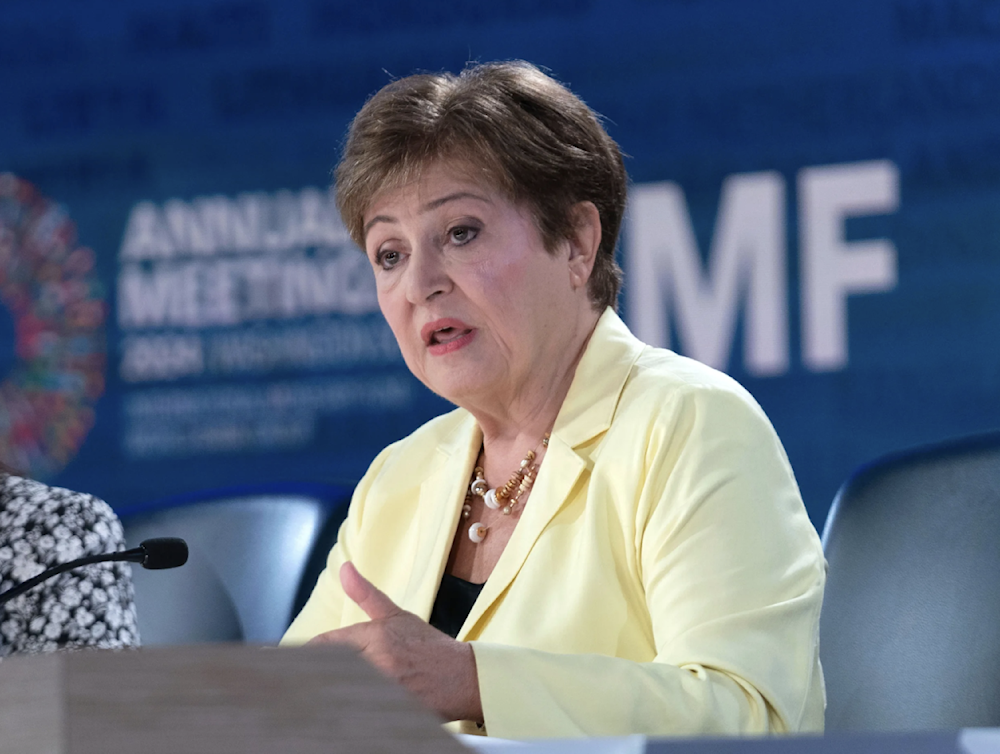
International Monetary Fund (IMF) Managing Director Kristalina Georgieva speaks during a news conference during the World Bank/IMF Annual Meetings in Washington, Oct. 24, 2024. (AP)
The International Monetary Fund has warned that the global economy faces a significantly worsening outlook if the war on Iran continues into 2027, with rising oil prices and inflation already signaling mounting economic strain.
IMF Managing Director Kristalina Georgieva said the fund’s earlier expectations of a short-lived war are no longer realistic, noting that its baseline scenario has effectively been overtaken by evolving events.
Adverse scenario already unfolding
Georgieva stated that conditions now align with the IMF’s “adverse scenario,” characterized by elevated oil prices, increasing inflation, and slowing global growth.
Under this outlook, global growth could fall to around 2.5%, while inflation could rise above 5%, reflecting the deepening impact of the conflict on energy markets and supply chains.
She warned that if the war persists and oil prices reach approximately $125 per barrel, the consequences would be far more severe, including the risk of inflation expectations becoming destabilized.
Energy shock and supply disruptions
The ongoing closure of the Strait of Hormuz, a key artery for global oil supplies, is already contributing to tightening energy markets, with around 20% of global crude flows previously passing through the waterway.
Industry leaders have cautioned that prolonged disruption could lead to physical shortages of oil, particularly affecting Asian economies first, as supply constraints force demand adjustments.
Georgieva highlighted the broader economic impact, noting that fertilizer prices have surged by 30% to 40%, which could drive global food prices up by 3% to 6%.
Rising costs and global ripple effects
She also warned that policymakers risk worsening the crisis if they continue to stimulate demand despite shrinking supply, cautioning against measures that could further fuel inflationary pressures.
“If supply shrinks, demand has to follow,” she said, emphasizing the need for a more measured economic response.
The IMF outlined a more severe scenario in which global growth drops to around 2% while inflation climbs further, raising the prospect of a broader economic slowdown or recession.
Georgieva stressed that the situation is “really serious,” warning that the longer the war continues, the greater the risk of long-term damage to the global economy.


