
Fallout from war on Iran could cut growth, push inflation up, EU says
 3 Min Read
The European Union warns that disruptions to energy supplies via the Strait of Hormuz could slow economic growth and drive inflation higher across the bloc.
-
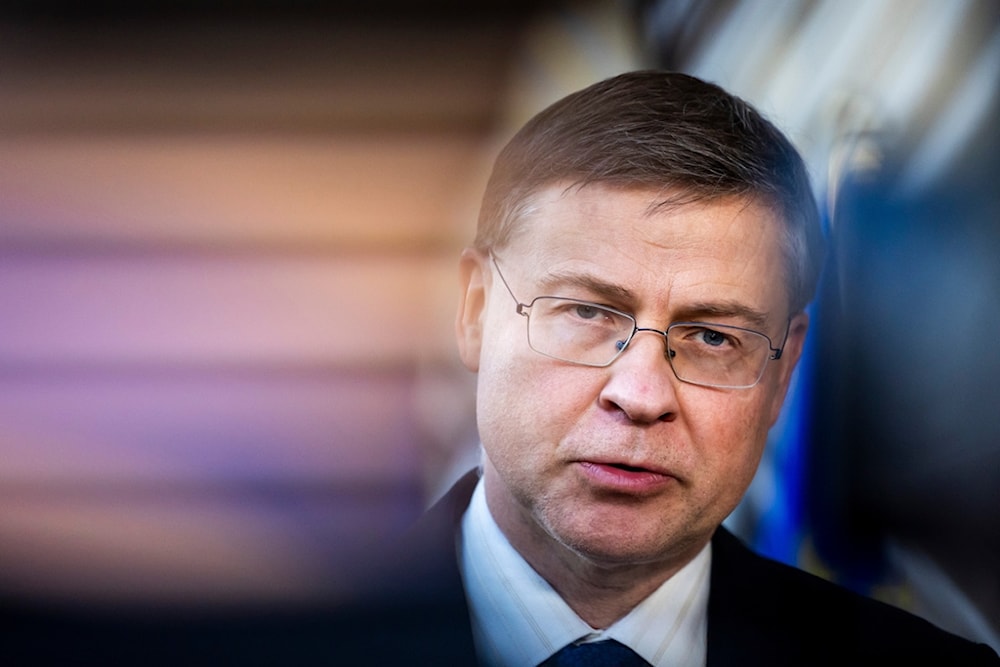
European Commissioner for Economy and Productivity, Implementation and Simplification Valdis Dombrovskis speaks with the media as he arrives for a meeting of eurozone finance ministers at the European Council building in Brussels, Monday, March 9, 2026. (AP Photo/Geert Vanden Wijngaert)
The European Union is bracing for mounting economic pressure as disruptions linked to the war on Iran continue to reverberate through global energy markets, with officials warning of weaker growth and rising inflation across the bloc.
Speaking at the Delphi Economic Forum, European Commissioner for Trade Valdis Dombrovskis outlined the expected fallout, pointing to intensifying strain driven by surging energy costs.
"The conflict in the Middle East and the blockage of the Strait of Hormuz is creating implications … We expect a negative economic impact on European economy somewhere between 0.2 and 0.6 percentage points and simultaneously increase in inflation … that can be about 1%," Dombrovskis said during the Delphi Economic Forum in Greece.
He noted that energy markets have tightened sharply as supply routes face disruption, driving up costs across multiple sectors.
The escalation began after the United States and "Israel" carried out an unprovoked aggression on Iran on February 28, causing damage and civilian deaths. Iran responded with retaliatory strikes on US and Israeli military positions in the region, raising fears of a broader confrontation before a ceasefire was announced on April 7.
Despite the truce, the Strait of Hormuz, a critical artery for global shipments of crude oil and liquefied natural gas, has seen traffic nearly grind to a halt, tightening supply and pushing fuel prices higher worldwide.
Energy shock fallout
The disruption has triggered a sharp rise in oil and gas prices, with global benchmarks climbing and European gas markets recording rapid gains in the immediate aftermath of the crisis.
For an economy heavily dependent on imported energy, the spike has translated into higher costs for transport, electricity, and manufacturing, feeding directly into consumer prices across the bloc.
Economists warn that the shock risks producing a stagflationary effect, where slowing growth coincides with persistent inflation. Energy-intensive industries, including chemicals, steel, and heavy manufacturing, are facing significant cost increases, raising concerns over reduced output and declining competitiveness.
Financial markets have also reacted to the uncertainty, with volatility rising across European equities as investors weigh the longer-term implications of sustained energy disruption.
At the same time, concerns over supply security have intensified, particularly regarding liquefied natural gas flows from Gulf producers, reinforcing fears of potential shortages if instability persists.
Read more: EU holds Nicosia summit on energy crisis, Strait of Hormuz


