
Oil dips, holds above $100 after Trump's announced 'Project Freedom'
 4 Min Read
Oil prices dip after US President Donald Trump pledged to escort ships in the Strait of Hormuz, while stalled US-Iran talks keep crude trading above $100 per barrel.
-
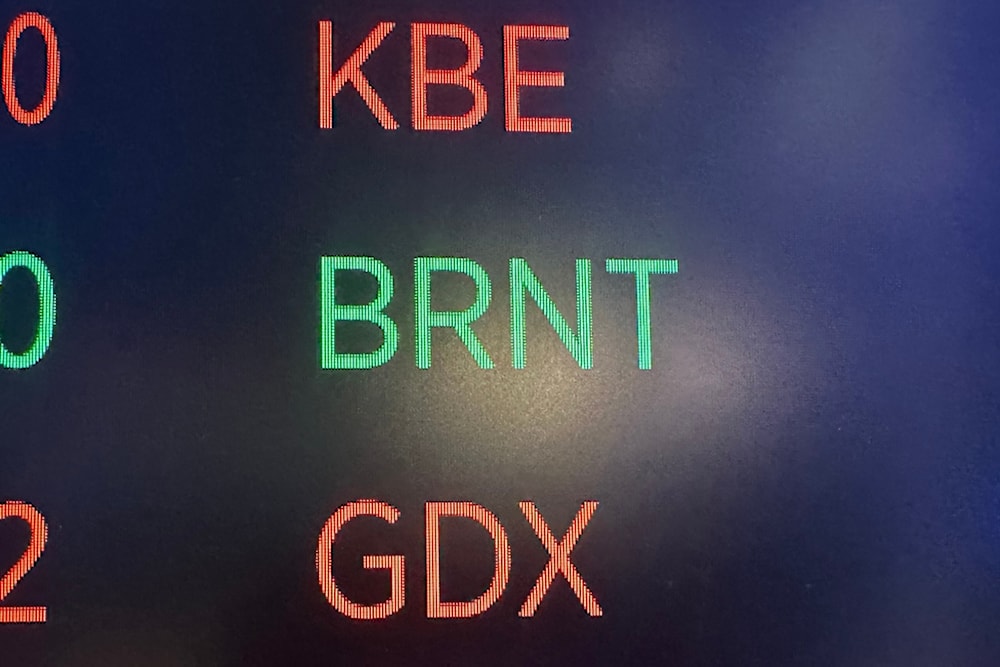
The BRNT ticker symbol representing the WisdomTree Brent Crude Oil Exchange Traded Commodity is seen at the New York Stock Exchange in New York, Thursday, March 12, 2026. (AP Photo/Ted Shaffrey)
Oil prices edged lower on Monday after US President Donald Trump announced that the United States would work to escort ships stranded in the Strait of Hormuz, while the absence of a US-Iran agreement kept crude trading above $100 per barrel.
Brent crude futures fell by 64 cents, or 0.59%, to $107.53 a barrel by 2308 GMT, extending losses after a $2.23 drop in the previous session. US West Texas Intermediate crude declined by 84 cents, or 0.82%, to $101.10 a barrel, following a $3.13 fall on Friday.
In a post published Sunday on Truth Social, Trump said Washington would act to escort vessels affected by restrictions in the strategic waterway. “For the good of Iran, the Middle East, and the United States, we have told these Countries that we will guide their Ships safely out of these restricted Waterways, so that they can freely and ably get on with their business,” he wrote.
He dubbed the naval initiative “Project Freedom,” which would allegedly begin Monday morning with US representatives tasked with guiding vessels and their crews safely out of the restricted area.
Despite the price dip, oil markets remained supported above the $100 threshold amid ongoing tensions and limited traffic through the Strait of Hormuz. Negotiations between Washington and Tehran continued over the weekend, with both sides reviewing proposals but failing to bridge key differences.
“Peace talks have been stalled as both sides refuse to move on their respective red lines,” analysts at ANZ said in a note.
Trump has prioritized reaching a nuclear agreement with Tehran during the talks, while Iran has suggested postponing nuclear discussions until after the end of the war and the lifting of blockades on Gulf shipping routes.
Meanwhile, the OPEC+ group announced on Sunday that it would increase oil output targets by 188,000 barrels per day in June for seven member states, marking the third consecutive monthly rise.
The planned increase mirrors May’s adjustment, excluding the share of the United Arab Emirates, which exited OPEC on May 1. However, the additional supply is expected to remain largely theoretical as long as the war on Iran continues to disrupt oil flows through the Strait of Hormuz.
Iran rejects Trump’s 'Project Freedom,' warns US over Hormuz role
Iran has strongly rejected Trump’s announcement of “Project Freedom,” warning that any American involvement in the management of the Strait of Hormuz would be considered a violation of the existing ceasefire framework.
Head of the National Security and Foreign Policy Committee in the Iranian Parliament, Ebrahim Azizi, issued a sharp warning to Washington, saying that any US interference in the emerging maritime arrangements in the Strait of Hormuz would breach ceasefire understandings.
Azizi stressed that Iran would not accept external control over one of the world’s most strategic waterways, amid ongoing tensions following months of confrontation in the region.
Azizi directly dismissed Trump’s “Project Freedom” initiative, stating that the management of the Strait of Hormuz and the wider Gulf region “would not be dictated by Trump’s delusional posts.”
His remarks reflect Tehran’s firm rejection of US attempts to position itself as an arbiter of maritime movement in the area.
⚠ WARNING
— ابراهیم عزیزی (@Ebrahimazizi33) May 3, 2026
Any American interference in the new maritime regime of the Strait of Hormuz will be considered a violation of the ceasefire.
The Strait of Hormuz and the Persian Gulf would not be managed by Trump's delusional posts!
No one would believe Blame Game scenarios!
The Iranian official also criticized "anticipated US narratives" surrounding maritime security, referring to them as “blame game” scenarios.
He said such rhetoric reflects Washington’s attempt to shape the political framing of developments in the Strait of Hormuz, while Iran asserts its own sovereignty over its territorial waters and strategic routes.
Read more: No compromise on enrichment or Hormuz: Inside Iran’s reply to US


