
Oil shock may hit US harder than China, EU, Russia: RS
 4 Min Read
The US economy may face a stronger impact from oil shocks than China or the EU, as global price spikes expose structural reliance on petroleum.
-
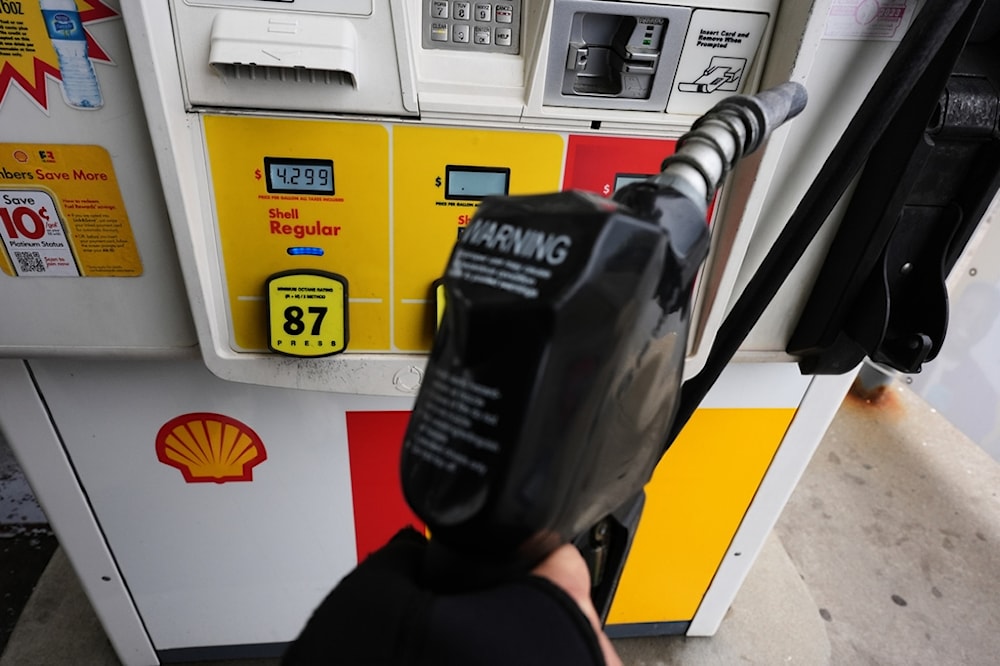
A gas price is displayed as a customer holds a fuel pump nozzle before filling up her vehicle's gas tank at a gas station, in Lincolnshire, Ill., Wednesday, April 15, 2026 (AP, File)
The United States could face more severe economic consequences from rising oil prices linked to disruptions in the Strait of Hormuz than other major economies, including China, Russia, and the European Union, according to a new analysis by Responsible Statecraft.
The assessment challenges claims by US President Donald Trump and his administration that domestic oil production shields the country from global price volatility following the war on Iran and its repercussions.
Analysts say oil prices are shaped by global supply and demand rather than national production levels, meaning disruptions affect all economies regardless of their output. The closure of the Strait of Hormuz has removed an estimated 10 million barrels of oil per day from global supply, significantly tightening the market and driving up prices worldwide.
Despite being a major oil producer, the US remains exposed to these fluctuations due to its integration in global energy markets.
Rising fuel costs signal growing impact
Recent data from the Energy Information Administration show a sharp increase in fuel prices, with average gasoline costs rising to $4.24 per gallon in April, up from $3.77 in March and $3.03 in February before the war intensified.
The agency also reported a decline of 6.2 million barrels in US oil inventories, indicating that domestic supply is being redirected to higher-priced markets abroad.
Economists warn that sustained increases in oil prices could trigger broader economic consequences, including inflation and reduced consumer spending.
Historically, most US recessions since World War II have been preceded by sharp increases in oil prices, highlighting the vulnerability of the economy to energy shocks.
Higher fuel costs can ripple across sectors, raising transportation expenses and increasing the prices of goods such as food and clothing.
US economy more oil-intensive than peers
The analysis suggests the US economy is particularly vulnerable due to its higher dependence on oil relative to other major economies.
Per unit of economic output, the US consumes significantly more oil than its counterparts, approximately twice as much as the European Union, 40% more than China, and 20% more than Russia.
This higher consumption is attributed to structural factors, including reliance on car-based transportation and slower adoption of alternatives such as electric vehicles.
Experts say reducing long-term exposure would require structural changes, including accelerating the transition away from oil-dependent transport systems.
In the short term, they argue that easing tensions and restoring oil flows through the Strait of Hormuz could help stabilize global markets and limit further economic disruption.
Oil prices hit four-year high as Trump vows to keep Hormuz blockaded
Against the backdrop of mounting warnings over the United States’ vulnerability to oil price shocks, the Trump administration has doubled down on its hardline stance, insisting on maintaining a naval blockade of Iranian ports.
Oil prices surged to their highest level in nearly four years on Thursday, driven by a lack of progress toward reopening the Strait of Hormuz and continued geopolitical tensions following the late-February US-Israeli war on Iran.
Brent crude rose as much as 4.3% to $123.11 per barrel, marking a ninth consecutive day of gains, the longest winning streak since May 2022.
The rally has pushed oil prices up more than 100% this year, with momentum further supported after Trump told Axios he would maintain a naval blockade on Iranian ports until securing a nuclear agreement with Tehran.
The spike in energy prices weighed on broader market sentiment, offsetting gains fueled by strong earnings in the technology sector. Futures for the Nasdaq 100 Index pared earlier advances to 0.3%, down from as much as 1%, while MSCI’s Asia Pacific shares index fell 1%.
Investors appeared increasingly cautious as rising oil prices and geopolitical risks tempered optimism from major tech earnings.
Bond markets also came under pressure, with rising oil prices and a hawkish stance from the Federal Reserve reducing demand for fixed-income assets. US 10-year Treasury futures declined for a fourth straight session, with yields holding near their highest levels since July. Japan’s 10-year government bond yields climbed to levels not seen since 1997, reflecting broader global shifts in borrowing costs.
Read more: Iran can thrive under blockade, the US and its allies cannot


