
Oil prices hit four-year high as Trump vows to keep Hormuz blockaded
 4 Min Read
Oil prices climb to four-year highs as Strait of Hormuz tensions and US-"Israel" pressure on Iran raise supply fears and weigh on global stocks.
-
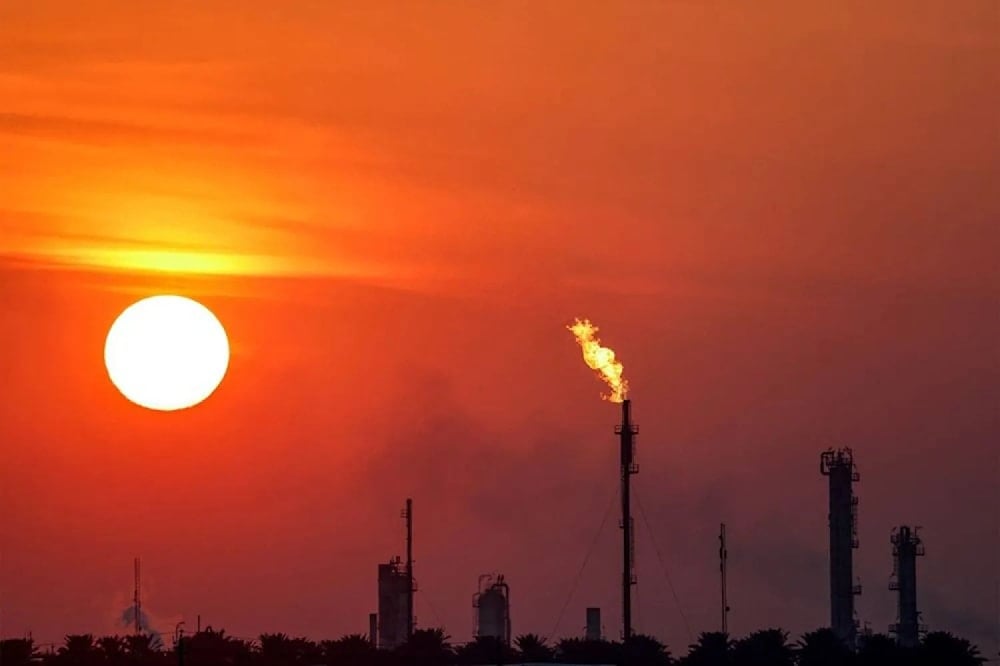
The sun sets behind burning gas flares at the Dora (Daura) Oil Refinery Complex in Baghdad on December 22, 2024 (AFP)
Oil prices surged to their highest level in nearly four years on Thursday, driven by a lack of progress toward reopening the Strait of Hormuz and continued geopolitical tensions following the late-February US-Israeli war on Iran.
Brent crude rose as much as 4.3% to $123.11 per barrel, marking a ninth consecutive day of gains, the longest winning streak since May 2022.
The rally has pushed oil prices up more than 100% this year, with momentum further supported after US President Donald Trump told Axios he would maintain a naval blockade on Iranian ports until securing a nuclear agreement with Tehran.
The spike in energy prices weighed on broader market sentiment, offsetting gains fueled by strong earnings in the technology sector. Futures for the Nasdaq 100 Index pared earlier advances to 0.3%, down from as much as 1%, while MSCI’s Asia Pacific shares index fell 1%.
Investors appeared increasingly cautious as rising oil prices and geopolitical risks tempered optimism from major tech earnings.
Bond markets also came under pressure, with rising oil prices and a hawkish stance from the Federal Reserve reducing demand for fixed-income assets. US 10-year Treasury futures declined for a fourth straight session, with yields holding near their highest levels since July. Japan’s 10-year government bond yields climbed to levels not seen since 1997, reflecting broader global shifts in borrowing costs.
AI boom hits market reality
In equities, attention turned to major technology firms, with Apple Inc. expected to headline earnings. Results from industry peers highlighted divergent performance in artificial intelligence investments.
Alphabet Inc. rose 7% in after-hours trading, signaling strong returns from its AI spending, while Meta Platforms Inc. fell 7%, indicating lagging performance.
Amazon.com Inc. gained 2.7%, and Microsoft Corp. edged up 0.3%. Meanwhile, Anthropic PBC was reported to be considering a new funding round that could value it at over $900 billion, potentially surpassing OpenAI as the world’s most valuable AI startup.
Asian markets show mixed signals
Asian markets reflected mixed sentiment, with technology-driven gains overshadowed by concerns linked to the ongoing US-Iran tensions. Japan’s yen remained weak at around 160 per dollar, raising speculation that authorities could intervene to stabilize the currency.
Regional equity benchmarks declined, with Japan’s major indices falling more than 1%, while broader measures such as South Korea’s Kospi and Taiwan’s Taiex remained on track for their strongest monthly performances in decades.
In commodities and currencies, gold rose 0.5% to $4,570 per ounce, benefiting from safe-haven demand, while Bitcoin climbed to approximately $75,750. Currency markets were largely stable, with the euro trading near $1.1666 and the offshore yuan at 6.8422 per dollar. Meanwhile, global bond yields remained elevated, underscoring continued volatility across financial markets as investors navigate geopolitical tensions and shifting monetary policy expectations.
World facing biggest energy crisis in history: IEA chief
As Brent crude prices hit a new high, International Energy Agency head Fatih Birol reaffirmed that the world is facing its biggest energy crisis in history due to the disruption caused by the Iran war.
At a conference in Paris, Birol said, "The oil markets and gas markets are going through big difficulties. When I looked last time, the oil price was over $120 which is putting a lot of pressure on many countries," said Birol.
"Our world is facing a major economic and energy challenge," he added.


