
Qatar warns of 'frozen conflict' amid Gulf tensions escalation
 3 Min Read
Doha stresses urgency of diplomacy as Gulf instability deepens, warning unresolved tensions, Hormuz risks, and stalled negotiations could trigger recurring escalation.
-
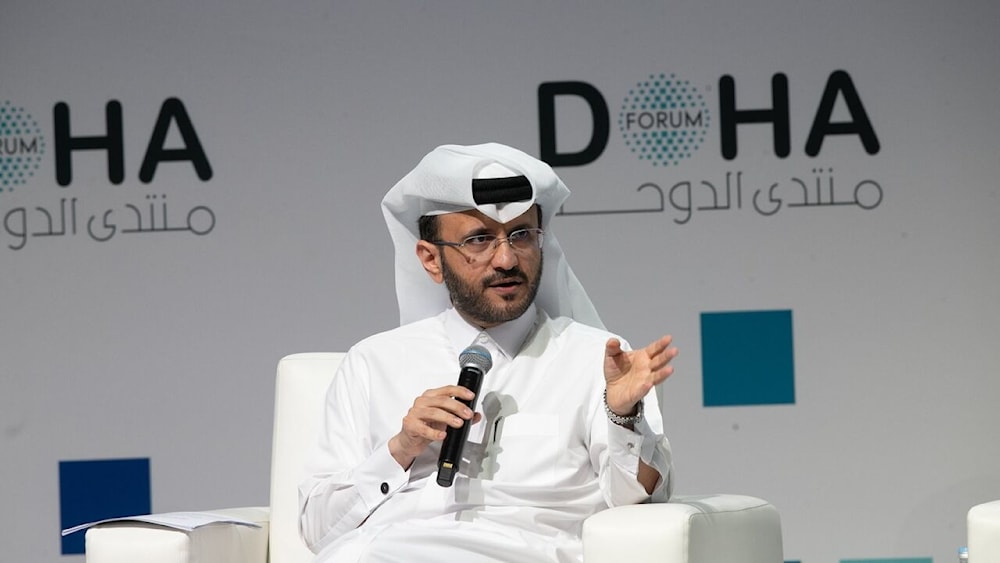
Spokesperson of the Ministry of Foreign Affairs Majed Al-Ansari speaks at the Doha Forum on December 8, 2024. (X/@MofaQatar_EN)
Qatar’s Ministry of Foreign Affairs has warned against the dangers of sustained tensions in the Gulf region without a comprehensive resolution, as negotiations between the United States and Iran continue to stall. The ministry stressed that leaving the conflict unresolved risks entrenching instability and prolonging regional uncertainty.
Foreign Ministry spokesperson Majed Al-Ansari emphasized during a press conference that the ongoing dispute must ultimately be resolved through dialogue, warning against allowing tensions to persist without a clear diplomatic framework.
Al-Ansari firmly rejected the use of the Strait of Hormuz as a political or military bargaining tool, describing any obstruction of maritime navigation as “unacceptable.”
He noted that threats to close or disrupt the Strait carry serious consequences, particularly for global energy security and supply chains. Qatar, he said, supports all international efforts to ensure the reopening and safeguarding of the vital waterway.
Iran initially utilized its geographic leverage over the Strait of Hormuz to block vessels linked to US and Israeli hostilities against it from navigating the key waterway. The US would later impose its own blockade following the announcement of a ceasefire in early April.
Diplomatic channels and mediation efforts
On the diplomatic front, Al-Ansari highlighted Qatar’s ongoing coordination with regional and international actors to contain the crisis. He pointed to mediation efforts led by Pakistan, indicating Doha’s support for such initiatives.
He added that expanding the scope of negotiations is not currently necessary, given the active communication channels already in place to manage tensions.
Read more: Gulf oil output plunges as Hormuz blockade disrupts exports
The danger of a 'frozen conflict' in the region
Al-Ansari explicitly warned against the emergence of a “frozen conflict,” a situation in which tensions remain unresolved and periodically reignite amid shifting political conditions.
“Qatar does not want a return to hostilities in the region or to witness a state of stagnation followed by renewed conflict,” he stated, emphasizing that the priority lies in achieving a lasting and comprehensive solution.
He reaffirmed that Qatar’s central objective is regional stability, stressing that Doha supports ceasefire efforts and measures to secure maritime routes, while prioritizing a full resolution to the crisis.
Regional context: war and blockade dynamics
Qatar’s statements come amid heightened regional tensions driven by the ongoing US-Israeli war on Iran and the continuation of US-imposed restrictions on Iranian ports.
In response, Iran has moved to reimpose restrictions on the Strait of Hormuz, citing Washington’s failure to meet its clauses for resuming negotiations. These include lifting the maritime blockade and ending the aggression on Lebanon in full.
The escalation reflects a broader cycle of action and counteraction, further complicating diplomatic efforts and raising the risk of wider regional confrontation.


