
Rezaei says no country can block Iran oil exports; as flows continue
 3 Min Read
Despite a US blockade, ships linked to Iran continue transiting the Strait of Hormuz, highlighting gaps in enforcement and ongoing disruption to global oil flows.
-
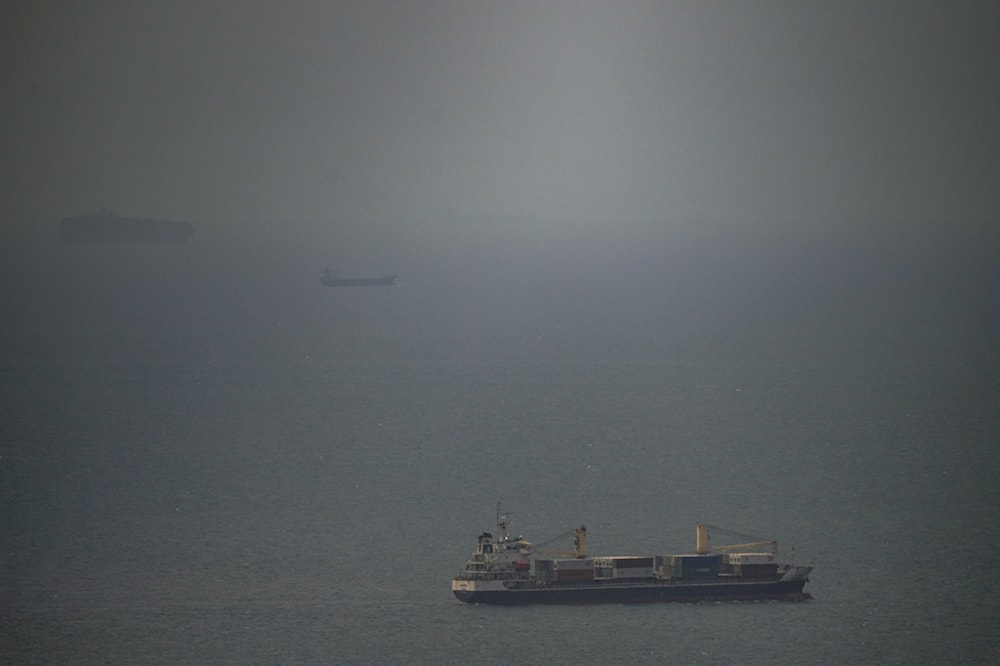
The Jordan-flagged cargo ship "Baghdad" sails in the Gulf towards the Strait of Hormuz, Wednesday, April 22, 2026 (AP)
No country is capable of blocking Iran’s oil exports, Mohsen Rezaei, a member of the Expediency Discernment Council, stated on Monday.
In a post on X, Rezaei advised the US president to focus on addressing the disorder within the United States’ government, economy, and armed forces instead of making boastful statements.
هیچ کشوری قادر به مسدود کردن صادرات نفت ایران نیست. به رئیسجمهور آمریکا توصیه میشود به جای لاف زدن، به فکر ساماندهی به آشفتگی حاکم بر دولت، اقتصاد و نیروهای مسلح آمریکا باشد.
— محسن رضایی (@ir_rezaee) April 27, 2026
Iranian oil flows continue through Hormuz, defying US blockade
This comes as vessels linked to Iran continue to transit the Strait of Hormuz despite a US-imposed blockade, CNN reported, in what reflects Tehran’s sustained ability to operate and regulate movement through the critical maritime corridor.
According to the report, most ships passing through Hormuz in recent days have followed routes designated by Iranian authorities, with roughly half loading cargo at Iranian ports, implying that efforts to isolate Iran’s exports have not fully succeeded.
The continued movement comes despite US measures aimed at preventing vessels from docking at or departing from Iranian terminals.
Uneven blockade enforcement
While US forces have carried out interceptions and boarded multiple ships, enforcement remains uneven, with uncertainty surrounding whether tankers leaving Iranian ports are being consistently stopped. Shipping data cited from maritime intelligence firm Kpler showed that 17 vessels crossed the strait between Friday and Sunday, including four large loaded tankers, two of which originated from Iranian ports.
At the same time, overall traffic has sharply declined since the onset of the war, as heightened risks prompted many operators to avoid the route. Flows have dropped to a fraction of pre-war levels, contributing to tightening supplies and rising pressure on global energy markets, even as Iran-linked shipments continue.
Tehran has maintained that it continues to exercise authority over the strategic waterway, a position reinforced by the Islamic Revolution Guard Corps (IRGC), which has warned against foreign interference and asserted control over passage through the strait.
Dual control emerges
The current situation has effectively produced a dual-control dynamic in Hormuz, with Washington attempting to enforce restrictions while Iran regulates access on the ground, leading to a dramatic contraction in shipping activity and underscoring the waterway’s central role in global energy flows.
Despite US claims that Iran’s export capacity could soon be constrained, Iranian officials and state media have rejected such assertions, maintaining that the country retains the ability to manage its oil production and maritime routes.
As tensions persist, the continued passage of vessels, particularly those linked to Iranian ports, highlights the limits of external pressure and reinforces Tehran’s position that stability in the Strait of Hormuz ultimately depends on its terms.
Read more: Hormuz traffic stays muted as US continues naval blockade of Iran


