
Tracker shows US war on Iran costs exceed $70 billion
 2 Min Read
Reports estimate US spending on the Iran conflict has surpassed $70 billion despite claims the operation is nearing completion and winding down.
-
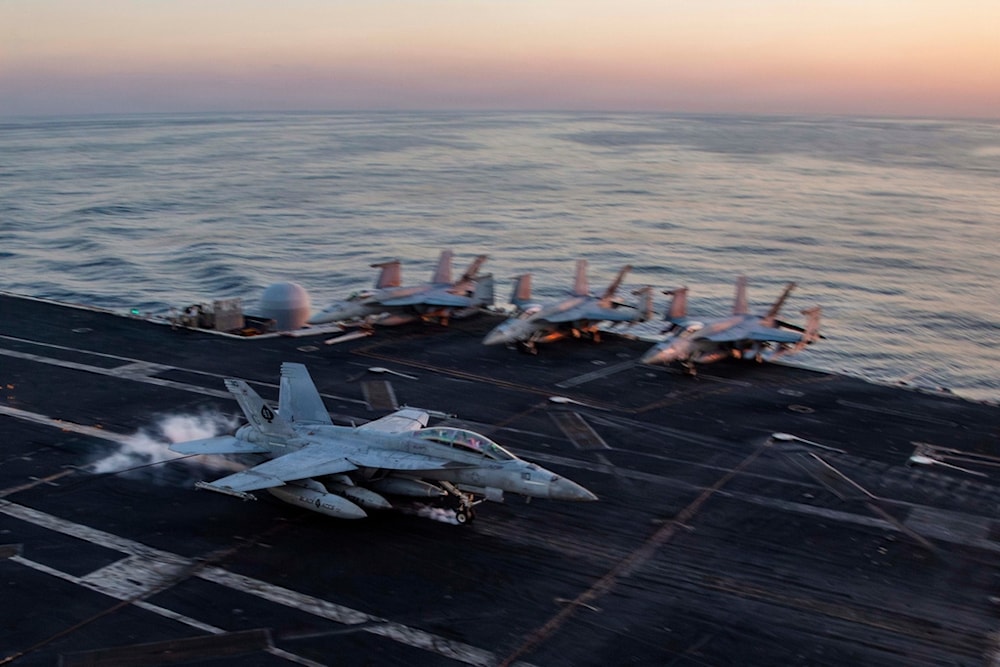
A F/A-18F Super Hornet preparing to make an arrested landing on the USS Abraham Lincoln (CVN 72) as part of Operation Epic Fury, on Saturday, February. 28, 2026. (U.S. Navy via AP)
US expenditures related to military operations against Iran have surpassed $70 billion, according to external cost estimates, even as officials suggest the campaign is approaching its final phase.
The figures highlight the financial scale of sustained military attacks, which continue to draw scrutiny over their scope and long-term objectives.
The Iran War Cost Tracker, an unofficial analytical project, estimates total spending at approximately $70.8 billion as of early May.
The projection is based on initial Pentagon-reported figures of $11.3 billion for the first six days of operations, combined with ongoing estimated daily costs of roughly $1 billion, including calculations of operational expenditure rates.
The project does not publicly disclose its founder or institutional backing.
Official Pentagon figures and diverging data
Official US estimates differ significantly. Jules W. Hurst III stated that as of April 29, total spending on operations against Iran stood at approximately $25 billion.
The discrepancy between official figures and independent estimates reflects ongoing uncertainty about the full financial scope of the campaign and the classification of associated military expenditures.
Read more: War on Iran may actually cost the US trillions: The Intercept
Political claims of conflict nearing end
US President Donald Trump has stated that Iran has already been “defeated” in the current conflict, while signaling that Washington seeks a more decisive outcome.
These remarks come amid broader claims that the main phase of military operations is nearing completion, even as financial and operational costs continue to accumulate.
Reporting on US military expenditures has long highlighted structural challenges in accounting for overseas operations, particularly in conflicts involving dispersed theaters and hybrid military activity.
US-led interventions emphasized that war spending is often assessed through multiple overlapping frameworks, budget appropriations, operational costs, and supplemental funding measures, making total cost calculations inherently contested.
This broader pattern informs current debates over the financial scope of US operations in the region, where transparency and methodology differences continue to shape public and political assessments.


