
Trump targets data centers' energy use amid rising US electricity cost
 5 Min Read
US President Donald Trump warns that tech giants must pay their share as AI-driven data centers strain the US power grid.
-
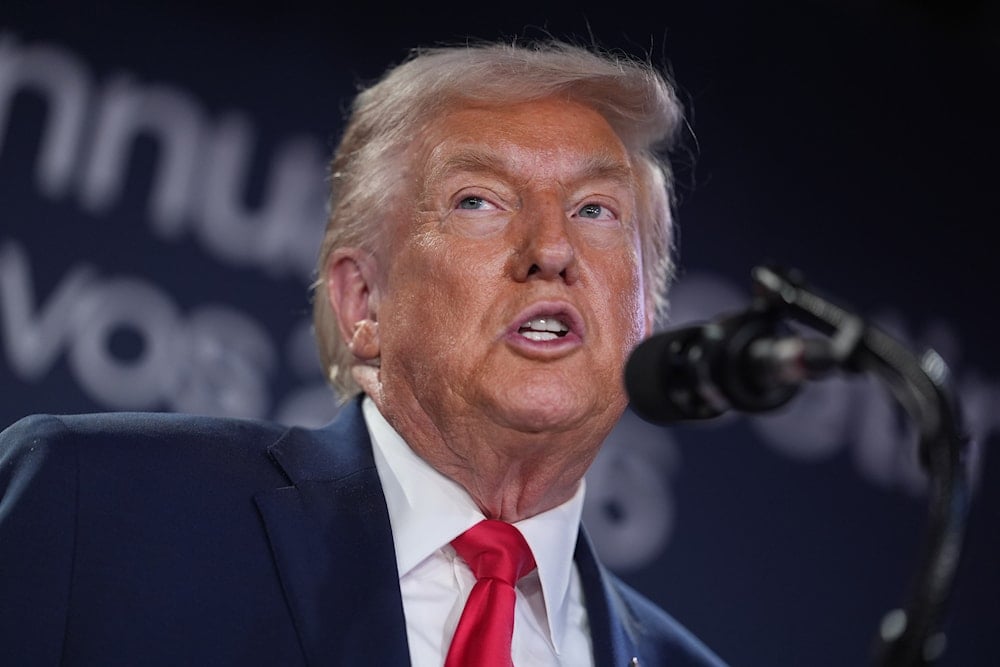
US President Donald Trump speaks after the signing of a Board of Peace charter during the Annual Meeting of the World Economic Forum in Davos, Switzerland, on January 22, 2026. (AP Photo/Evan Vucci)
US President Donald Trump is raising alarms over the impact of data centers on the country's strained electricity grid. With energy prices already surging, Trump is pressuring major tech companies to shoulder the rising costs, a move that could shape the political and economic landscape ahead of the November elections.
In an analytical piece published by The Guardian, written by Blake Montgomery, Trump’s stance was observed more clearly through two major developments in January. On January 13, he appeared alongside Microsoft’s president to announce that the tech giant would pay full property taxes on its data centers, declining both tax breaks and electricity rate discounts in the towns where it operates.
“We are the ‘HOTTEST’ Country in the World, and Number One in AI. Data Centers are key to that boom, and keeping Americans FREE and SECURE but, the big Technology Companies who build them must ‘pay their own way,’” Trump wrote on Truth Social. “Thank you, and congratulations to Microsoft.”
Three days later, on January 16, Trump and governors from several northeastern states ordered the country's largest grid operator to hold an emergency reliability auction by September, according to Bloomberg.
The auction is expected to require companies like Microsoft, Amazon, and OpenAI to bid for future energy reliability, potentially funding new power plant construction. “I never want Americans to pay higher Electricity bills because of Data Centers,” Trump said.
AI boom meets energy crisis in the US
On January 20, OpenAI followed Microsoft’s lead, announcing its commitment to "paying our own way on energy, so that our operations don’t increase your electricity prices." The company is part of the Stargate initiative, a $500 billion partnership between the AI sector and the Trump administration to expand national AI infrastructure.
Trump has vowed to cut electricity bills by half, but his administration’s simultaneous rejection of renewable energy projects, which he labels a "scam" and "con job," complicates this promise. While promoting AI growth, the administration has also endorsed expanding oil and gas drilling, reversing coal plant closures, and resuming liquified natural gas exports. Analysts warn these measures could, paradoxically, increase domestic energy costs.
Power prices remain a central concern for American households, influencing the broader debate over the rising cost of living, an issue that could undercut the Republican Party’s election campaign.
Elon Musk’s company, xAI, entered the spotlight on January 15 when the US Environmental Protection Agency ruled that its Memphis facility had been illegally operating methane-powered generators. The ruling set a precedent: tech firms need more electricity than the grid can supply, and cannot simply install backup generators like homeowners do.
Instead, firms such as Meta, Google, Microsoft, and Amazon are increasingly investing in nuclear power.
Global reactions to surging data center demand
In Europe, governments are also grappling with the growing electricity demands of data centers. Germany, home to the continent’s highest number of such facilities, faces tight energy constraints. Chancellor Friedrich Merz has supported data center expansion but opted for a different path than Trump.
In November, Merz’s ruling party approved subsidies for heavy industrial energy users and reduced grid fees for consumers and businesses. Importantly, German law mandates that data centers must obtain at least 50% of their electricity from renewable sources, a requirement that many citizens doubt tech firms can meet, fueling public skepticism about further data center construction.
The UK, which has the second-largest number of data centers in Europe, continues to build new facilities despite facing some of the world’s highest electricity rates. In November, the Department for Science, Innovation and Technology proposed offering electricity discounts in designated "AI growth zones" to attract tech investment, a move that may clash with ongoing cost-of-living concerns.
Ireland offers a cautionary example. In 2024, data centers consumed more electricity than all urban homes combined. The resulting pressure on the grid prompted the government to ban new data centers from connecting to Dublin’s power infrastructure in 2021. Although the ban ended in December, it highlights the infrastructure risks posed by unchecked expansion.
Next frontiers: Gulf states and India
Montgomery highlighted that as Western energy grids tighten, tech giants are eyeing regions with abundant energy or fewer restrictions. Trump and several companies have committed to building one of the world’s largest data centers in the United Arab Emirates, with more to follow across the Gulf. While the region offers cheap energy, the massive water demands of data centers could strain already scarce resources.
In India, Microsoft, Amazon, and Meta have pledged $17 billion for data center development. Yet, unreliable electricity supply means some of the funds may go toward modernizing local grids. In cities like Mumbai, aging infrastructure may remain in use longer than planned, worsening pollution and increasing public health risks.


