The fight against the hegemon: Iran's resistance and its global significance
-
 Alexander Tuboltsev
- 6 Mar 2026 00:32
- 2 Shares
 7 Min Read
Iran's confrontation against the US and "Israel" reflects a broader struggle against American global hegemony and neo-colonial power, forming a part of a historic anti-imperialist movement defending the sovereignty of the Global South.
-
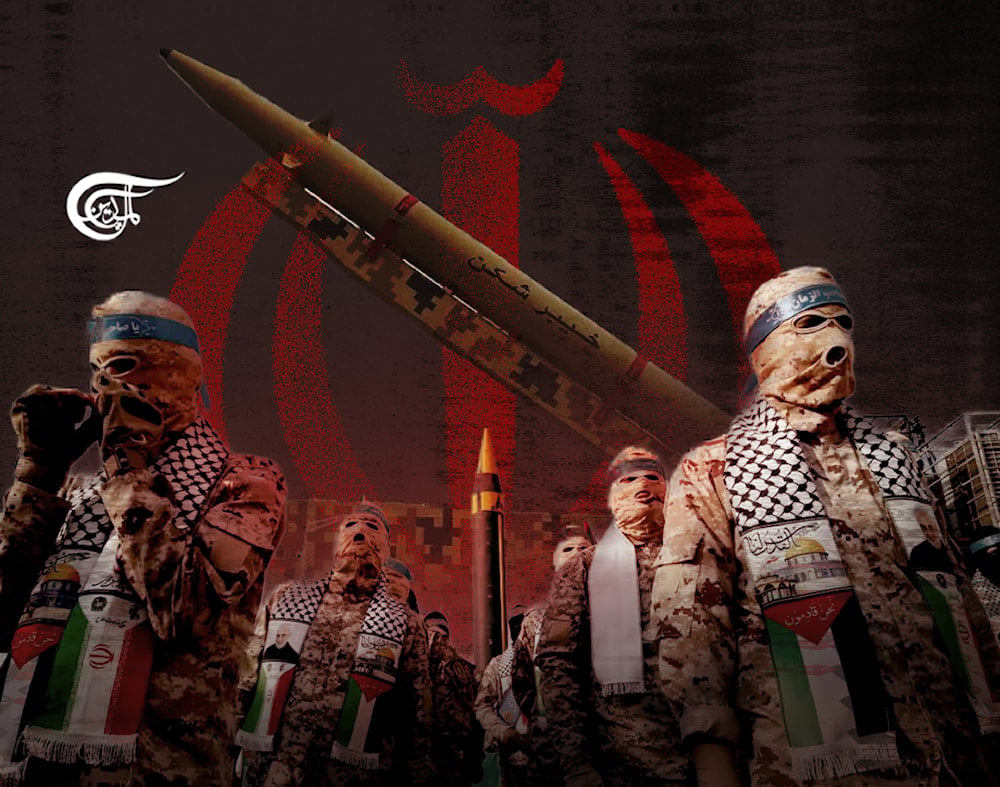
Being faithful to the ideas and principles of the Martyr Sayyed Ali Khamenei, the Islamic Republic of Iran continues its struggle, which is morally and historically just. (Al Mayadeen English; Illustrated by Mahdi Rtail)
When Trump recently publicly admitted that he "doesn't care" about opinion polls, even though a large share of the American public opposes aggression against Iran, he merely confirmed what has long been evident: in America, the upper political class makes decisions ignoring the opinion of the majority of the population. Instead of democracy, there is the power of the financial and political establishment, which promotes exclusively its own narrow corporate interests.
The actions of the modern Caligula from the White House, intoxicated by megalomania and narcissism, once again show us that the essence of the American ruling elites is unchanged and represents an example of the policy of expansionism and neocolonialism. However, hardly anyone had any illusions about this. The main goal of the US foreign policy is an attempt to maintain its hegemony, its claims to world domination. Everything else is just an application to this goal. Some American administrations have tried to hide this goal behind a deceptive "smoke screen" (for example, using terms such as "democracy", "human rights", "freedom", etc.) in order to legitimize their actions. Methods and tools have changed over the years, but, again, the goal of American foreign policy in the 20th and 21st centuries has always remained the same: global economic and military-political domination, hegemony.
Various strategies that have been employed to achieve it are a consequence of the already mentioned corporate interests of the American establishment, that is, the combination of group interests of a limited number of subjects (representatives of financial, military, and political elites) institutionalized at the state level. A favorite technique of Western propaganda is to attempt to hide this purely corporate interest under the broad term "national interests." But it is obvious that this is a banal substitution of concepts.
Colonial and neocolonial powers (including the United States) are, by their nature, mechanisms of exploitation and expansion implemented at the state level, when there is a metropolis around which capital is concentrated, and an exploited periphery from which resources are drained. In the case of the neocolonial powers, the term "national interests", in my opinion, is of little use, since the imperial state, which has turned into a giant corporation, remains only the corporate interests of its elites, around which its entire foreign and domestic policy is formed.
For decades, the American establishment has used various methods to achieve its hegemonic ambitions: psychological warfare, political manipulation, hybrid warfare, control of global transport and trade routes, economic pressure measures, patronage of puppet regimes and satellites, trade wars, acts of direct aggression, and false flag operations. If we turn to history, we can see that many of these methods were used by previous hegemonic powers of past times, from the Roman Empire to the British Empire.
Since 1979, the United States has continuously staged its destructive actions against the Islamic Republic of Iran, including slanderous campaigns in the Western media, sanctions, attempts to destabilize the internal situation, threats, and acts of hybrid warfare. And on February 28, 2026, the United States, together with the Zionist regime, launched an aggressive attack on Iran, plunging West Asia into new military confrontations. This aggression was a continuation of America's long-term hostile actions aimed at realizing the hegemonic aspirations of the United States in the Eastern Mediterranean, the waters of the Indian Ocean, and the zone of strategically important sea routes (Strait of Hormuz, Bab el-Mandeb Strait).
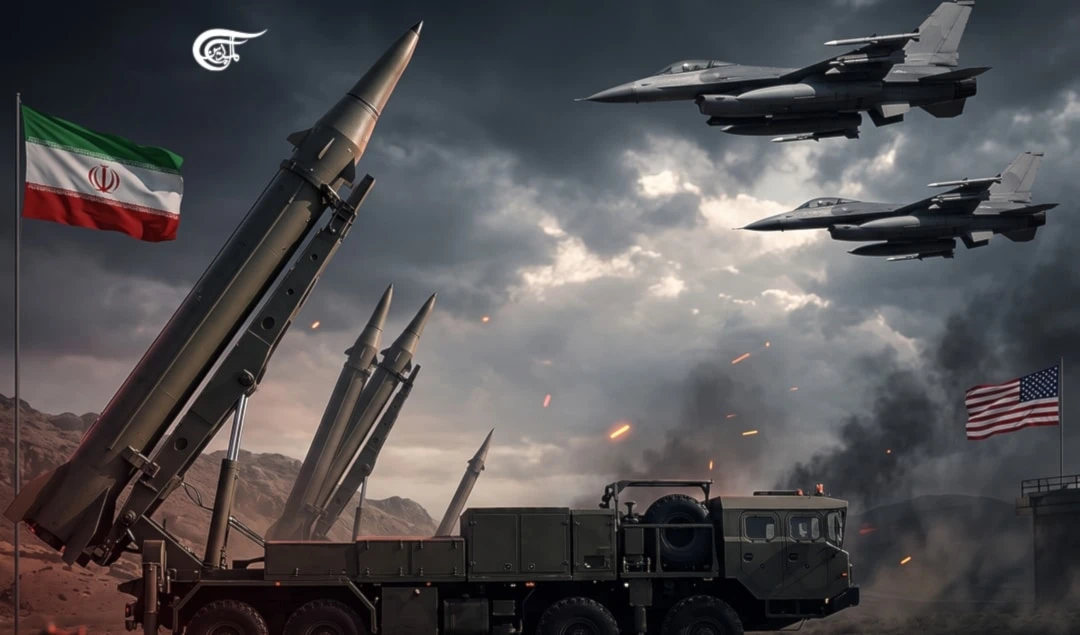
By entangling West Asia with a chain of its military bases, sponsoring the bloodthirsty Zionist regime, and interfering in the region's affairs, the United States wanted to fully control the vast natural resources of the region's countries (especially oil and natural gas) and the main maritime trade routes. The main obstacle to the realization of these hegemonic aspirations turned out to be anti-imperialist forces - the Islamic Republic of Iran, the Resistance in Lebanon, Yemen, and Gaza. They proved to be the only guarantee that the whole of Western Asia would not end up in the clutches of American imperialism.
And here we see the following deep, fundamental differences. On the one hand, the United States, driven solely by the corporate interests of its greedy establishment; a neo-colonial hegemon based on the dollar system and the economic exploitation of the resources of the Global South. On the other side are Iran and the region's Resistance movements, driven by a just struggle against imperialism, neocolonialism and imperial arrogance. These are not ordinary opposites; they are completely different poles of the modern stage of history.
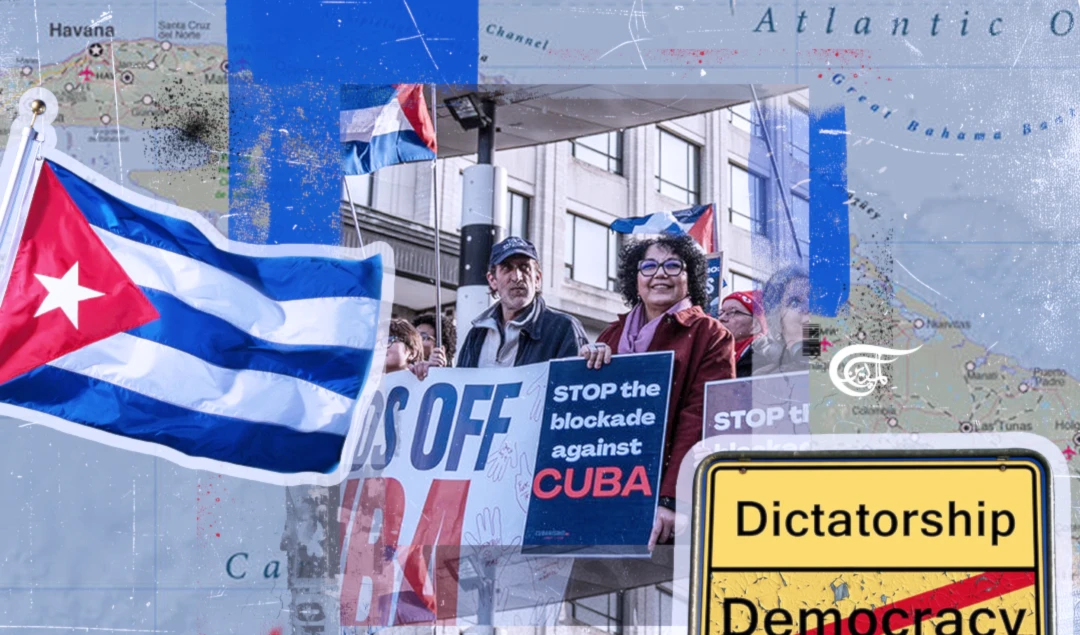
There have been many outstanding victories in the history of the global struggle against neocolonialism and hegemonism. The success of the revolution and the proclamation of the People's Republic of China in 1949; the victory of Vietnam over the French colonialists in the Battle of Dien Bien Phu in 1954; the victory of the Cuban Revolution in 1959; the victory of the Islamic Revolution in Iran in 1979. And this struggle continues. Neocolonial, imperialist, and hegemonic forces continue to pose a key threat to the countries of the Global South. And to counter this threat, a resolute and comprehensive anti-colonial, anti-imperialist strategy is needed.
Iran, having the full right to self-defense, defends its independence and sovereignty. And if we look at current events broadly, we will understand that this is also a battle in defense of all the oppressed peoples of the Global South who have suffered from American imperialism at various times. This is the most important battle against the oppressors, against those who imagine themselves to be a global hegemon. The Islamic Republic of Iran acts both in full compliance with international law (exercising legitimate self-defense) and in accordance with the moral values of justice.
The whole world has become convinced that, contrary to Trump's narcissistic boasts, the American army is not invincible. Smoke and flames spread over American bases across West Asia. Iran's response proved to be effective and powerful, demonstrating that neither the geographical location, nor the distance, nor the missile defense systems will save the US military footholds in the region from the sword of retribution raised over them. The United States is accustomed to viewing geographical spaces as a kind of "chessboard" on which America, using its military and technical superiority at sea and in the air, makes convenient moves. However, now this "chessboard" has been turned over when Iran has made its own retaliatory moves and applied a competent strategic vision.
Precise and rapid strikes have turned American military objects in the region into vulnerable targets. These strongholds, which Washington used to control a vast expanse of the West Asian geopolitical "chessboard," were within range of missiles and drones. By making an aggressive attack on Iran, the American administration has made a gigantic strategic mistake by getting involved in a conflict that will develop according to a different logic than the Americans expected, and not according to their rules.
This conflict will develop in several directions. The fact that Hezbollah fighters have launched retaliatory operations against the Zionist aggressors confirms that the Resistance has a strategic vision of how to successfully operate on different fronts. This is clearly demonstrated by burning Merkava tanks, which were hit by the Islamic Resistance in Lebanon with the help of anti-tank missiles, and American military bases engulfed in fires throughout West Asia.
Being faithful to the ideas and principles of the Martyr Sayyed Ali Khamenei, the Islamic Republic of Iran continues its struggle, which is morally and historically just. This is a battle in the name of all the oppressed, against the brutal neo-colonial oppressors and imperialist hegemonists.