The UN will condemn again the Blockade: 10 Recommendations to End the Silent Suffocation of Cuba
-
 Pedro Monzón Barata
- 14 Sep 2026 15:57
- 5 Shares
 24 Min Read
The US blockade is strangling Cuba through blackouts, hunger and medical shortages, inflicting record losses as the UN demands an end to collective punishment.
-

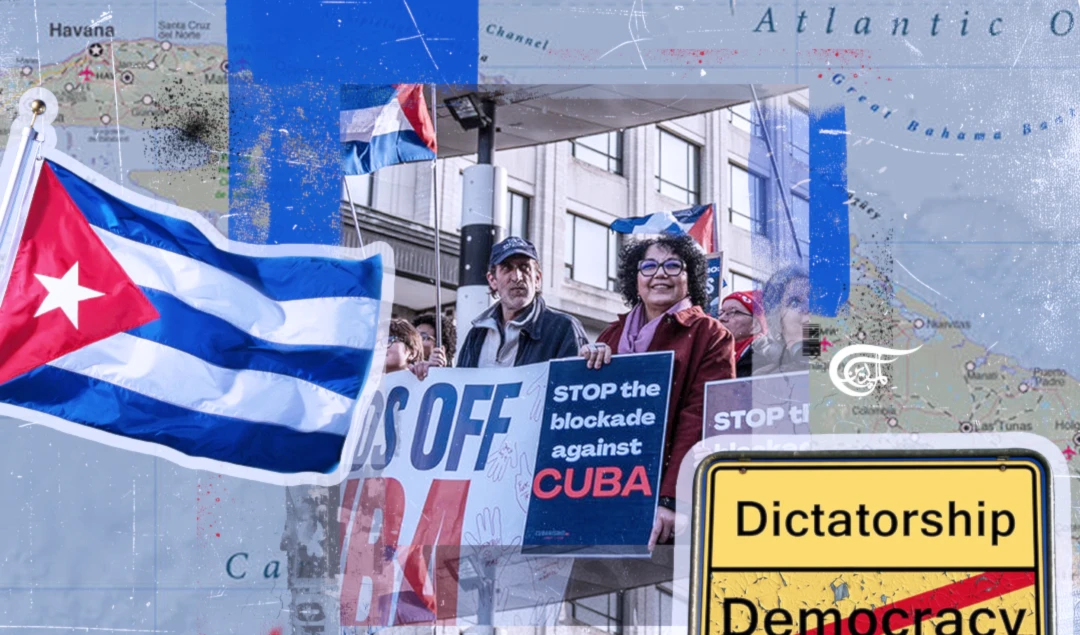
The economic toll between March 1, 2025, and February 28, 2026, reached 8,083,300,000 dollars at current prices, a record figure and a 7 percent increase over the previous report (Illustrated by Zeinab al-Hajj to Al Mayadeen English )
On September 7, 2026, Cuban Foreign Minister Bruno Rodríguez Parrilla presented to national and international media the Cuba Report on the effects of the U.S. economic, commercial, and financial blockade. What he unveiled was not merely a set of figures but an exact X-ray of a punitive policy against an entire people that, after more than six decades, continues to mutilate the daily life of over 10 million Cubans. Yet the document exposes something even more terrible: this is an economic strangulation policy now compounded by a deep energy crisis, designed to bring a people to their knees through blackouts, hunger, and despair.
The economic toll between March 1, 2025, and February 28, 2026, reached 8,083,300,000 dollars at current prices, a record figure and a 7 percent increase over the previous report. Accumulated losses across more than six decades now stand at 178,700,500,000 dollars at current prices, 4.7 percent higher than previously reported. No other country has endured, or could endure, a siege so prolonged and so devastating.
At that press conference, Rodríguez Parrilla stressed that this amount covers only the first month of effects of the energy blockade decreed by Washington on January 29, 2026. "The damages in these 8 months multiply the damages that occurred in the period covered," he warned. Since then, the island has received only one Russian tanker carrying 100,000 tons of crude oil, on March 30.
More Than Figures, Lives
The findings did not limit themselves to macroeconomic balances. They underscored "the tremendous impact on people, on Cuban families, in short, on our entire people." And they described a reality that hurts especially because it is daily:
"Long months living with only two or three hours of electricity per day or less, with food spoiling, the heat that doesn't let you sleep, parents fanning their babies, children in the dark doing their schoolwork, young people without connectivity or recreation, grandparents without television or sometimes even radio, all family life damaged."
That is the true dimension of the blockade: not a matter of abstract diplomacy, but of mothers unable to preserve their children's food, of elderly people isolated in the dark, of an entire generation growing up amid blackouts and shortages. "The blockade does not punish a government, it punishes the daily life of a people in all areas," the minister stated. It is, in his own words, an "act of collective punishment."
The Energy Siege: The Cruelest Weapon of the 21st Century
Rodríguez Parrilla devoted special attention to the measures adopted by Washington that have further aggravated the situation. The executive order of January 29, 2026, signed by President Donald Trump, imposed a fuel blockade that prevents even already-paid supplies, through threats of sanctions against tanker owners, shipping companies, and other transport actors.
The consequences are concrete and brutal. "A crude oil ship of 100,000 tons would drastically reduce blackouts for approximately two weeks," the diplomat noted. Importing fuel and diesel for the generator sets of the so-called distributed generation would "reduce blackouts to a minimum," but the fuel blockade blocks those purchases. That ship does not arrive. That distributed generation cannot operate at full capacity. And the darkness continues.
Cuba has accelerated its shift toward renewable energy sources, but even that effort runs into the wall of the blockade. Among many other affected products, "now shipping companies are threatened so they won't bring solar panels or batteries for the new photovoltaic parks that we have learned to install in just 45 days," Rodríguez Parrilla denounced. Washington does not merely want to suffocate the Cuban economy; it wants to condemn its population to perpetual darkness. It wants Cubans to live in gloom: for children to do their homework by candlelight, for transportation to grind to a halt, for factories to stop, for food to rot in refrigerators without power.
The Health System Under Siege.
The impact of the blockade on the Cuban health system is perhaps the most painful of all, because it takes human lives and generates avoidable suffering. Infant mortality, which in 2018 was 4 per 1,000 births, increased in 2025 to 9.9, more than double. "They are children, not numbers. Deaths that should not have happened," the foreign minister said, his voice breaking with indignation.
Moreover, the deaths do not stop there. In August 2026, a team of United Nations experts warned of a growing risk of disease outbreaks on the island as a consequence of the tightening of U.S. sanctions. U.S. health authorities, in a cynical twist, also issued a travel alert about the increase in intestinal diseases and diarrhea caused by the failure of water and electricity supplies on the island. That is, they recognize the problem, but refuse to lift the siege that causes it.
Medicines of all kinds are critically scarce, as are other resources essential for the functioning of the Cuban health system, so admired around the world.
But there is a fact that is chilling in its starkness: more than 100,000 Cuban patients, including 12,000 children, remain on surgical waiting lists as a direct consequence of the energy blockade and the shortage of medical supplies. Deputy Minister of Public Health Carilda Peña García specified that as of the first week of June 2026, 95,555 people were waiting for general surgery and another 5,152 were waiting for oncological procedures. At the Pediatric Hospital of Havana, the waiting list exceeds 900 patients, and the center's director has denounced that emergency interventions are not suspended, "but we have had to interrupt or not perform procedures related to brain tumors because they take from 18 to 20 hours in an operating room." Every day that passes without surgery is another day of pain, uncertainty, and risk of metastasis.
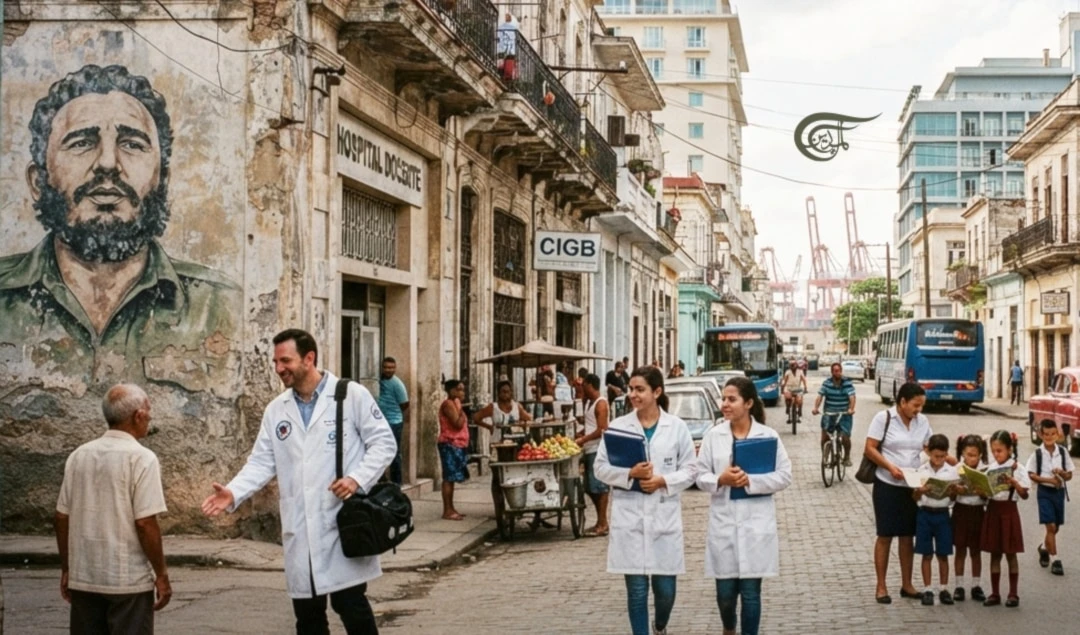
Let me tell you one of the many stories that do not appear in official reports. At the Pediatric Hospital of Havana, doctors have learned to perform emergency surgeries with rechargeable headlamps and cell phone flashlights. When the hospital's generator fails—and it fails frequently due to the severe fuel deficit and because spare parts to maintain it do not arrive—anesthesiologists must manually ventilate patients with resuscitation bags. Anesthetics, both inductors and pure, are critical supplies that are alarmingly scarce, and without them no surgery is possible. Children with cancer, who require continuous chemotherapy, see their treatments interrupted because the refrigerators where medications are stored lose the cold chain during prolonged blackouts. The survival rate for children with leukemia in Cuba fell from 85 percent to 65 percent in just two years.
And it is not only children. Oncological, renal, and surgical patients in general are trapped in a system that cannot operate. More than 5,000 people are waiting for an oncological intervention, while 2,888 hemodialysis patients have seen their treatments affected, forcing the system to increase the reuse of dialyzers as a desperate measure. Each suspended operation is a deferred death sentence for someone with cancer. At the "Mártires del 26 de Julio" Home for the Elderly in central Havana, staff have had to improvise cooling systems with ice bought on the public market to preserve insulin for diabetic patients. Alzheimer's patients, disoriented by darkness and extreme heat, have increased their episodes of agitation and falls. Testimonies collected in the community report that several elderly people died in August 2026 during a 72-hour blackout, not from their chronic diseases, but from dehydration and heat exhaustion. They were not numbers. They were people. They were someone's parents and grandparents.
The Children, the Generation Being Sacrificed
Beyond what has already been noted, the impact on Cuban childhood deserves special attention, because that is where the blockade leaves its deepest, most lasting, and most painful mark. More than 117,000 children have stopped receiving their daily milk ration, according to international press reports. The energy crisis also severely affects the meat supply intended for care facilities, nursing homes, and priority patients. Children, who should be growing up healthy and strong, have their nutrition compromised by a policy that shows contempt for childhood. But the damage is not only physical. Despite the magnificent effort to keep the school year and education—essential pillars of the Cuban Revolution—from being disrupted, the damages are inevitable. Children do their homework "in the dark." Young people grow up with enormous connectivity difficulties and serious problems enjoying recreational spaces. Its future is being painfully damaged.
Without Light and Water: Another Right Denied
The blockade does not only turn off the lights: it also seriously affects the water supply. Families are forced to keep several containers—jugs, tubs, buckets, plastic bottles, even bathtubs—always full of water. Many times they have to fetch it in buckets from distant places, because often, when there is a blackout, the water supply is also cut, and even the gas supplied through public networks is cut as well. Without water, bathrooms cannot be kept clean, nor can the home and family be kept hygienic. But this inevitable need to store water, due to mosquito proliferation, generates additional problems: a significant increase in mosquito-borne diseases has been reported, and dengue cases have grown by 300 percent compared to the same period last year. To close the siege, the blockade also prevents the import of insecticides and larvicides needed to combat the transmitting mosquito.
Blackouts have become increasingly frequent and prolonged. On a daily basis, they last between 20 and 40 hours, with a 2- or 3-hour window in which electricity returns at any time of day, sometimes at dawn. Therefore, the people must stay alert to do household chores when electricity returns, for fleeting periods. There are areas that have no electricity for several days. The extreme fuel shortage and the blockade that restricts access to spare parts for thermoelectric plants explain the extreme fragility of our national electric system. On July 14, 2026, the entire Cuban power grid collapsed for the third time in less than two weeks.
The situation is, simply, desperate.
Transportation and Tourism Paralyzed
The energy blockade has paralyzed public transportation throughout the island. What were once routine trips for work, family, or recreation have become an impossible odyssey for many.
Tourism, which was one of the island's main sources of income, is in crisis. Many foreign companies that operated in the tourism sector together with Cuban companies have withdrawn from the country due to U.S. sanctions. This is the case of the Spanish chain Meliá, which had 34 hotels and had been working continuously with Cuba for 36 years. The company argued that the "notable operational, legal, economic, and financial difficulties" derived from the U.S. blockade and the energy crisis made it "impossible" to maintain minimal operational stability in the country. Many cruise ships and airlines suspended their operations in Cuba due to fuel shortages. In Old Havana, numerous modern and comfortable hotels are practically empty. Thousands of Cubans who depended on that sector have lost their jobs or seen their incomes fall to unsustainable levels.
Health workers, teachers, and engineers, the backbone of the country, struggle enormously to reach their workplaces because public transportation has cut its services almost to zero.
A Cuba Without a Blockade
Rodríguez Parrilla offered a fact that invites the deepest reflection: if the blockade did not exist, Cuba's Gross Domestic Product in 2025 would have been 10.8 percent higher than the estimated value. That means the blockade not only impedes development: it actively impoverishes the nation, reduces its capacity for social investment, limits access to medicines, food, and technology. Every dollar that never arrives is a hospital left in disrepair or a school left unrepaired..
The blockade is an active policy of destruction. The Trump administration does not only maintain it; it intensifies it, reinvents it, makes it crueler. Its executive orders and the shower of "sanctions" in 2026 have constituted a declaration of total war, particularly energy war, against the civilian population.
Without the blockade, Cuba would be one of the most developed countries in Latin America and would contribute to humanity everything that has characterized and distinguished it: health, education, science, sports, and especially solidarity.
The Blockade Is an Act of War
The strict fuel blockade against Cuba constitutes a "naval blockade" that, in international law, is an "act of war." "It is the same ruthless feeling as in the genocide in Gaza; in Cuba it is silent, without bombs, but it also kills," the Cuban foreign minister stated. It is not a metaphor: it is a confirmation that a policy that generates severe shortages in all areas of a people's life is causing deaths and deterioration slowly but surely.
And it is not an interpretation. Secretary of State Marco Rubio himself confessed it without hesitation: "What we are trying to teach them is that there are no escape valves. Every time they create a new mechanism to try to free themselves from the siege, we simply block it." It is the most explicit admission that the suffocation is not collateral damage, but the very objective of the policy.
President Donald Trump has not ruled out military intervention and has threatened on several occasions to take the island. A military intervention "would provoke a true bloodbath," in which not only Cubans would die, but also Americans "in a war that is not theirs." Cuba is prepared for that extreme alternative, but the blockade is already a war, a silent war fought in every Cuban home, in every hospital, in every school, in every kitchen where food spoils for lack of electricity.
How many more deaths and how much more suffering are needed for the world to shout "enough"? The energy siege is causing a humanitarian damage comparable to that of an armed conflict. There are no bombs, but there are children dying of diarrhea from contaminated water. There are no tanks, but there are elderly people dying of dehydration from extreme heat. There are no rifles, but there are doctors operating with flashlights strapped to their heads. Is that the civilization the world defends?
The Paradox of International Legality: 31 Condemnations, Zero Effects
Here we arrive at the heart of global hypocrisy. The UN General Assembly has condemned the blockade against Cuba for 31 consecutive votes, overwhelmingly. In 2023 and 2024, support reached almost unanimous figures (187 votes in favor, 2 against). In 2025, although the majority remains overwhelming, support fell to 165 votes. This decline demonstrates the enormous pressure the United States exerts in a vain attempt to legitimize its policy of death.
On July 7, the UN General Assembly approved the holding of a special session to debate the blockade with 136 votes in favour, only 9 against, and 30 abstentions. That session, which lasted two days and included interventions by dozens of speakers in defense of Cuba, was a preview of what will happen on October 28, when the resolution "Necessity of ending the economic, commercial, and financial blockade imposed by the United States of America against Cuba" is put to a vote.
But UN resolutions are not binding on the United States. Washington continues to defy the international community with the impunity conferred by its military and economic power.
What is the use of international condemnation if it has no binding effects? The UN resolution "requests" an end to the blockade, but cannot impose it. This reveals the impotence of the multilateral system before the will of a superpower. The entire world says "no," but the blockade continues and intensifies. How is this possible?
The answer is one: there are no consequences. The United States uses its economic and military power to pressure other countries, blackmail shipping companies, and isolate Cuba, defying international law. To this is added the passivity of powers that, having the capacity to confront this hegemonic and criminal dominance, prefer to look the other way. The fantasy of neutrality, or the conviction that these are problems of others that do not affect us, is what sustains these attitudes. And those attitudes, in the end, are suicidal. It is enough to recall the terrible example of Nazism and fascism during World War II. Passivity, neutrality, and complicity allowed the threat to advance, and by the time the world reacted, it was too late. The UN report that describes the blockade as an "energy famine" with grave consequences for human rights is ignored. Declarations by human rights experts condemning the blockade go unheard. The will of the General Assembly is trampled underfoot.
This impunity does not only harm Cuba. It erodes the credibility of the entire system of international norms. If a superpower can violate international law with impunity, what value do the laws governing relations among peoples have? The blockade against Cuba is not only a crime against a country: it is a crime against the very idea of international justice.
Geneva Backs 10 Recommendations Against the Blockade
But the paradox of international legality has entered a new and hopeful chapter this week. On September 9, 2026, the UN Human Rights Council—in its 63rd regular session—overwhelmingly backed the report of the Special Rapporteur on Unilateral Coercive Measures, Alena Douhan, who traveled to Cuba for the first time to gather direct evidence on the ground. The findings, described by Foreign Minister Bruno Rodríguez as "forceful," concluded that the blockade and the energy siege have a "devastating impact on the entire Cuban population and particularly on its most vulnerable sectors," in flagrant violation of the rights to food, health, education, development, and life.
On that basis, the Council endorsed 10 concrete recommendations directed at the U.S. government. Among them: lift all unilateral coercive measures against Cuba; eliminate all restrictions that hinder the supply of essential goods, including food, medicines, electrical supply systems, water supply, and sanitation; end the designation of Cuba as a State sponsor of terrorism, a political tool used to isolate the island from the international financial system; repeal the national emergency declared under the false premise that Cuba represents a threat to U.S. security, as incompatible with Article 4 of the International Covenant on Civil and Political Rights; eliminate fines imposed on banks for having links with Cuba; remove all obstacles to the sending of remittances; and opt for dialogue, rather than pressure, to resolve disputes.
Cuba's ambassador to the Council, Rodolfo Benítez Verson, said it bluntly: the Special Rapporteur's report "reveals Washington as a liar when it says there is no blockade" and demonstrates that this policy "must be lifted, because it violates International Law and invades the sovereignty and jurisdiction of other States." No nation defended the criminal conduct of the United States in the session. "It is now up to the Council to follow up on the implementation of these actions by the United States," the foreign minister concluded.
This is the news the world must know: it is not a political opinion, but a legal finding backed by evidence gathered on site. The ball is now in Washington's court. And the entire world has documentary proof that its refusal to lift the blockade is not an act of legitimate defense, but a deliberate and systematic violation of international law.
Resistance: The Cuban People Do Not Give Up
Despite everything, the Cuban people do not give up. And here is the most moving part of this story: daily resistance, creativity to survive, and dignity to face adversity. But we do not resist alone. We are accompanied by the warm solidarity of the peoples of the world, who strengthen our resolve and remind us that we are not forgotten. "
In every neighborhood, neighbors organize to share water when the pumps do not work. In every hospital, doctors invent solutions: they operate with flashlights, manually ventilate patients, store medicines in portable coolers powered by solar panels they installed themselves. In every school, teachers seek alternatives so children do not lose the school year, improvising outdoor classes during hours without light.
Cuba has learned to install solar farms in just a few days, even though the blockade prevents the import of solar panels and batteries. Electric vehicles are proliferating across the country. The island is accelerating its transition to renewable energy, not only out of ecological conviction, but out of a need for sovereign survival. Every solar panel installed is an act of defiance against the blockade. Every battery that manages to be imported is a battle won against darkness..
Young Cubans, despite the lack of connectivity and recreation, have not lost hope. They organize community activities, art workshops, sports, and even festive activities in public spaces, keeping alive the culture and joy that characterizes our people. Resistance is not only about surviving: it is about maintaining humanity in the midst of the siege.
And there is another type of resistance, silent but powerful: that of mothers fanning their babies during blackouts, of grandparents sharing their stories by candlelight, of children doing their homework with hope for a better future. That resistance is what makes the blockade, despite all its power, destined to fail. Because a people that refuses to be bent cannot be bent.
October: An Appointment with History, a Cry of Hope
Next month, on October 27 and 28, Cuba will formally present this report and the resolution before the UN General Assembly. We trust that the vote will reflect majority support, despite Washington’s pressures. As the foreign minister stated, “In spite of the extraordinary pressure and intimidation by the United States on Member States, Cuba trusts in the overwhelming support for the demand that the blockade be ended.”
But the real challenge is not merely to add votes in New York. The challenge is for those votes to translate into concrete actions, for international law to prevail over unilateralism, and for the international community to move from moral condemnation to effective measures to end this policy that violates the UN Charter and the most elementary principles of humanitarian law.
The October vote is not only about Cuba. It is a referendum on whether the world accepts that a superpower can impose its will by force, violating international law and causing immense human suffering. It is the opportunity for the international community to say “enough” to impunity. It is the opportunity for the world to demonstrate that international norms are worth something.
Conclusion: A Crime That Cannot Go Unpunished
As a Cuban academic, as an intellectual who has experienced personally and in my family how the blockade mutilates the present and mortgages the future of my country, I can only affirm in the strongest terms: the U.S. blockade against Cuba is a crime against humanity. It is not an opinion, it is a finding based on facts, figures, and testimonies. It is a policy that should shame whoever maintains it and that stains the history of a country that calls itself a defender of freedom.
The report presented by Foreign Minister Bruno Rodríguez to the press is a contundent document. It must be read, disseminated, and debated. Because every figure is a life, every dollar of damage is a truncated dream, and every year that passes without this siege being lifted is a year of unjust and unnecessary suffering.
Cuba does not ask for charity. Cuba asks for justice. And the world, on October 28, will have the opportunity to say, once again, that the blockade has no place in the 21st century. That humanity cannot continue to be complicit in this collective punishment. That Cuban children deserve to grow up with light, with milk, with a future. That Cuban elderly deserve to live their last years with dignity, not in darkness and scarcity. That Cuban families deserve to live in peace, without the ghost of the blockade lurking in every corner of their homes.
No more blockade. No more suffering. No more silence. No more impunity.
References
Agencia Cubana de Noticias. (2026, 9 de junio). Una expedición guiada por amor a Cuba. Juventud Rebelde. https://juventudrebelde.cu/cuba/2026-06-09/una-expedicion-guiada-por-amor-a-cuba
Cubadebate. (2026, 7 de septiembre). El bloqueo castiga la vida cotidiana de un pueblo en todos los ámbitos. Mesa Redonda. http://redaccionmr.cubadebate.cu/noticias/2026/09/07/el-bloqueo-castiga-la-vida-cotidiana-de-un-pueblo-en-todos-los-ambitos/
El Confidencial. (2026, 21 de julio). Meliá abandona definitivamente Cuba al cerrar todos sus hoteles en el país. https://www.elconfidencial.com/empresas/2026-07-21/melia-abandona-definitivamente-cuba_4393468/
Granma. (2026, 7 de septiembre). Informe «Necesidad de poner fin al bloqueo económico, comercial y financiero impuesto por los Estados Unidos de América contra Cuba». https://www.granma.cu/cuba/2026-09-07/informe-necesidad-de-poner-fin-al-bloqueo-economico-comercial-y-financiero-impuesto-por-los-estados-unidos-de-america-contra-cuba-07-09-2026-12-09-01
La Jornada. (2026, 8 de septiembre). Denuncia Cuba que por bloqueo de EU ha perdido 8 mil mdd en un año. https://edit00.jornada.com.mx/2026/09/08/mundo/020n1mun
La Jornada. (2026, 10 de septiembre). Bloqueo estadunidense a Cuba tiene más impacto en pobres, mujeres y niños: relatora de ONU. https://www.jornada.com.mx/2026/09/10/mundo/024n3mun
Radio Rebelde. (2026, 10 de septiembre). Canciller Bruno Rodríguez destaca apoyo internacional a Cuba en Consejo de Derechos Humanos. https://www.radiorebelde.cu/canciller-bruno-rodriguez-destaca-apoyo-internacional-a-cuba-en-consejo-de-derechos-humanos-10092026
Trabajadores. (2026, 7 de septiembre). Presenta Cuba nuevo informe contra el bloqueo. https://www.trabajadores.cu/20260907/presenta-cuba-nuevo-informe-contra-el-bloqueo/
Xinhua. (2026, 5 de septiembre). Bloqueo de EE. UU. agrava afectaciones al suministro de agua en Cuba. http://spanish.xinhuanet.com/20260905/