Glasgow’s students stand with Palestine. Why doesn’t the university’s leadership?
-
 David Miller
- Today 16:14
 20 Min Read
Students elected Ghassan Abu-Sittah as rector by a landslide. Management investigated him and distanced itself from him, and the governing body voted against divesting from arms companies. Throughout the genocide in Gaza, the university’s principal was a trustee of the Walton Foundation, the charity of one of Scotland’s leading Zionist families. The foundation paid his university £275,000 and funded Lubavitch, the Scottish branch of the Chabad movement.
-

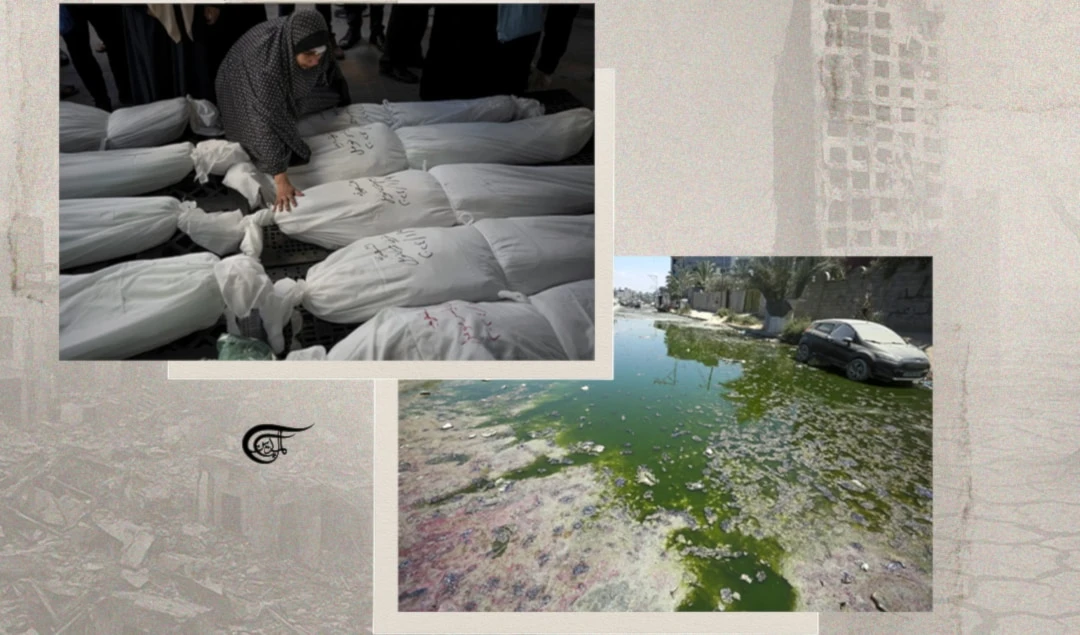
A university that asks its students to trust its handling of Palestine owes them answers (Illustrated by Batoul Chamas to Al Mayadeen English)
In 2024, students at the University of Glasgow elected the British-Palestinian surgeon Ghassan Abu-Sittah as their rector. He won 4,172 of the 5,219 votes cast. Few student votes anywhere have sent a clearer message.
Later that year the university consulted on its investments. It found that 81 per cent of staff and 86 per cent of student respondents wanted it to divest from arms companies.
The leadership has gone the other way. Repeatedly, the university’s management and its governing body, the Court, have treated Palestine solidarity as a problem to be managed. That raises a question. Why is the leadership of one of Britain’s oldest universities so out of step with its own students on Palestine?
This article does not claim to fully answer that question. It sets out one documented fact that the university has never explained. For about six years, including almost the first two years of the genocide in Gaza, the then principal, Sir Anton Muscatelli, sat on the board of a family charity. That charity was paying his university and funding Zionist causes, including the Scottish iteration of the genocidal cult known as Chabad-Lubavitch.
A record of hostility
The pattern predates 7 October. In 2021, the School of Politics and Sociology invited Dr Somdeep Sen of Roskilde University to give a seminar on his book Decolonizing Palestine: Hamas between the Anticolonial and the Postcolonial. The Jewish Students’ Society complained that the talk was antisemitic.
According to the International Studies Association, Sen was then asked to show that his talk did not breach UK anti-terror law, “without the institution offering reasonable grounds for such concerns”. The ISA protested the “significant barriers” put in the seminar’s way. Sen withdrew, and the seminar did not take place.
The university’s chief operating officer, David Duncan, replied to BRISMES, the Middle East studies association, on Sir Anton’s behalf. He said the university had “not prohibited any academic from speaking” and hoped the seminar would “proceed as planned”. The same letter confirmed the university’s decision to adopt the IHRA working definition of antisemitism, though not the examples that mention "Israel."
That same autumn, the university retreated after labelling an article in its own postgraduate journal, eSharp, antisemitic. BRISMES later wrote to Sir Anton about the affair. I reported on it at the time for The Electronic Intifada.
The rectorial election brought the same reflex. During the campaign, UK Lawyers for Israel wrote to Sir Anton about Abu-Sittah. UKLFI published his reply, in which he said he had asked the Clerk of Senate “to investigate”.
After the students had spoken, Sir Anton told UKLFI that the new rector’s views “do not represent those of the University”.
Dr Abu-Sittah told me that “it was very clear from the very beginning that the university found itself in a very difficult situation because of the vote”, since “this clear mandate ran in the face of the wishes of the university”. In his account, the university tried “four times” to stop his candidacy before the election by referring him to its adjudicator in the Senate to examine his fitness, and afterwards Sir Anton “refused to attend my inauguration”. “It was from the very beginning something that they tried to distance [themselves from] once it became a fait accompli,” he said.
The case against Dr Abu-Sittah has since fallen apart in more than one forum:
-
Germany: German courts ruled that the measures barring him from the country were unlawful.
-
Medical regulator: In January 2026 a medical practitioners tribunal found the General Medical Council’s case against him not proved. The GMC is appealing.
Students occupied 11 University Gardens from 22 January to 6 February 2024, demanding divestment from arms companies. On 20 November 2024 the Court voted 14 to 7 against divestment, despite the consultation result. Its minute records that this was “the unanimous position of SMG”, the senior management group, “based on the moral position of supporting the UK defence sector”. Sir Anton was present at that meeting. Staff anger was reported by The National.
In April 2025, a student was banned from campus after a protest at an open day.
Asked for comment, a University spokesperson said that “universities are a place for debate” and that “we fully recognise and respect the right of students and staff to do so within the law”. But “where individuals engage in acts of vandalism, break the law or disrupt the rights of others to go about their business in peace, we investigate and take disciplinary action under the Student Code of Conduct”. The spokesperson added that “the large majority of demonstrations pass off peacefully, so recourse to the Code is rarely required”.
In March 2026, the Hillhead Review reported, the Glasgow University Justice for Palestine Society lost its booking at the Queen Margaret Union for a talk by the Egyptian-Canadian academic Mohamed Abdou, about an hour before it was due to start. The society alleged that university management, “through David Duncan”, had pressured the union to cancel on grounds of “illegality” and because the event could be “alienating” to some students. Abdou left Columbia University in 2024 after controversy over statements he made following 7 October, including that he was “with the muqawamah (the resistance)” of Hamas, Hezbollah and Islamic Jihad “but up to a point”. The university did not comment directly on the booking. It told the paper that “universities are a place for debate” but that “hate has no place in our University”.
I asked the university whether it disputed the society’s allegation and whether anyone in management had contacted the union. Its spokesperson said that student societies affiliated to the Students’ Representative Council “are welcome to book space for speakers, debates and events on campus”, but that “the GUJPS is not an affiliated student society – we do not know who its office holders are – and so it is not afforded this privilege”. The statement did not say whether anyone in management contacted the Queen Margaret Union, which is a separate charity with its own premises. Asked again, the spokesperson said that affiliation “is with GUSRC so that’s a question for them”, referring to the Glasgow University Students’ Representative Council, and repeated that “GUJPS is not an affiliated student society so we do not know who its office holders are”. The further reply again did not address whether anyone in management contacted the union.
I then asked the Students’ Representative Council. Its President, Molly Corbett, replied that “to my knowledge, GUJPS have never been an affiliated society with GUSRC” and had never applied for affiliation. She said that “the University’s management has not specifically been in contact regarding the affiliation of GUJPS or any other Palestinian society”, and that the university “seemed to be aware that GUJPS are not affiliated”. She added that “non-affiliation would not prevent GUJPS from booking spaces at Queen Margaret Union”, although “non-affiliates may not access University managed Buildings on Campus”. The university’s point about affiliation therefore explains why the society cannot use university buildings, but not why its booking at the union, which non-affiliation did not bar, was cancelled.
In October, the Glasgow Guardian reported that shares in BAE Systems, Boeing, Lockheed Martin and Rolls-Royce were still held at the end of May 2026. The university said it “does not control direct investments made by the Investment Managers”. The university’s endowment asset listing for 30 April 2026 includes all four companies, among other arms makers. They no longer appear in the listing for 31 July 2026. Nor do about 300 other companies, including Samsung, Unilever and Nestlé, while Rheinmetall and Textron remain. The university has not said whether this reflects any decision to divest; it had been tendering for a new passive fund manager. Asked whether it still holds shares in them, a University spokesperson said only that “the University’s shareholdings are publicly available on our website”. Asked about the change between the two listings, the spokesperson said that “fund managers have discretion to invest and divest in specific companies over time”. That reply did not say whether the disappearance of the four arms companies reflected a decision or a policy of the university, or a choice made by its fund managers alone. The statement did not respond to the Court minute’s account of SMG’s “moral position”.
There is another side to the record. The university called for a humanitarian ceasefire in November 2023, and it offers scholarships to students from Gaza and the wider region. But on every contested decision, management stood against the clear wishes of students and staff.
The principal and the Walton Foundation
Sir Anton Muscatelli led the University of Glasgow from 2009 to 2025. From 2019 or 2020 until August 2025 he was also a trustee of the Walton Foundation. A University spokesperson said: “It is a matter of public record that Professor Sir Anton Muscatelli was a trustee of the Walton Foundation. He stepped down as a trustee in 2025.”
The foundation’s published 2024 accounts redact one trustee’s name. The accompanying note states that the redacted trustee “(a trustee until 25 August 2025), is the Principal and Vice-Chancellor of the University of Glasgow”. Because of that seat, the foundation disclosed its payments to the university as related-party transactions. They totalled £275,000:
-
The 2018 pledge: £250,000 for a “Walton Unit for Translational Pharmacology”, committed in October 2018 before Sir Anton joined the board. Nine of its ten instalments, worth £225,000, were paid while he was a trustee.
-
The 2024 grant: a further £25,000. It is the only new grant to the university decided while he sat on the board.
Two official records disagree about when he joined. His own report to Court in October 2019 records: “26 August: Having accepted an invitation to become a Trustee of the Walton Foundation, I attended their AGM.” The university’s register of his external roles gives “Jan-20”. There may be an innocent explanation, such as a formal deed of assumption signed months after the AGM.
The register, which I obtained under freedom of information, files the trusteeship under “social good/philanthropy”. It is the only one of his roles described that way. In March 2025 the university answered my request (reference 625523) with this statement: “As previously advised, the University does not hold any information relating to the Walton Foundation.” Yet it had received £275,000 from the foundation under a funding commitment that ran for five years. Its statement to me now calls the trusteeship “a matter of public record”, but it did not explain the FOI answer, the two start dates or the “social good/philanthropy” category.
The register leaves out another "Israel"-related role. The Academic Study Group on Israel and the Middle East lists “Prof Sir Anton Muscatelli Glasgow University” on its National Council. That role does not appear in the register the university released to me.
The university’s Register of Interest Policy requires Court members to declare interests “in matters likely to be considered by the University”. I reviewed Court papers from October 2019, April 2024, February 2025 and September 2025. They contain no declaration about the foundation.
There is no evidence that Sir Anton took part in any grant decision concerning his own university. There is also no evidence that the trusteeship influenced any decision the university took on Palestine. The documents simply do not say whether he stood aside.
A Zionist family for six decades
The Walton family has been at the centre of organised Zionism in Scotland for more than half a century. I have traced their role as part of what I call the Caledonian Cousinhood on Mintpress and in a previous article for Al Mayadeen English.
The property developer Isidore Walton (1913–1979) built Scottish Metropolitan Property. He founded the charity in 1964 with his wife, Lena, and his son David. The Jewish Chronicle published his obituary in June 1979. It described him as a “hard-line Zionist” and recorded that he had endowed chairs at Glasgow and Strathclyde universities and sat on Strathclyde’s Court.
In 1963 he was one of five founders of the Glasgow Jewish Community Trust. His son David succeeded him as chairman of Scottish Metropolitan, the Herald reported in 1990.

The family’s bond with Chabad-Lubavitch goes back to the movement’s arrival in Scotland. Rabbi Chaim Jacobs and his wife Sora were sent to Glasgow by the movements leader, the Rebbe, Menachem Mendel Schneerson. Chabad’s own news site describes them as the first British Lubavitch emissaries to open a Chabad house in a city outside London and Manchester. In July 1971 the Jewish Chronicle reported that “nine Lubavitch leaders from London assisted in the project launched by Mrs. Isidore Walton”, a Lubavitch day camp.
The link has continued into the present generation. In November 2019, Lubavitch of Scotland held its golden jubilee dinner. Its guests of honour were “local benefactors David and Carole Walton”, the same site reported. Rabbi Aryeh Sufrin attended, representing Lubavitch UK.
On 24 November 2024, during the genocide in Gaza, the 55th anniversary dinner again honoured David and Carole Walton. They were described as “Glasgow’s leading charitable benefactors”. Tribute was paid to “their generosity in supporting Lubavitch”. The guest speaker was the first Lubavitch rabbi to serve as a chaplain in the US military.
Where the money went
David and Carole Walton are trustees of the foundation, alongside the principal until 2025. The accounts describe its purposes as charitable “primarily in Glasgow and the West of Scotland”. Most of its money goes to care, hospital and community causes, led by Cosgrove Care. Its named grants to "Israel"-linked causes between 2016 and 2025 amount to roughly 4 per cent of donations.
But one beneficiary appears year after year: Friends of Lubavitch Scotland, the fundraising charity of the movement’s Glasgow centre in Giffnock. The foundation gave it £59,500 between 2015 and 2025. During Sir Anton’s trusteeship it gave at least £30,000, including £10,000 in 2024. There is no evidence that Lubavitch in Scotland sent any of this money to Israel or to its military. The grants supported its work in Glasgow. The question is what movement that work belongs to.
The foundation’s largest "Israel"-linked commitment leads, at one remove, towards the Israeli military. In September 2023, weeks before 7 October, the foundation committed £25,000 to the United Jewish Israel Appeal’s Access Israel Fund, payable in five annual instalments of £5,000 from October 2023. UJIA says the fund exists so that money does not stop young British Jews “participating in transformative Israel experiences”, including gap years in "Israel", because “Israel’s centrality to Jewish identity and community leadership is increasingly under challenge”.
One gap year UJIA lists is the Year Course of the Federation of Zionist Youth, to which UJIA’s accounts record grants of £233,000 in 2025 and £167,000 in 2024. FZY says the course fee includes “the option to participate in MDA or Marva (subject to acceptance)”. "Israel’s" military describes Marva as “an army simulation program run by the IDF and the Jewish Agency for Israel”.
In July 2026 Middle East Eye reported that another provider, Aardvark Israel, offered Marva within a gap-year track advertised on UJIA’s website. Aardvark says participants live on an military base for six to eight weeks and “wear an Israeli army uniform, carry a gun”. It also states that UJIA bursaries cover “all Aardvark Israel Programmes”, although Aardvark no longer appears in UJIA’s online directory. CTeen, Chabad’s teen network, invites families to apply for a UJIA bursary for an "Israel" tour whose activities include “packing and delivering care packages to IDF soldiers”.
UJIA does not run Marva. There is no evidence that the Walton grant, or any bursary it funded, paid for Marva or went to anyone who took it. UJIA’s accounts state that its spending in "Israel" is “restricted to projects within its internationally recognised borders”, and Middle East Eye said it was “unclear whether UJIA funds projects that link Britons to the Israeli military”. But UJIA’s money flows to movements that offer Marva, and its bursaries cover gap years that include it. It is hard to see this as anything other than helping to build a pipeline from British Jewish youth movements into an army that a UN commission of inquiry has found committed genocide in Gaza.
In 2025 the foundation gave £5,250 to MDA UK, which raises money for Magen David Adom. The accounts do not show whether that grant came before or after Sir Anton left the board. MDA’s founding law makes it “an auxiliary service of the Medical Service of the Defense Army of Israel in time of war”. MDA says its blood saved lives “inside the combat zones in the Gaza Strip”.
What Chabad stands for
Chabad presents itself to the world as a warm, outreach-minded Hasidic movement. Its own texts, its leaders and its conduct during the genocide in Gaza tell a harder story.
Its founding text: The movement’s founding text, the Tanya, teaches in its first chapter that “the souls of the nations of the world” derive “from the other, unclean kelipot, which contain no good whatsoever”. The scholar Elliot Wolfson, in a 2009 study of the Rebbe, writes that “foundational to Ḥabad’s philosophic orientation is the presumed ontological difference in the constitution of the Jew and the non-Jew”. Chabad rabbis reject readings of the passage as racist. The Rebbe himself wrote that everything contains a divine spark.
The Rebbe on land: In politics the Rebbe’s line was territorial maximalism. His “decades-long position”, the Jewish Telegraphic Agency reported in 1990, was “that Israel should not surrender ‘one inch’ of territory”. A 2013 study found that after 1967 he “emphasized the need for increased settlement” and “argued vociferously against returning any captured land”.
Ginsburgh’s writings: Rabbi Yitzhak Ginsburgh heads a yeshiva in the West Bank settlement of Yitzhar. The Forward reported in 2016 that he “considers himself part of Chabad” and that his “ties with the sect remain close”, though he has diverged from its doctrine. He is not an official Chabad emissary.
After Baruch Goldstein massacred 29 Palestinians in Hebron in 1994, Ginsburgh wrote a pamphlet extolling the act. The Forward quotes it: “the best goy is a dead one.”
Friedman’s answer: In 2009 the prominent Chabad rabbi Manis Friedman was asked how Jews should treat their enemies. He answered in Moment magazine: “The only way to fight a moral war is the Jewish way: Destroy their holy sites. Kill men, women and children (and cattle).” Friedman later apologised, calling his words irresponsible. Chabad said it vehemently disagreed with them.
Chabad in uniform: Since October 2023 those ideas have met practice. On 10 October 2023, Chabad.org described how its centres near military bases were supplying troops. One of those centres is in Hebron, in the occupied West Bank. Its entire rabbinate was “in uniform on reserve duty”. Its director told the site: “We need to know confidently that this is our land that G‑d gave us.”
A “Chabad House” in Gaza: In December 2023, Israeli soldiers in Beit Hanoun hung a “Chabad House Gaza” sign on a damaged building, Middle East Eye reported. Haaretz noted that the Rebbe “was a staunch believer that Israel must retain control of all the Biblical land of Israel”.
The UK regulator: In Britain, the Charity Commission issued an Official Warning in January 2025 to Chabad Lubavitch Centres North East London and Essex. The charity had raised about £2,280 for an Israeli soldier. The regulator found misconduct and/or mismanagement and stated that “providing aid or military supplies to any foreign armed force is not a charitable purpose”. The charity’s executive director, its own website states, is Rabbi Aryeh Sufrin, the man who represented Lubavitch UK at the Glasgow dinner honouring the Waltons in 2019.
None of this makes Lubavitch of Scotland responsible for what other Chabad figures have said or done. It does show what kind of movement the Walton Foundation was funding.
Questions the university has not answered
For about six years, the principal of a university whose students overwhelmingly support Palestine sat on the board of a charity that funded:
-
his own university;
-
the Chabad-Lubavitch movement in Scotland; and
-
a bursary scheme for “Israel experiences”.
In those same years his management questioned the rector the students chose, stood by its arms holdings and placed the burden of proof on a Palestine scholar.
I put these questions to the university. Its statements did not answer them:
-
Which start date for the trusteeship is correct?
-
Did Sir Anton stand aside when the foundation considered grants to Glasgow?
-
Was the trusteeship ever declared at Court?
-
How can a university that received £275,000 from a charity say it holds no information about it?
-
On what basis did it file that trusteeship under “social good”?
-
Who asked Dr Sen to show that his seminar complied with anti-terror law, and on what grounds?
-
What did the Clerk of Senate’s investigation of Abu-Sittah involve, and what did it find?
-
Did anyone in management contact the Queen Margaret Union about Abdou’s talk?
-
Did the university, or only its fund managers, decide that BAE Systems, Boeing, Lockheed Martin and Rolls-Royce would no longer be held?
A university that asks its students to trust its handling of Palestine owes them answers.
Declaration: I made the freedom of information request cited in this article. I have previously written about the University of Glasgow for The Electronic Intifada, and about the Walton family on my Substack, Tracking Power, and in Al Mayadeen.