US-Iran escalation: The side effects and benefits of low intensity war
-
 Robert Inlakesh
- Today 19:39
 6 Min Read
-

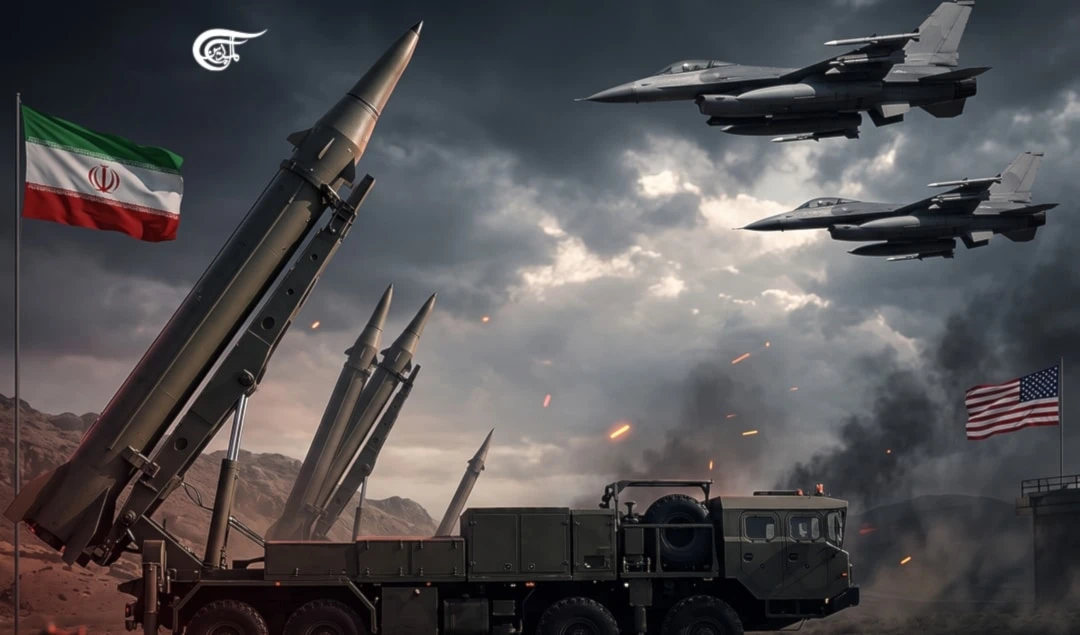
Gone is the era where the Americans are able to bully any nation they choose. Now they face a decision. (Al Mayadeen English; Illustrated by Batoul Chamas)

The US war on Iran recently escalated into direct strikes between the two sides, yet managed to remain a low-intensity conflict. However, this kind of conflict ultimately favours Tehran and will inevitably leave the United States with no other options but to resume a large-scale bombing campaign.
Despite US President Donald Trump’s frequent claims to have already defeated the Iranian military and that he personally owns the Strait of Hormuz, the consequences of the disastrous war on the Islamic Republic have continued to pile up over the months. Politically, Trump experienced a total wipeout in the mid-term elections, as US voters registered a protest vote against his leadership.
Gas prices skyrocketed, only calming down temporarily due to enormous releases of Washington’s Strategic Petroleum Reserves - which now sit at low levels not seen since the early 1980s - putting pressure on populations across the collective West, not just the United States. At the helm of the war’s decision making has been the Israeli leadership, a fact that is now well known around the world, that this costly war is being fought solely for the interests of Tel Aviv.
Since July, when Riyadh made the decision to bomb Sanaa International Airport and reopen the conflict in Yemen, Saudi Arabia’s economy and overall stability has taken an enormous hit. This has meant that the stable supply of around 6 million barrels of oil per day, exported by Saudi through the Red Sea, has been cut off from the global market.
Despite the counter-blockade imposed on Iran in the Strait of Hormuz, Tehran’s leadership has continued to export gas and increased rail trade at ten times its pre-war rate. In October, Kpler published an investigation in which it estimated that the Islamic Republic was charging tolls in exchange for allowing the passage of select vessels through the Strait of Hormuz, estimating that they had been taking between 10-20 percent of the cargo’s worth. If true, this means that Iran has earned billions in profits, off of ships that are being granted US military escorts to leave the Strait. Meanwhile, it is estimated that the blockade on Iran is costing the US taxpayer around $1 billion per month.
When the US engages in any trade of fire with Iran, a low intensity conflict massively favours the Iranians. They are capable of using all their bases at full capacity, to hit any targets of their choosing, while the US are restricted to hitting less consequential targets along the southern Iranian coastline.
In contrast, when a full-scale war is in effect, the US and Israelis working together are able to fire on Iranian missile bases frequently. The intensity of the war means that Iran’s ability to fire is suppressed to an extent and forces it to use less launchers at any given site. Missile bases during the war were struck dozens of times, and although no significant structural damage was done to the IRGC’s underground facilities, the entrance and exits were often bombed with bunker-buster munitions. Logistically, this created a temporary issue, as the area had to be dug out in order to allow for missiles and drones to be extracted safely.
Also, during an all out war period, it is far more dangerous for Iran to line up large groupings of missile launchers in single locations, as they are more prone to being pre-emptively struck. As long as the war is being fought at a lower intensity, no significant blows are likely dealt to the IRGC or Iranian regular army.
Since April 8, the United States has attempted a whole range of tactics in order to make their Iranian opponents suffer and come to the negotiating table offering surrender. The closest that either side came to a deal was the Memorandum of Understanding, which Trump ultimately betrayed, but was in essence a US surrender agreement.
The US is incapable of ending the war, because this requires them to force the Israelis to withdraw from Lebanon and to end its aggressions on all fronts, a task which has proven too tall for the decision makers in Washington.
It has not only been the United States that has suffered as a result of this war, the economic fall out has been felt around the globe; in shockwaves that haven’t even reached their projected peak. Washington’s standing amongst its allies has been greatly diminished, its power projection has been ruined, its military bases blown to pieces across West Asia, its Arab partners left battered and betrayed.
Iran on the other hand has emerged more powerful and confident than ever before, it has been granted time to resupply its arsenal of missiles and drones, even making technological advancements. Economically it knows how to survive, and has experienced worse impacts from US sanctions before. Although the multi-polar moment on the global stage may not have yet arrived in the way many were predicting, in the economic sphere, that multi-polarity very much exists today and Tehran is benefitting from this new system.
Gone is the era where the Americans are able to bully any nation they choose. Now they face a decision, the Trump administration must either take on his Israeli backers or escalate the war against Iran once again at their behest. In the likely event that he chooses more war, then Tehran is fighting a conflict against the Israelis, because victory can only come when Tel Aviv waves the white flag.