
Hormuz: The beginning of the end of dominance
 6 Min Read
A test that goes beyond geography to the credibility and continuity of power
-
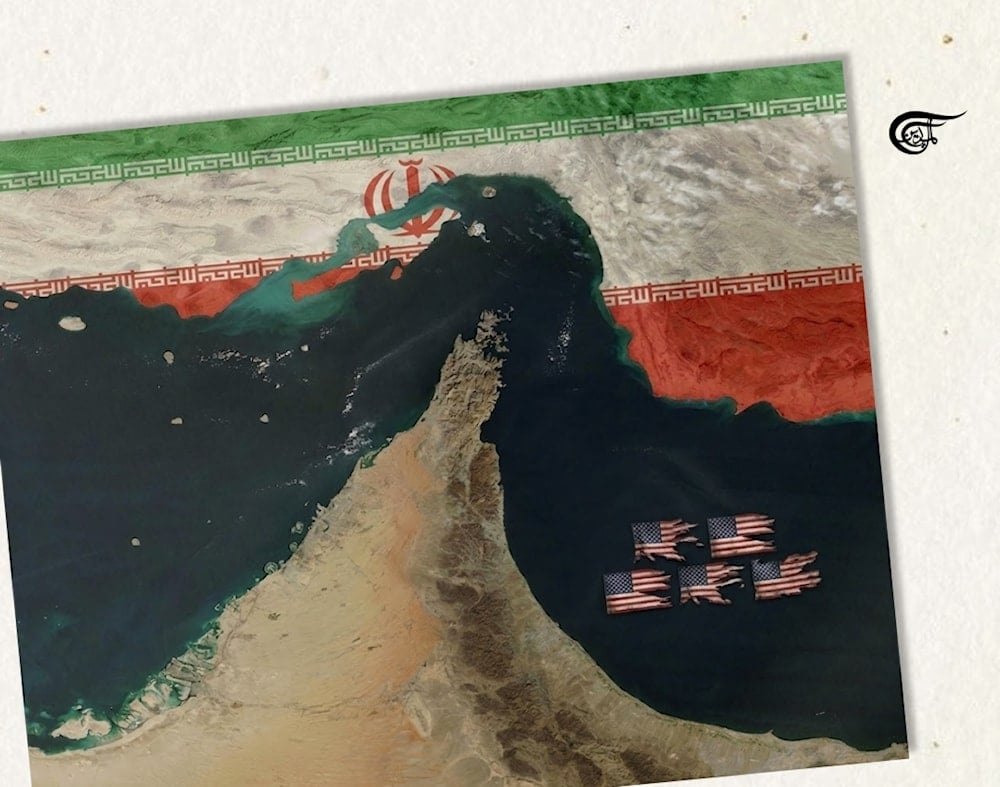
The Strait of Hormuz may become a pivotal point in reshaping the international system, where the decisive factor is no longer who is strongest, but who is perceived as likely to remain so. (Al Mayadeen English; Illustrated by Batoul Chamas)
Major shifts in the international system do not usually begin with clear military defeats, but with a slower and deeper erosion: a decline in trust. In this context, the Strait of Hormuz today stands out not only as a passage through which nearly a fifth of world oil trade flows, but also as a central test of the credibility of the power that presents itself as the guarantor of the world order.
The question is no longer who possesses military supremacy, but who can maintain order under continuous pressure and escalating costs over an open-ended period.
Most economic and strategic theorists and analysts argue that the Strait of Hormuz represents a “systemic knot” in the global economy, where energy intersects with supply chains and financial stability. Any disruption in this corridor does not remain local; instead, it quickly transmits to energy prices, then to inflation rates, and from there to monetary policy and financial markets. For this reason, control over it is not measured by the scale of military deployment, but by the ability to ensure uninterrupted flows in an environment of low-intensity yet persistent threat. The threat here is not conventional but cumulative, building over time and testing continuity more than decisiveness.
In such environments, the rules of conflict change: weaker actors do not seek direct confrontation, but rather aim to gradually increase the cost of control. This pattern makes Hormuz a typical arena for attrition warfare, where the conflict shifts from a battlefield engagement to a long test of political will. Past experiences, such as the wars in Vietnam, Iraq, and Afghanistan, have shown that military supremacy does not guarantee outcomes, and that the ability to sustain engagement is often the decisive factor. In this context, a major power may achieve frequent tactical victories, yet still face a growing challenge at the level of long-term sustainability.
History reveals a repeating pattern: decline does not begin with direct military defeat, but rather when a country’s power is reassessed by markets, allies, and adversaries. The Suez Crisis offers the clearest example. Britain did not immediately lose its military or economic capabilities, yet it lost the confidence of the international system in its ability to act independently of the United States. This triggered pressure on the pound sterling, capital flight, and forced Britain to withdraw, marking a decisive turning point in its global decline. The same pattern recurred in other historical events. Portugal, a pioneer of the Age of Exploration, did not collapse after a single defeat; rather, it gradually declined as it lost control over maritime trade routes to rising powers such as the Dutch, leading to a steady shift of commercial and financial centers away from it.
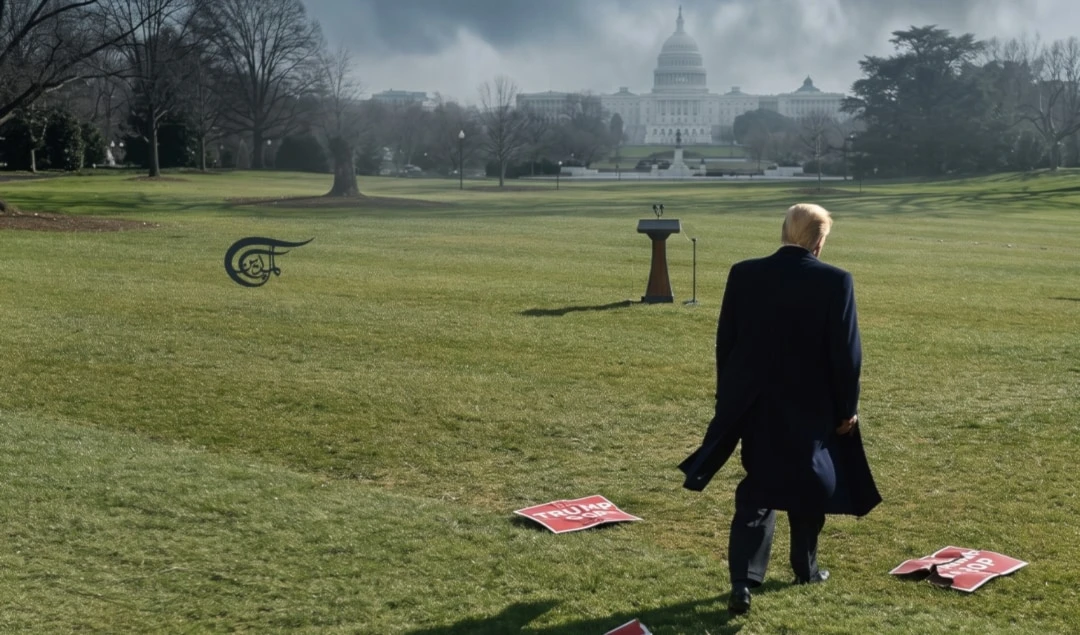
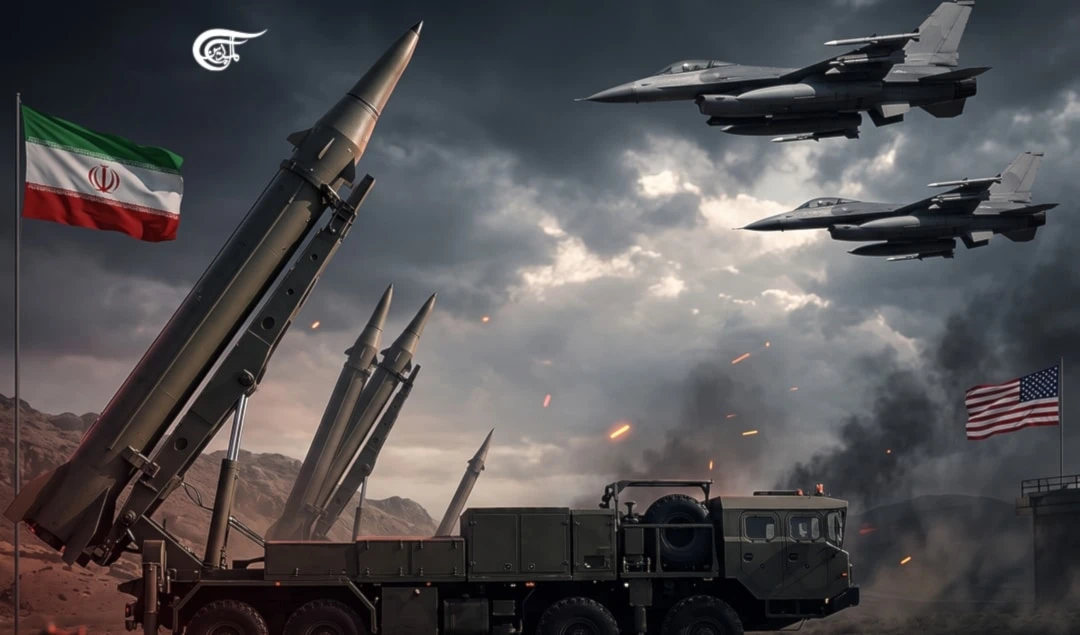
The Dutch Republic, which formed a global financial center in the seventeenth century, began its decline when it lost its naval supremacy to Britain, a shift that was quickly reflected in market confidence in its ability to protect its trading networks. Similarly, Britain itself did not decline only due to the cost of wars, but when it began to lose effective control over the strategic sea lanes that formed the basis of its maritime dominance. In all these cases, the decisive factor was not a single military event, but a cognitive shift in how others viewed the country’s ability to use its power. This shift set off a chain reaction involving asset repricing, capital reallocation, and the realignment of alliances, initiating a gradual process of decline that can be more consequential than any direct military defeat.
Based on this logic, any failure to secure the Strait of Hormuz would not be interpreted as a limited operational incident, but rather as a broader structural signal of the limits of US ability to act as the “guarantor” of the international system, a role fundamentally based on protecting vital trade and energy flows. Such a failure would quickly translate into interconnected consequences across multiple levels. On the financial level, it would lead to a comprehensive repricing of risks associated with the global economy, with higher financing costs and growing pressure on the dollar as confidence weakens in the stability of the environment on which it depends. This could push investors to seek alternative safe havens or further diversify their portfolios away from US assets. Strategically, allies would likely reassess the extent of their reliance on US security guarantees, not only in the Gulf but more broadly, prompting them to diversify their options by developing self-reliant capabilities or expanding partnerships with other powers.
At the geopolitical level, any decline in the ability to secure the strait would open space for rival powers, particularly China, to expand their maritime and economic influence, while Russia could benefit from energy price volatility to strengthen its position. Economically, these developments would compel countries and companies to reshape supply chains and energy sources in order to reduce dependence on a single chokepoint, potentially leading to long-term shifts in the structure of globalization itself. From this perspective, the core risk does not lie in a scenario of closing the strait, but in the erosion of confidence in the ability to keep it open under pressure. Once this erosion begins, it triggers a chain of cognitive, financial, and strategic interactions that could ultimately reshape the balance of the entire international system.
Accordingly, any erosion of this confidence could gradually push the international system toward multipolarity. Europe may accelerate its path toward strategic independence, while Asian countries seek alternatives for energy security. China may expand its maritime role, and Russia could benefit from fluctuations in energy prices. These shifts do not occur all at once, but through the slow accumulation of small signals: isolated incidents, tactical hesitations, and escalating costs.
In conclusion, the Strait of Hormuz no longer appears to be merely an arena of conflict, but rather a mirror reflecting the nature of power in the contemporary international system. Power is no longer defined solely by what countries possess, but by what others believe those countries are capable of doing and maintaining over time.
The clearest lesson from history remains constant: decline does not begin with defeat, but with a moment of doubt. In that moment, power does not collapse immediately, but begins to shift from a source of confidence to a subject of question. Hence, the Strait of Hormuz may become a pivotal point in reshaping the international system, where the decisive factor is no longer who is strongest, but who is perceived as likely to remain so.


