
Faraj’s arbitrary detention: Dynamics of right to life, fearless journalism
 5 Min Read
The unwarranted detention of Al Mayadeen's Faraj is not just a moment of concern but a significant test of conscience for observers of free speech, brave journalism, and basic protections of human life.
-
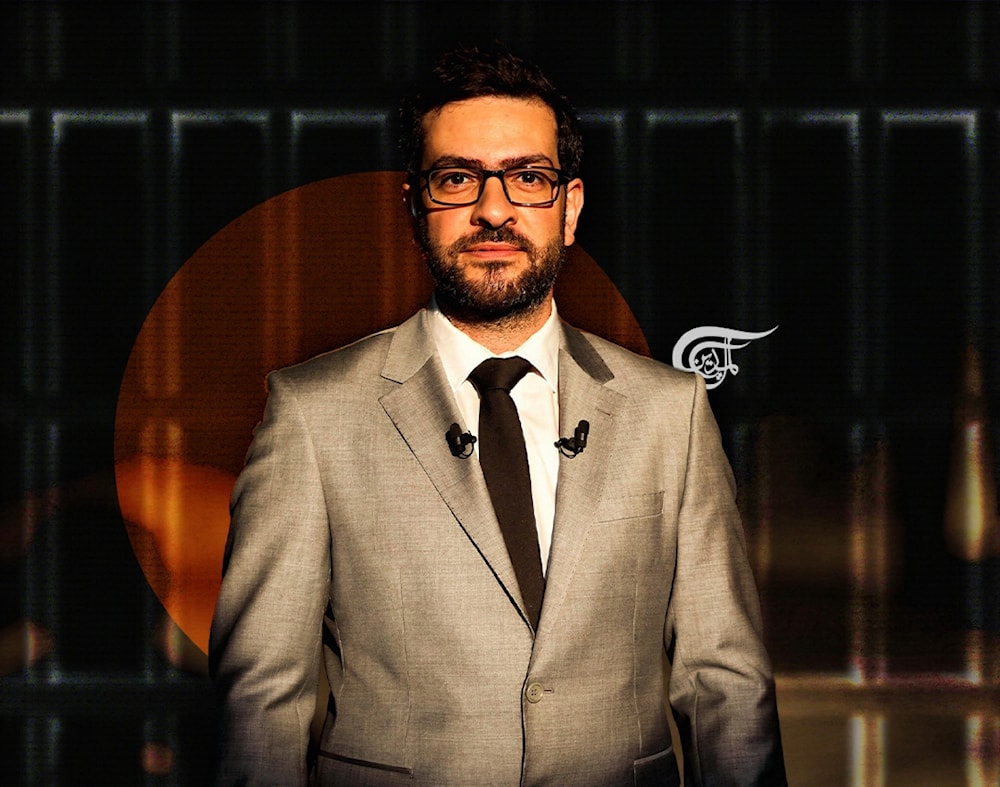
Silencing one journalist threatens every journalist’s right to speak freely (Illustrated by Ali al-Hadi Shmeis for Al Mayadeen English)
Al Mayadeen journalist Mohammad Faraj’s arbitrary detention and arrest should send shockwaves across the Middle East. Returning to Jordan, questioned in isolation, and detained without any legal justification, Faraj’s disappearance raises pertinent questions about sidestepping the due process of law and creating conditions that made it difficult for his family to visit him. The possibility that Faraj’s family could favor UN mechanisms if his current arrest is prolonged is a moment of empowerment for other activists, rights groups, and journalists who refuse to let proponents of free speech be challenged through authoritative measures.
Holding a journalist in custody without any trace of his whereabouts or legal status has no justification. Faraj’s well-established career spans documentary making, presentation, production, and commentary – often across various regions of the Middle East and international affairs. He is one of scores of voices that have established both an on-ground presence and a reputation for tailoring journalism to many mediums of expression. To be taken in isolation by authorities in Jordan and his present absence treated as the new normal is a monumental challenge to life, his family’s right to access and information, as well as the practice and protection of journalism. "There is no new information available to the General Secretariat of the Arab National Congress regarding the arrest of Mohammed Faraj, and we continue to demand his release," stated Arab National Congress General Secretariat member Khaled Shukaat recently.
The call for verifying Faraj’s current condition is in the interests of the authorities as well. If the goal is to let the arrest face the test of inspection, then it is critical to ensure that all outstanding allegations against Faraj are clarified. This move would demand transparency, heeding calls by human rights activists, journalists, and groupings – including the Committee to Protect Journalists – and communicating a sense of security to all other journalists who can be arbitrarily detained and denied further movement on their case.
The need to step up activism for Faraj also has regional merits. "Israel’s" genocidal war on Gaza has killed scores of valiant proponents of free speech, seeking to dial down their enthusiasm to speak truth to power and underlining the imperative for increased protection of journalists. With a climate of fear and intimidation marking responses from select powers to those at the center of the genocide, it is critical to strike a contrast and strengthen alignment with international law when it matters most.
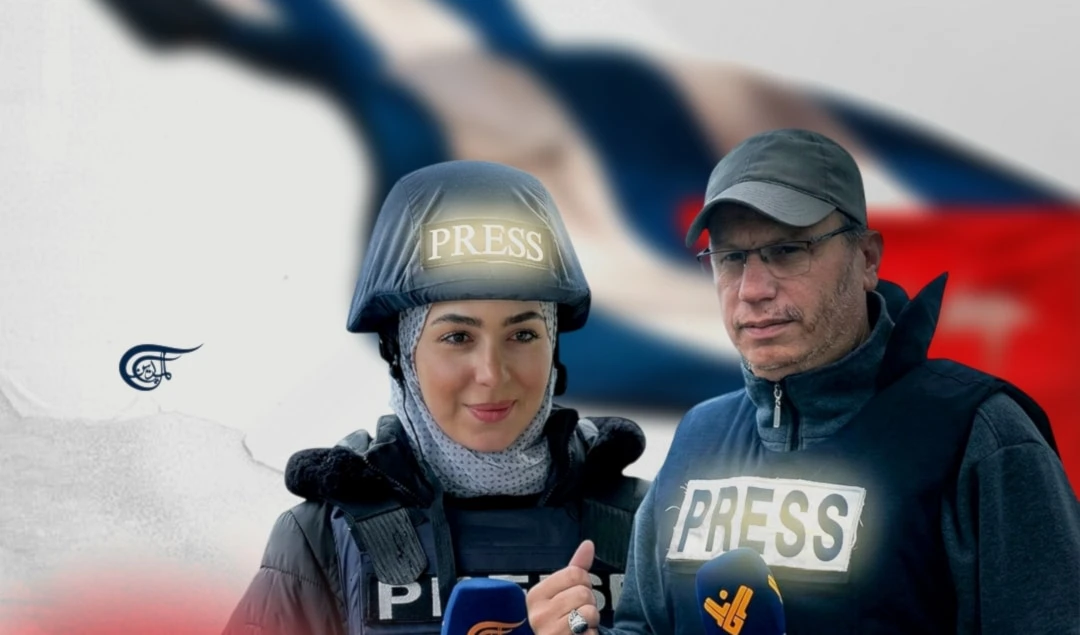

For these reasons, Faraj’s unwarranted detention is not just a moment of concern but a significant test of conscience for observers of free speech, brave journalism, and basic protections of human life. Without adequate disclosure of his whereabouts, authorities risk generating a high degree of alarm around his treatment, the grounds on which he was forced into disappearance, and how this adds up to Jordan’s stated and actual commitment to safeguarding speech and rights.
Failure to deliver Faraj from the confines will only add to the crescendo for justice. After all, it is not just the Arab Committee for Human Rights but the Scandinavian Institute for Human Rights and the International Institute for Peace and Justice that have called for Faraj’s unconditional release. There is also space for Faraj’s family, including his wife's eyewitness, to activate UN-aligned mechanisms to take proceedings forward in the event that Jordanian authorities refuse to relent. Advancement of cases in a multilateral setting could yield wonders: Pakistani ex-premier Imran Khan, who is currently serving in solitary confinement, has also drawn increased international scrutiny for a lack of action on his release. His sons, in a recent interview, appealed to possible movement by engaging with capitals in Brussels and Geneva to produce the momentum necessary to advance justice. All this is to say that a last resort measure to appeal for justice for Faraj would not be an anomaly on the part of his family. Jordanian authorities should cooperate and release information on Faraj’s present state to save his family the pain.
If global appeal is any metric for momentum, look no further than Latin America. Argentinian journalist Sebastian Salgado joined thousands of counterparts recently on the continent to elicit glaring answers to Faraj’s detention. What makes it a sight to behold for justice is that human rights organizations stood shoulder to shoulder on the issue, amplifying calls for clarification and immediate release.
This is not just about Mohammad Faraj, the journalist, in isolation. Ensuring his swift, unconditional release could also assure scores of fearless journalists across borders that they can assemble, lead personal lives, and exercise their craft without fearing arbitrary detention. Assurances require fearless activism and the joint efforts of legal entities, rights groups, and other journalist counterparts to appeal for protection. In Faraj’s case, this is apparent.
Let's also be clear: arbitrarily detaining a journalist who was on a family visit risks undermining personal agency. Thus, the stakes for Faraj’s release transcend the community of journalists: it should concern all those who are committed to their right to life and security.
Jordan can guarantee these rights, but a single standard of enforcement has to come through. For this, Faraj’s release remains central.


