News from Nowhere: Trumped off
-
 Alex Roberts
- 19 Mar 2026 16:19
 7 Min Read
This is not, of course, how you build or sustain a durable alliance. It's not how you make genuine friends. And perhaps even his most dedicated and politically duplicitous disciple, Nigel, might be starting to see that.
-
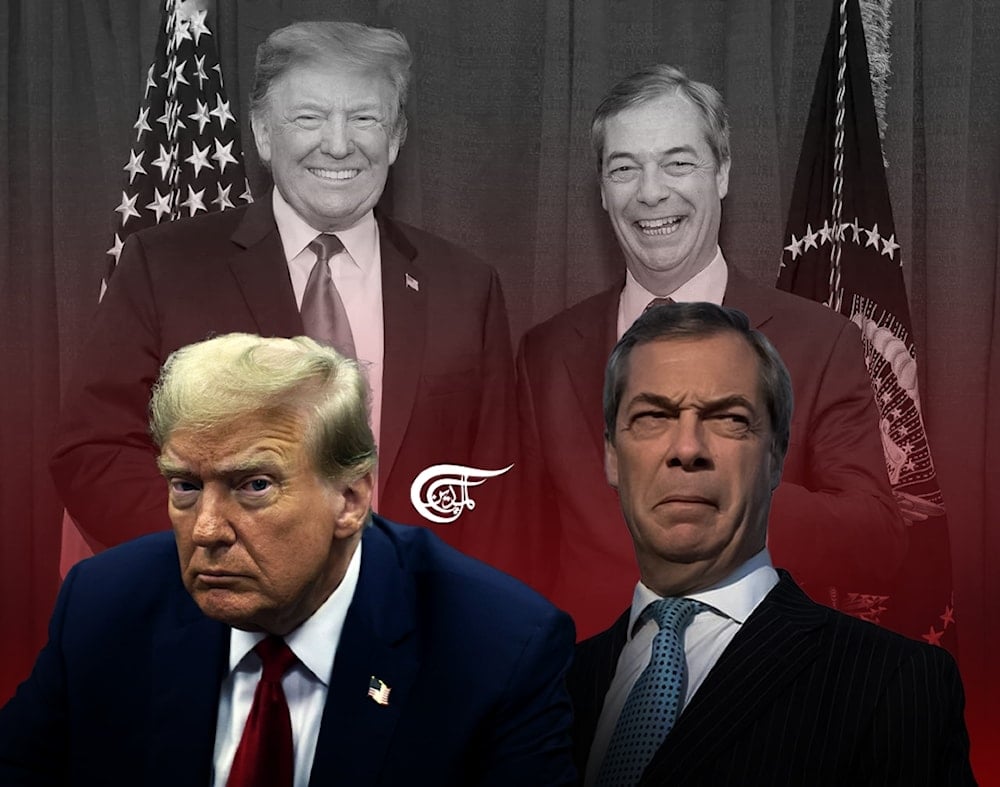
Farage backed Trump’s Iran war, then reality hit (Illustrated by Ali al-Hadi Shmeiss; Al Mayadeen English)
Reform UK supremo Nigel Farage believes he is Britain's Prime Minister-in-waiting. Nigel Farage believes he is Donald Trump's best friend. Nigel Farage believes we, in the UK, should "do all we can" to support Donald Trump's war on Iran. Nigel Farage believes that British Prime Minister Keir Starmer was wrong to refuse to take part in offensive action against Iran and to criticise Mr. Trump's strategic approach.
But then Nigel Farage went to visit the American president in his famous Mar-a-Lago resort in Florida's Palm Beach at the start of March. It was a visit that Mr. Farage had much trumpeted in advance. But when he arrived, he discovered that his best buddy Donald wasn't home. Rumour has it that nasty Nigel had booked his own room at the hotel. He may not even have been invited.
Farage had boasted that he would be "dining at Mar-a-Lago" but met instead with what the London Economic called the "embarrassment" of discovering that his relationship with the orange-faced madman in the White House has – as the Financial Times put it – "cooled" or (as Politico said) "plummeted".
As if it weren't already bad enough that he had made very public his desire to reaffirm his close association with his fellow Far Right narcissist, Mr. Farage would then have seen the opinion polls back home., or at least one of his advisors would have done so: it's pretty rare for Nigel to find time, between his high-end trips overseas, to pay a great deal of attention to what's going on in the UK.
Yes, it appears that Nigel Farage was at some point made aware of polling which showed that around 60 per cent of British people oppose the war on Iran, and that only 10 per cent support that military action.
At the same time, Mr. Trump started to get spooked by the economic and market fallout from his war. Just at the moment that his Defence Secretary – a former TV presenter of questionable moral scruples – declared that the conflict had only just begun, the US President – himself also a former TV presenter of questionable moral scruples – tried to calm the global financial panic, as oil prices soared past $100 a barrel, by announcing that his war was more or less "complete".
Trump’s unconvincing intervention had only a brief effect on the price of oil, as did the release of major oil reserves. Meanwhile, a poll showed that about three-quarters of Americans were concerned by the impacts of Trump’s war on the cost of gasoline at the pumps. As one British commentator put it, it was starting to look like the course of this war could be turned simply by deploying a few cheap drones or a couple of speedboats in the Strait of Hormuz. The Pentagon seems not to have factored this obvious possibility into its plans. And, as the BBC has pointed out, "deep rifts are growing within the MAGA movement" as a result of the economic impacts of the war.
Wealthy populist leaders like Trump and Farage have sold themselves to their dispossessed constituencies on the basis of an ultra-nationalism whose xenophobia combines a capacity to hate, blame, dehumanise, and exclude foreigners and migrants with an insularity which denies any responsibility for the problems of the rest of the world – and which has previously denounced expending resources on international interventions, whether humanitarian or military.
This stance seems difficult to square with their newfound zeal for aggressive military action. Trump and Farage's indifference to democratic norms may make them unconcerned about the impacts of this war on international diplomatic and legal structures, but their various, contradictory and increasingly ridiculous attempts to justify this action – from national economic self-interest and a vaguely articulated desire for some kind of regime change through to regional defence and a paradoxical quest for global peace – appear to fly in the face of the national isolationism which underpins their political brands.
Both these populists have also based their appeal on their claim that such rich businessmen care to, can, and will improve the standards of living of their fellow citizens struggling to survive in the most disadvantaged and precarious circumstances. This claim is somewhat undermined by the news that Trump's war would be pushing up the cost of living yet again.
Trump faces mid-term elections this autumn. Farage, more immediately, sees opportunities for his party at local and regional polls in May. The British public's evident unhappiness with Trump's war, its virtually ubiquitous dislike of Trump, and its anxiety over the predicted economic impacts of that war – and the likely return of a cost-of-living crisis – make it increasingly difficult for Farage (or indeed Trump) to continue to beat Trump's warmongering drum.
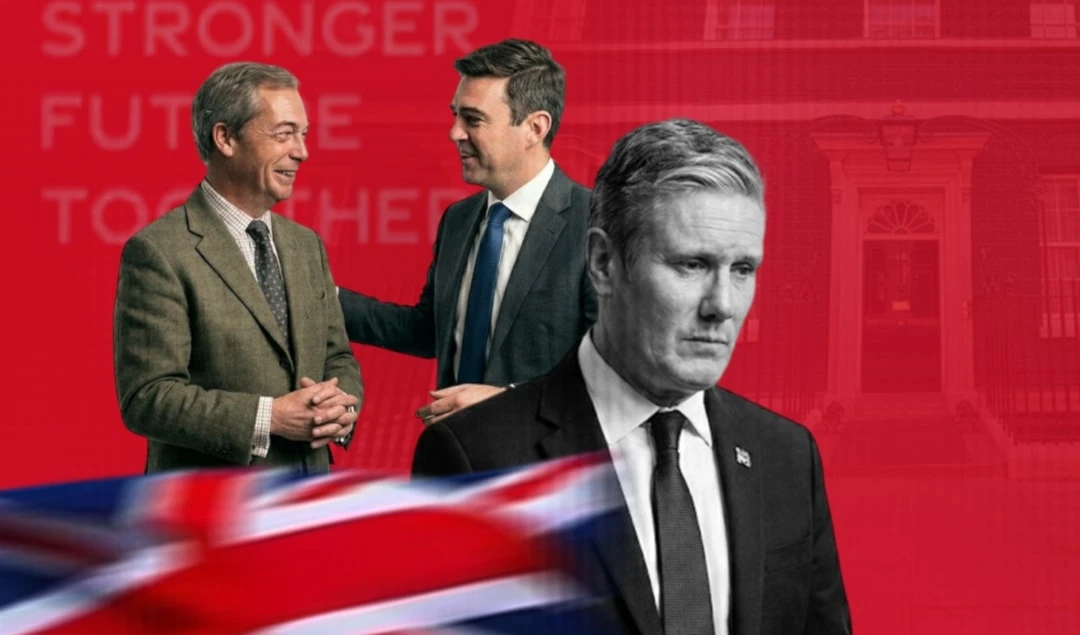

And so, in the second week of March, Mr. Farage very clearly changed his tune, just as his lord and master in the Oval Office seemed to be showing signs of uncertainty in his own grandiose design.
"Let’s not get ourselves involved in another foreign war," said Nigel Farage, the same day that Trump declared that his war was "very complete, pretty much."
Farage went on. "This war needs to come to an end as soon as possible because it is making Britain poorer."
When not only the Prime Minister of your nation's closest ally but also even your most sycophantic supporter turns against your illegal and catastrophically ill-judged war, maybe it's time to think again.
Farage's duplicitous lieutenant and so-called Shadow Chancellor Robert Jenrick added, "We are a party for working people, not drawn-out wars in faraway places."
The Mayor of Greater Lincolnshire – the Reform politician currently holding the party's highest political office – was almost as incoherent on the subject as her boss's boss in Washington: "You can’t rule anything out. It’s too hostile. We don’t know the direction it is going to go in."
At each of his U-turns, Trump's enemies like to chorus 'TACO' – 'Trump Always Chickens Out'. And where's there's a TACO, there's also a 'FAJITA': 'Farage Always Joins In Trump's Absurdity'.
And it is truly absurd. Even Jack Straw – the right-wing Labour Foreign Secretary who served Tony Blair during the invasion of Iraq – has condemned what he calls "the war against Iran which US President Donald Trump has unleashed."
Straw wrote, "You can’t exactly call Trump ‘thoughtful’. His impulses are dominated by his overweening ego. He doesn’t think things through, but rather lurches."
As of writing, Trump has stopped saying he's about to stop the war and is instead issuing vague threats to NATO members that the alliance will face a "very bad" future if they don't help him out in the Strait of Hormuz.
The British Prime Minister – the first Western leader to stand up to Trump's bullying – very vaguely made diplomatic noises of limited agreement, while at the same time stressing the UK won't be drawn into a "wider war".
His response provoked a typically angry outburst from President Tantrum, who said this was “terrible” and raged about the amount of money America had spent on supporting its relationship with its allies.
This is not, of course, how you build or sustain a durable alliance. It's not how you make genuine friends. And perhaps even his most dedicated and politically duplicitous disciple, Nigel, might be starting to see that.