News from nowhere: Keir today, gone tomorrow
-
 Alex Roberts
- 24 Jun 2026 14:41
 6 Min Read
Alex Roberts takes a scalpel to the Starmer era, charting the remarkable journey from historic majority to political obituary.
-

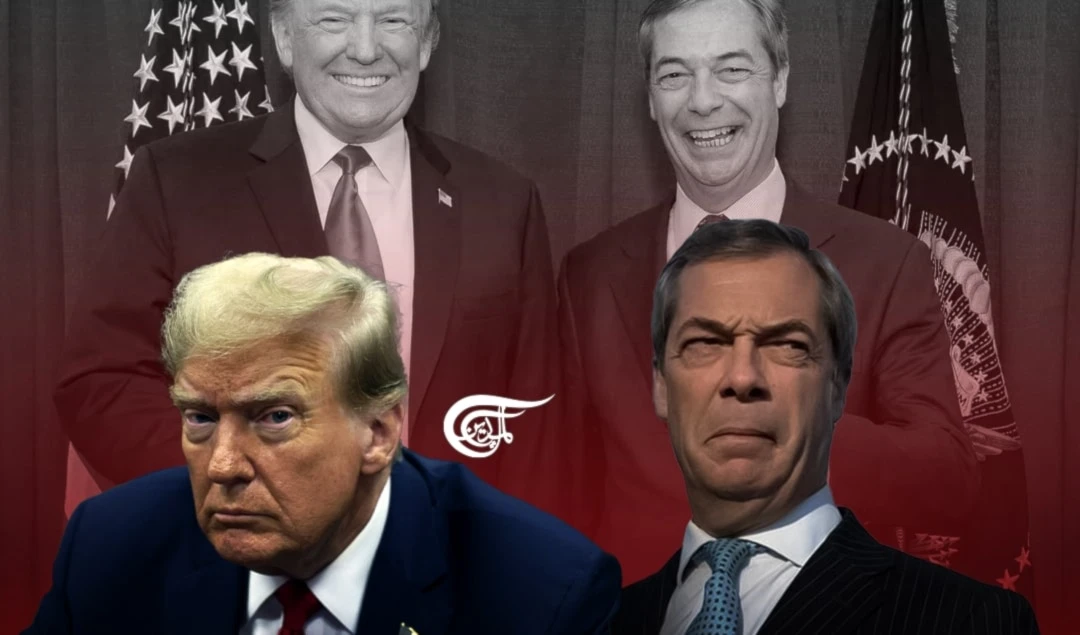
A prime minister with the personality of a brown paper bag and the political lifespan of a mayfly? (Illustrated by Batoul Chamas for Al Mayadeen English)
It was, perhaps inevitably, Donald Trump who hammered the final nail into Sir Keir's political coffin, as he took time out from his delusional crowing and expletive-strewn frustration at his capitulation in the Middle East, his failed military action, and his inability to restrain the warmongering provocations of his closest ally in the region, and took to his own social media platform to declare his verdict on the political fate of the first western leader to openly oppose the White House's unlawful war: "Keir Starmer will resign as Prime Minister of the United Kingdom. He failed badly on two very important subjects – IMMIGRATION AND ENERGY… I wish him well!"
In February, this column warned that Mr. Starmer's move to block his rival Andy Burnham from standing for parliament in order to be in a position to challenge him for his party's leadership only offered the British Prime Minister the prospect of a temporary reprieve.
It was a stay of execution which lasted four months, plus however long our even-lamer-than-usual lame-duck premier hangs on in a caretaker role until his parliamentarians and (if it comes to that) his party decide his successor.
It took those intervening months for his authority to be so badly damaged by an extraordinarily poor set of local – and Welsh and Scottish parliamentary – election results (in which Nigel Farage's populist nationalist Reform UK party had swept the board) that he was unable to resist Mr. Burnham's second attempt to return to parliament.
Andy Burnham chose to stand in a seat which Mr. Farage's had dominated at the local council elections in May – specially vacated for him by an ally – within his own fiefdom of Great Manchester, which he had served as a popular and successful mayor for the past nine years. Burnham won the seat with an impressive 55 per cent of the vote – beating Reform into a poor second place, 20 percentage points behind the Labour Party's newly anointed King of the North.
It was, as many commentators observed, a dream result for Andy Burnham – who had proven to Labour MPs and party members that he could convincingly defeat Mr. Farage's minions – and a disaster for Keir Starmer, whose leadership had in recent months disastrously failed to do so.
Three days after that victory, and a day after the American president had issued his damning prognosis – on the fourth Monday in June – Sir Keir Starmer stepped out of the door of Number 10 Downing Street, and, with an unusually human grace, said the words everyone had known were coming.
Starmer started his resignation speech by listing what he thought were his greatest achievements in office. The problem with his leadership has not however been what it has achieved.
Fastest-growing economy among the G7 nations. Patient waiting lists in the National Health Service down. Massive reductions in net migration. Abolition of the two-child limit on benefit payments introduced by the previous administration. Enhanced workers' rights and renters 'rights. Inflation kept below three per cent, despite Trump's war. And standing up against that war.

He had also rebuilt a broken Labour Party after it had been dealt a catastrophic drubbing in the general election of December 2019.
But the trouble with Starmer isn't what he's done so much as who he is. Of course, better-off pensioners had hardly been pleased when he'd cut their winter fuel allowances shortly after coming to power. It hadn't helped that it emerged at the same time that he'd accepted thousands of pounds' worth of free clothes from a wealthy donor.
And it certainly hadn't bolstered his reputation when it came out that, against civil service advice, he'd appointed a man with known connections to a convicted sex offender to be the UK's ambassador to Washington (apparently because the US president has similar connections with that disgraced and deceased billionaire).
Yet, by contrast, Nigel Farage is still beloved among his xenophobic supporters, despite the recent news that he failed to declare a £5 million gift from a mysterious billionaire benefactor based outside the UK and the fact that many of his newly elected councillors have quit because they can't handle the work, or have been thrown out of his party because they've turned out to be even nastier Nazis, misogynists, racists, and Islamophobes than even Reform UK would care to admit to its unsavoury ranks.
It's also true that Keir Starmer has been subject to relentless vitriolic attacks from the popular press, magnified and exaggerated by the smears of hate campaigns in social media.
But the bottom line is that he lacks the character – the charisma, commitment and convictions – to lead. He may be more honest, decent and well-meaning than most politicians, but he lacks the fire to inspire the electorate.
He has all the personality of a brown paper shopping bag, serviceable enough on a fine day, but liable to collapse into a sloppy mess when bad weather comes.
This Labour wet has also been swift to blame – and fire – others for the repeated blunders which have increasingly characterised his time in office, rather than taking responsibility for those mistakes himself.
And those mistakes have been numerous. He's not only a dull communicator who rarely prompts passion, fellow feeling, wonder, or laughter in his audiences. He may be a competent technocratic manager, but he's also a pretty unlucky one.
In July 2024, he was elected with a massive landslide, but was foolish enough to believe that this might have meant the voters liked him – rather than that they simply disliked him less than the Conservative Party, whom they were delighted to expel from government.
The sad thing is that, despite his virtues (or perhaps because of them), this serious and sometimes sanctimonious man wholly fails to connect with the British people, their identities, interests and concerns – and the realities of their lived experience. Now, as a new leader waits to seize his crown – with promises to repel the threats of the encroaching Far Right – it seems clear that whatever happens next, over the next few, days, weeks, months and years, will represent a fight not only for the keys to Downing Street and for the survival of the British Labour Party, but for the soul of the nation itself.