News from Nowhere: The Burnham question
-
 Alex Roberts
- 20 Jul 2026 16:02
 8 Min Read
Andy Burnham’s rise to UK prime minister signals a more progressive Labour era, but his ability to turn bold promises into results will define his leadership.
-
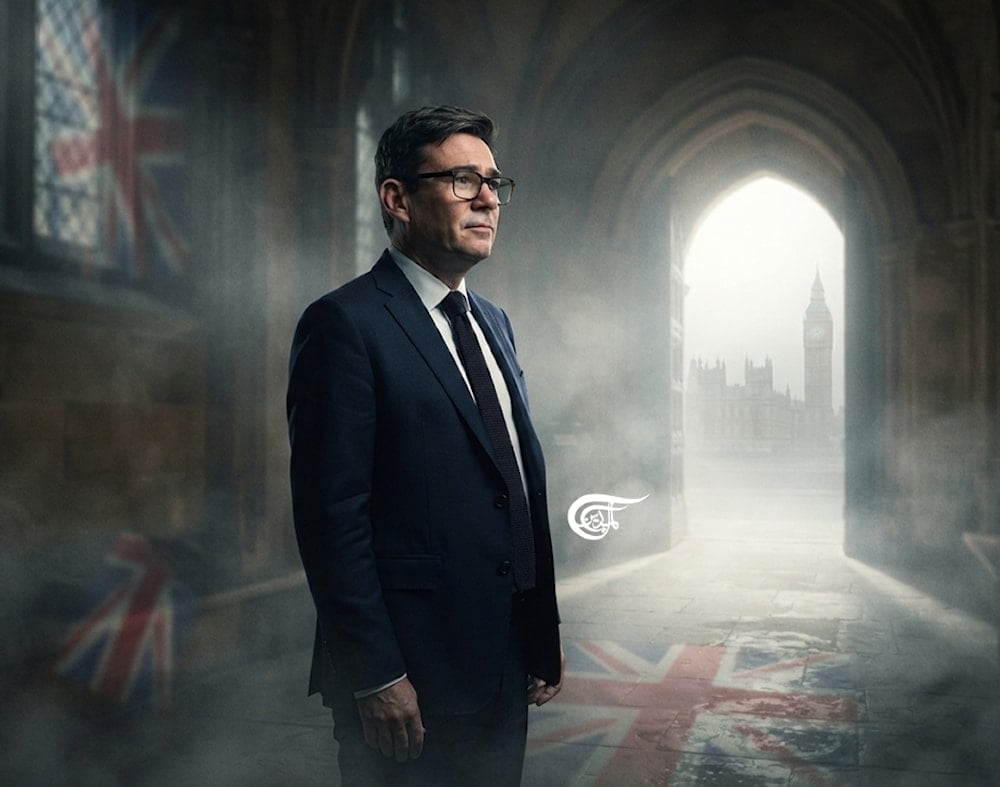
Andy Burnham enters Downing Street promising a more progressive Labour agenda. (Illustrated by: Al Mayadeen English/Fatima Attieh)
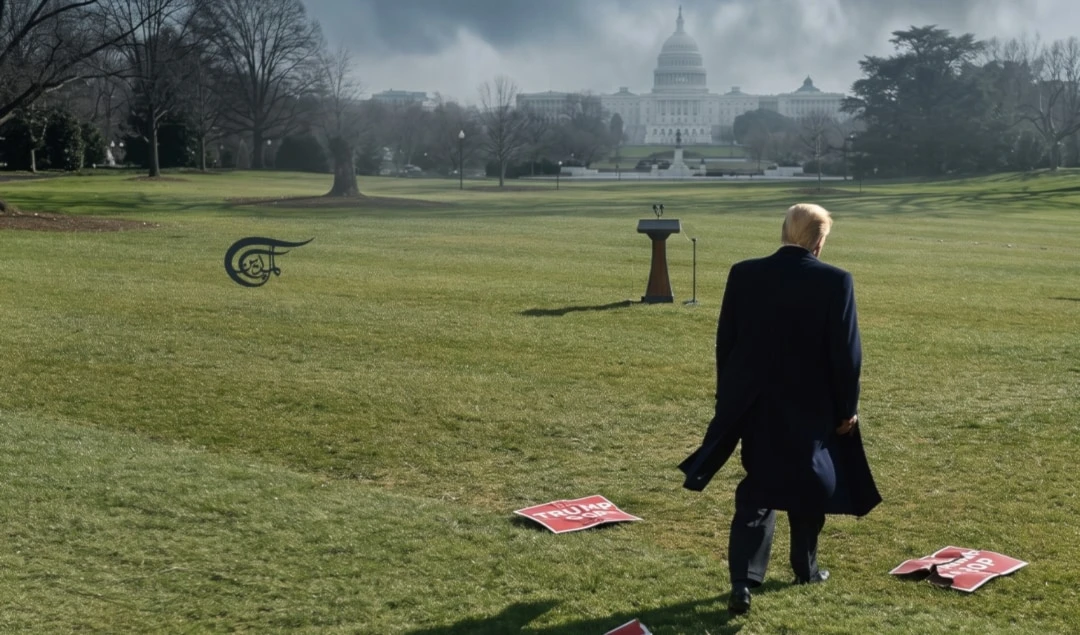
When asked last month what he thought of the UK's Prime Minister-in-waiting Andy Burnham, US president Donald Trump was typically dismissive, self-absorbed, and eager to demonstrate his own capacity to be wilfully ill-informed: "I don't know anything. I see that he was, I guess, the mayor of a town. I hear he's extremely liberal, extremely. So that means he probably won't open up the North Sea. I gave Keir Starmer some pretty good advice. I said: Open up the North Sea".
Off the record, however, it has been reported that the White House has already quietly reached out to the new British premier's team, lobbying for appointments and policies that suit its own interests, and pushing in particular to prevent the political elevation of those who believe that energy priorities should be determined not by a desire for short-term financial gains but by long-term concerns as to the future sustainability of human life on the planet Earth. (Or, as Mr. Trump would no doubt see them, bleeding-heart snowflake-woke liberals. Extreme ones. Who should sink a few pints of crude and man up.)
So, what are Mr. Burnham's actual credentials? What kind of leader will he make for Britain and on the world stage?
The first and most obvious thing from his recent process of enthronement, and his longer-term history, is that he may be a patient and civil one, but he's also one who's determined to get things done.
He has, after all, been content to spend years in the wilderness (or Manchester, as it's properly called), as the highly popular and successful "mayor of a town" who has worked very hard to promote that city's economic growth and prosperity, and his own profile.
Having failed twice in his own bid to become leader of the Labour Party in 2020 and 2015, he spent nine years in Manchester patiently rebuilding his political credibility by demonstrating his ability to inspire his electorate and collaborate with businesses and local communities to mobilize action on shared goals.
He's often ridiculed for his proud insistence that his greatest mayoral achievement was that he got Manchester's buses to run on time, to places where Mancunians wanted to go at fares they could afford, through a (technically tedious) publicly controlled franchising model, yet his transport policy not only attracted investment to the city but also improved many ordinary people's lives.
His "Manchesterism" (as he and his supporters call it) may sound parochial to some, and may feel irritatingly smug to anyone outside that corner of the North of England (especially if he makes good on his pledge to partially move the seat of government up there) – but, for the moment at least, thanks in no small part to his own charisma and communication skills, it has been shown to work.
He's about as principled as most British politicians today, which may not be much, but he's probably rather more so than some, notably those further to the right of the ideological spectrum. He's also practical and pragmatic. His third bid to lead his own party floundered at the first hurdle when Keir Starmer blocked his attempt to return to parliament. And so, he tried again: this time persuading a Starmer loyalist to give up his seat in a constituency which had just demonstrated its staunch support for Nigel Farage's populist-nationalist party Reform UK.
This was a major political risk, but a necessary one. He had to prove that he could get Starmer's supporters on side. Much more crucially, he had to show he could beat Reform. And he ended up doing so in spectacular fashion, taking 55 per cent of the vote, a clear 20 points ahead of his Far-Right, Farage-loving rival.

He has the patience of Starmer, but, unlike Starmer, he can demonstrate steadfast determination, take big risks, and (very importantly) win. That was why Keir Starmer capitulated with such alacrity, quitting a few days after his rival's by-election victory, and it's why the vast majority of Labour MPs then immediately swept to Burnham's side.
But to start to understand what this presumptive "King of the North" may be like as a national leader and international statesperson, we need to look further back into his political past.
Andy Burnham had served in junior ministerial positions during Tony Blair's last two years in office, and, when in 2007 Gordon Brown set up his stall in Number 10 Downing Street, he'd swiftly been promoted to more senior roles, ascending to Brown's Cabinet as Chief Secretary to the Treasury before becoming Culture Secretary and then Secretary of State for Health.
As a result, he's more closely associated with Gordon Brown than with Tony Blair. These days, that isn't at all a bad thing – given that Mr. Brown's legacy, and his conduct since leaving office, are rather better respected than his grinning, grifting, warmongering predecessor's.
Earlier this month, one reader wrote to The Guardian's letters page commending Andy Burnham's stated fondness for the work of the great northern poet Tony Harrison, who died last year. Noting that Harrison had written some powerful verse condemning the horrors of the 1991 Gulf War, the letter-writer went on to observe that Burnham, as a new MP, just two years into his first term in parliament, had voted in favour of Britain's involvement in the 2003 invasion of Iraq, and went on to wonder whether he might "redeem himself by reversing Keir Starmer’s baffling silence on the Gaza genocide, which lost Starmer so many loyal supporters".
Indeed, since then, Mr. Burnham has done precisely that, pointing out that many people believe that, at the start of the military action in Gaza, his party "didn’t get it right" – and saying that he is "sorry about that". Admitting that "the UK was too slow to call for a ceasefire", he went on to pledge to "do more to put pressure" on the Netanyahu government.
It also seems clear that Burnham, as a more progressive and plain-spoken Labour leader than Mr. Starmer could ever have been, and one more overtly committed to his party's traditional values, will continue Sir Keir's uncharacteristically bold, unwavering, and emphatically principled opposition to Donald Trump's unlawful war against Iran.
The BBC's North America correspondent has listed some of the profound differences between Burnham and Trump in such areas as "military spending, digital service taxes, energy extraction, international conflicts and trade" – and, unlike Starmer, it's not clear that Burnham will feel comfortable publicly kowtowing to the ego of the corrupt and incontinent orangutan in the gilded kitsch of a morally bankrupt Oval Office.
Burnham's international instincts won't most likely be to focus first on transatlantic diplomacy but will be to strengthen relations with the European Union, to continue a process that Keir Starmer had begun. That would, of course, further infuriate Donald Trump, and might also hand political ammunition to Trump's simpering disciple Nigel Farage.
One suspects that these may be battles that Andy Burnham is willing – even eager – to fight, if he believes that the best way to defeat the monstrous foe at home is to highlight its association with the even more obviously monstrous enemy in Washington.
The United Kingdom's new Prime Minister has in the past been criticised for being big on talk and less convincing in his follow-through. Keir Starmer's achievements in stabilising the British economy, growing GDP, restraining inflation, promoting workers' rights, and investing in healthcare have, for the most part, gone unnoticed by the public, thanks to his almost complete lack of ability to communicate his success in any of these things.
Members of the Labour Party will, for the moment, simply be relieved to have a premier capable of talking a good game, but his honeymoon period won't last long, and they and the entire country will soon be impatient for him to deliver on his promises – and that won't be such a straightforward thing to do.