Operation Epstein Fury and Jewish Exceptionalism
-
 Eoghan Harris
- 5 Oct 2026 12:11
- 6 Shares
 16 Min Read
Conventional Marxist political-economic analysis cannot fully explain the US-Israeli war on Iran, which is why Zionist ideology and elite influence networks must be examined alongside capitalism and imperialism to understand Western decision-making.
-

Within this crisis of imperialism lie great dangers and great opportunities. There is a dialectic of aggression and a dialectic of liberation. (Al Mayadeen English; Illustrated by Fatima Attieh)

The launching of the US-Israeli war of aggression on Iran on February 28 of this year cannot be explained in the workings of the internal dynamics of capital accumulation, or the political mechanism of imperialism which enforce the capitalist system on a global scale. As inflation hits and affects almost all strata in the Western world, it is obvious to many that the strategic interests of Western imperialism have been greatly undermined by this ill-conceived military aggression on a formidable opponent which had already proved their capabilities in the 12-Day War the previous summer. Yet many Marxists in the West cling onto mechanistic explanations which at best lead us to wrong conclusions and at worst, pander to Western Jewish exceptionalism.
Marxism can be broken up into two “sub-disciplines”; Marxist Political economy and Historical materialism. Marxist political economy works at the level of mathematical abstractions and explains in a scientific way the laws of capital accumulation, while Historical materialism applies dialectical materialism to historical processes. Political economy is useful to tell us how we got here, but historical materialism supersedes it because it allows us to situate human agency and ideology within the framework of the material forces which shape the world.
Some Marxists forget this and opt for a form of materialism which is mechanical rather than dialectical. For many on the academic left, this is a safety mechanism where they can escape into abstract economic theory in order to avoid assessing contemporary events and challenging powerful imperial actors which shape their own academies. Zionist impunity works through Jewish exceptionalism, and the reluctance to acknowledge the importance of Zionism is a comfort for those who distance themselves from the forces of liberation, namely Iran and the Axis of Resistance.
The role of Zionist ideology in subverting the imperial architecture of US power to its own messianic and paranoid ends is obviously a decisive factor in the decision to launch and prolong this catastrophic war, which one revolting US soldier dubbed ‘Operation Epstein fury’. Political economy can explain how we got to this situation in an abstract sense; the long crisis of capitalism, increasing financialisation, the need for the absorption of surplus through military spending. But when we enter the turning points in history where human ideology is a decisive factor, we need dialectics, we need clarity about the actors causing the genocide and oppression and we need to stand with the forces of liberation.
Finance capital is a class relation organised through monopoly institutions. Its most concentrated nodes are the big 3 asset managers: BlackRock, Vanguard, and State Street. Together they manage trillions of dollars and vote large blocks of shares in nearly every major bank, defence contractor, pharmaceutical firm, and tech platform. Below them sit the major banks and private-equity giants such as JPMorgan Chase, Goldman Sachs, Bank of America, Citigroup, HSBC, and Wells Fargo. Private equity is dominated by Blackstone, Apollo, and KKR. The CEOs of NVIDIA, Oracle, Google, Amazon, Meta also hold great influence over imperial strategy. These are the central organs through which dispersed capitalist property is concentrated and wielded.
Modern finance capital is therefore the merger of bank capital and globalised industrial capital under the conditions of generalised monopoly capitalism. They are not "owners" in the sense of the earlier US monopoly capitalism of the Rockefellers, the Fords and the Carnegies. Furthermore, “Globalist” managers of Capital, unlike in previous instances of monopoly capital, are not as delineated to national bourgeois power blocs because production is globalised, as Samir Amin points out:
“The idea that the objective cause—the emergence of the globalized production system—entails ipso facto the emergence of a globalized dominant class is based on the underlying hypothesis that the system must be coherent. In reality, it is possible for it not to be coherent. In fact, it is not coherent and hence this chaotic system is not viable.”
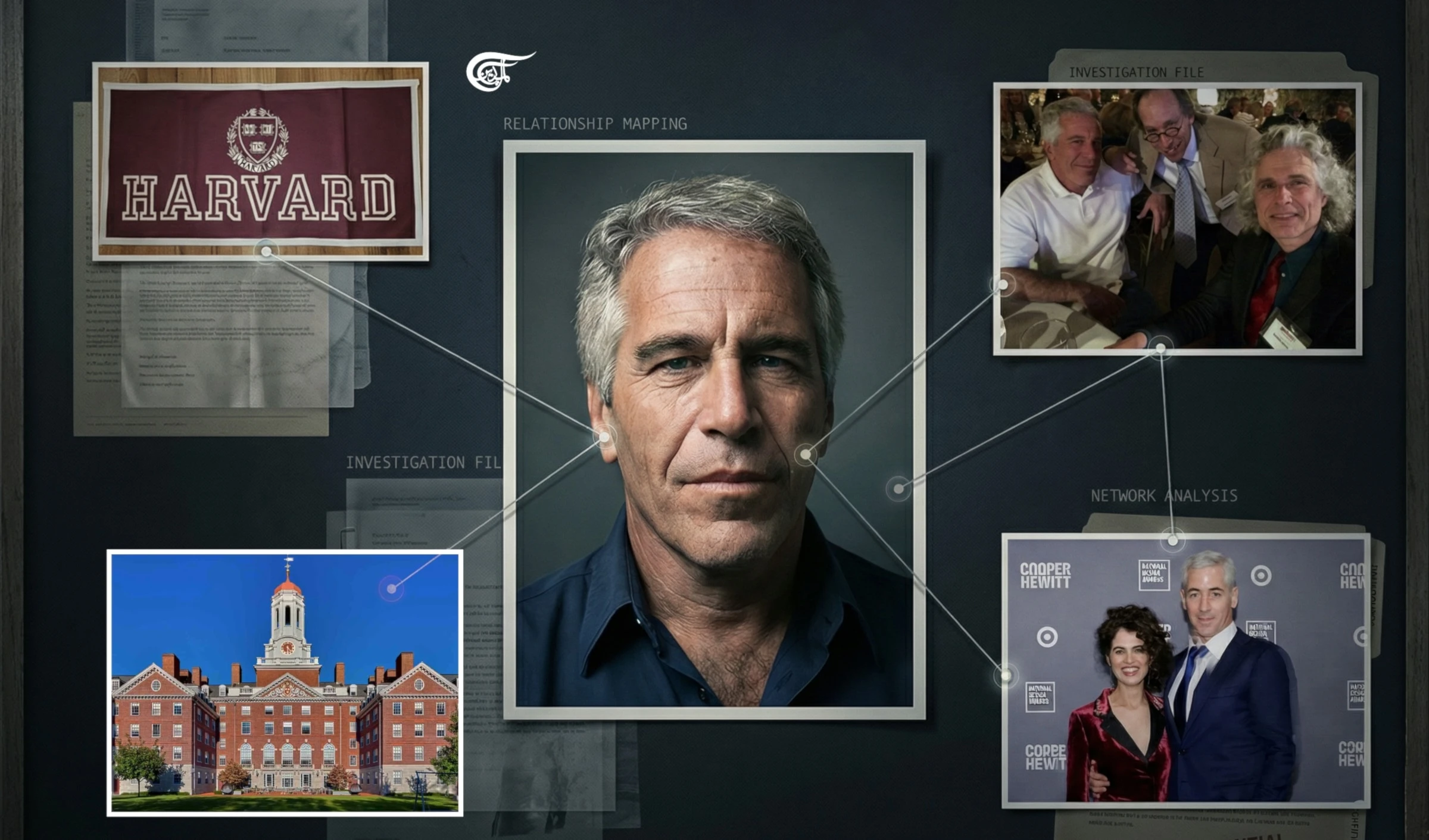
It is within this chaotic environment of generalised monopolies and the complexities of managing capitalism jointly by imperial powers in a decolonising world, that the line between bourgeois constitutionality and intelligence linked criminality got blurred, particularly in the US. In this environment, those who control shadowy influence networks and Kompromat rings become the real power brokers. The recent file dump of the Epstein Mossad Kompromat ring gives us an insight into how elite power formation operates. We know that CEOs and managers have much more real power than the stockholders under generalised monopoly capitalism, but who appoints these managers? What shadowy networks of espionage and blackmail lie behind the management of Capital and the imperialist order that backs it up?
The US is an Oligarchic regime, a tripartite state in the words of Aaron Good, which has depended on an intelligence apparatus which can subvert the constitutional order to maintain its imperial power. This intelligence apparatus has always depended on criminal networks, particularly throughout the post-war period. It is in these networks, such as the collaboration with the Lansky syndicate, that the roots of the current dominance by the Zionist sections of the US oligarchy lie.
Recognising Zionist domination does not mean we forget past crimes committed at the behest of other non-Zionist sections within the US oligarchic structure. From the direct military aggressions in Korea, Vietnam, Cambodia and Laos to Suharto’s mass slaughter to Operation Condor, the examples are endless. When the CIA was established after World War 2, it was dominated by the big industrial capitalist families like the Rockefellers, the Fords, the Carnegies, whose interests often diverged from the Zionists. These owners of earlier forms of monopoly capital were no less imperialistic than the managers of the generalised monopolies of today. Their class character had a national bourgeois character in contrast with the globalised financialized production systems in the generalised monopolies that succeeded them. The demands of the "Greater Israel" Zionists were subordinated many times by other oligarchic actors in the US power structure in many instances, such as Eisenhower’s reaction to the 1956 invasion of Egypt, and the many times their demands were denied under the Kennedy, Nixon, Reagan, and Bush senior administrations.
The imperial bloc is part of the crisis of capitalism and imperialism. After World War II, Western imperial powers now had to collaborate in a unified bloc under the leadership of the United States, while the process of post-war decolonisation took place. This process led the way from nationally delineated monopoly capitalism to globalised generalised monopolies. To understand the rise of Zionist power within this process, it is essential to dispense with long-held Western taboos about examining the role of Jewish actors in the history of Capitalism.
Jewish Exceptionalism
Jewish exceptionalism in Western society rests on the perception which has been cultivated by Zionists in the uniqueness of Jewish suffering. It has been the cornerstone of Zionist impunity. As the process of decolonisation unfolded in Africa and Asia, anti-colonial commentators such as Aimé Cesaire proclaimed that Hitler did, in an industrial manner inside Europe, to sections of white Europeans, what European powers had already done in the colonial world. Hitler was the logical conclusion of European colonialism.[1] Norman Finklestein documented how, in the decades since the Six-Day War, Zionist organisations in the US created a Holocaust industry based on the belief in the holocaust as a genocide which sits above history and above other genocides and the result of an eternal anti-Semitism which sits above all other forms of racism.[2]
The hollow anti-racism of the West can be seen by comparing attitudes to Anti-Semitism and Russophobia. The same educated Western liberal-left who frown at the Judeo-Bolshevik conspiracy have no problem swallowing post-war revisionist history about the Soviet Union by the likes of MI6 agent Robert Conquest or unapologetic fascist Solzhenitsyn, as well as those post-Soviet Russophobic conspiracies such as those exposed in the Steele Dossier. These attitudes mirror those of the political elites of Europe who feign extreme sorrow for six million Jews who perished in the Holocaust, but have nothing to say about the other fifty million-plus Untermenschen across Europe and Asia who perished in the fascist terror of the Axis powers.
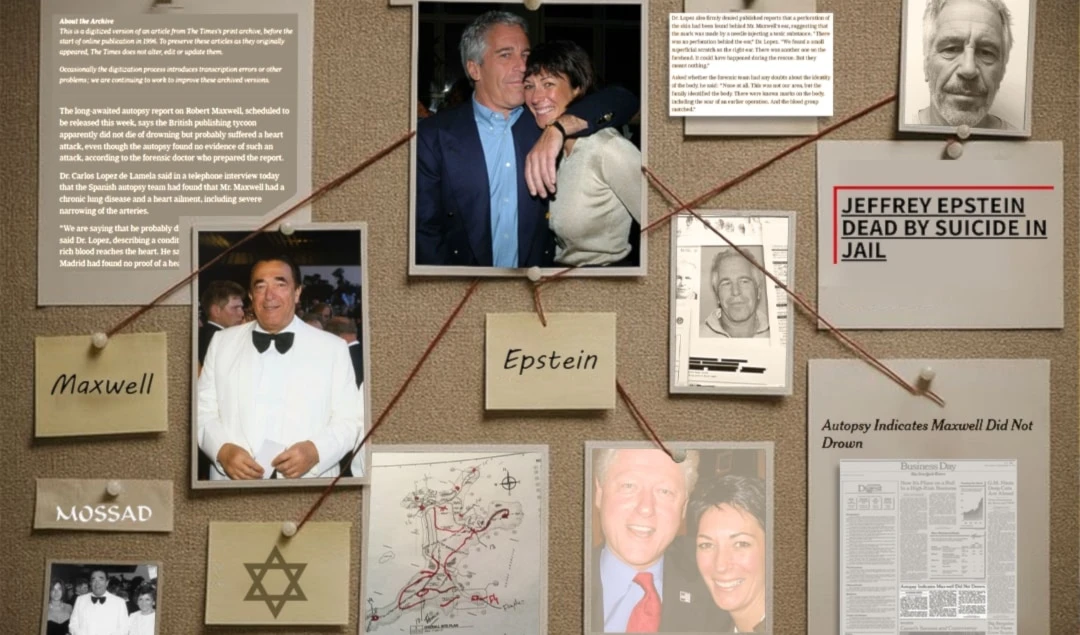
Since the Gaza genocide, the ideological architecture of Zionism in the West has been severely challenged. However, it is still taboo in Western discourse to look at the role of Jewish actors in the history of capitalism. Western leftists feel that just because various reactionaries have anti-Semitic conspiracy theories, that we therefore cannot look at this complex history. But disentangling this history is essential to challenging Zionist impunity, ironing out misunderstandings from reactionaries who use the revelations in the Epstein files to their own ends, and compelling all Jews, whether openly Zionist or not, to take real action and fight what is being done in their name.
Jews and Capitalism
During feudal times and into the early modern period, Jews were barred from owning land in much of Europe and denied the same political rights as Christians. Christian doctrine had barred usury, but Jews were permitted to charge interest to non-Jews. This incentivised Jews into banking and financial services, and Jewish banking families became adept at playing those Christian absolute monarchs who had denied their political rights against each other. After the Napoleonic Wars, Jewish banking families, most notably the Rothschild dynasty, gained huge power as arbiters of international finance. This incentivised peace between the European powers for one hundred years as fiscal responsibility went hand in hand with rising bourgeois power.[3] With the rise of monopoly capital, these peace arrangements broke down, leading to World War I.
It is often said that the influence of Haute finance declined in the succeeding years with the rise of protectionism and fascism. But this surface-level reading ignores fascism’s real purpose as a fake revolution from above, financed by the ruling classes to thwart communism in the wake of a global workers' revolution. Jews were a convenient target for fascist governments to blame for the ills of capitalism, but it should be never forgotten that communists were the first and primary target. The Judeo-Bolshevik conspiracy theories were effective tools for the ruling classes because they spoke to the real power of Jewish banking dynasties. They were an effective tool for the ruling classes because they fused an internal scapegoat with an external enemy.
The German branch of the Rothschild bank was amalgamated into Deutsche Bank in 1901 after the remaining heirs died. There is very little information readily available about the Austrian branch between 1911 and 1938, when head Baron Louis Nathaniel de Rothschild was famously held for ransom by the Nazis after the annexation of Austria. However, the German Jewish banking dynasty the Warburgs’ role in financing the Nazis is well known, a decision they would surely later regret as IG Farben, which they had a great stake in, underwent “Aryanisation”.[4]
Chaim Weissman, a biochemist and influential Zionist Jewish settler in Palestine, had been instrumental in the British victory in World War I through his pioneering work on munitions. He became the first president of "Israel". Despite his contribution and influence, the Balfour Declaration in 1917 was addressed to Lord Lionel Walter Rothschild (2nd Baron Rothschild), head of the British branch. Such is the power of high finance. The Epstein files give a clear indication of the Rothschild family's continuing influence. Even if we refuse to take Jeffrey Epstein’s declaration of “I represent the Rothschilds” at face value, we cannot avoid that statements like these, whether bluffs or not, are intended as a threat.
Those anti-Zionists who are not afraid to investigate this history often get their arguments straw-manned and misrepresented in respectable circles in the West, where this Jewish exceptionalist cancel culture has protected the Zionist entity. This cancel culture, which conflates anti-Zionism and anti-Semitism, can be seen in the saga of David Miller’s battle with Bristol University. The latest verdict in favour of Dr. Miller is a great victory over the military-industrial-academic complex of Zionism in public discourse.
Western Marxists try to avoid this ideological battle entirely by escaping to abstract economic theory and, in doing so, vulgarise the tools of economic analysis pioneered by Marx. When anti-imperialists use the phrase ‘Zionist dominated Western imperialism’, we define Zionism as an ideology, while imperialism is the political-economic structure. ‘Zionist dominated Western imperialism’ just means that this political structure is currently dominated by powerful actors who are invested in this settler colonial ideology. The strategic decision making power for the Western imperialist bloc as a whole currently rests with a Zionist Oligarchic cabal. In the case of Operation Epstein Fury, purveyors of the "Greater Israel" ideology made a decision on behalf of the whole Western bloc that is detrimental to the strategic interests of Western imperialism as a whole. Intelligence failures cannot be blamed for the decision to wage open warfare, as Iran’s capabilities were well known and their position regarding retaliation to any unprovoked attack had been made clear. The rational thing to do would be to keep up the strategy of hybrid warfare and sanctions on Iran, continue on the slow and careful path they had been treading for nearly forty years.
"Israel" serves as a regional gendarme, arms market, and wedge against West Asia's Arab nationalist and socialist movements. But the current state of affairs was far from inevitable. Establishing a Palestinian state with a compliant class was a rational option pursued by political leaders running up to the Oslo Accords. The two-state solution, still an unjust solution for the Palestinian question, was a serious proposal within sections of the US ruling class before it was subverted by messianic Zionists and Epstein linked Mossad Komromats.
We must also acknowledge the role of intellectual property in the current conjuncture. After the collapse of the Soviet Union, a huge outflow of not just capital but intellectual property drained from the Soviet Union. The Zionist colony incentivised the inflow of skilled computer technicians and scientists. About one million emigrated from the Soviet Union to the Zionist entity in the 1990s, and these skilled technicians formed the backbone of Unit 8200. This is the largest transfer of intellectual resources since Operation Paperclip. Zionist Oligarchs who looted Soviet wealth, such as Oleg Deripaska and Zelensky’s financial sponsor, Ilhor Kolomoisky, are known Rothschild subordinates and Epstein network affiliates. In the era of globalised supply chains, control over information and technology becomes critical ammunition. The more a political actor has to lose, the more they can be controlled by networks of mutual blackmail.
Dialectic of Aggression and Liberation.
The aggression on Iran and Yemen continues in spite of great economic damage to Western economies, deep dissatisfaction by both the US military establishment and ordinary ranks, and the fearless resistance and powerful defensive capabilities of both Iran and the Yemeni Armed Forces. The continuing self-defeating aggression, and revelations that Kushner and Witkoff (who have no previous qualifications in politics, not to mind high stakes diplomacy) will be the main negotiators in trilateral talks with Ukraine and Russia, are clear signals that no competing camp within the imperialist bloc is able to assert sufficient power and take decision making capabilities from the Zionist networks at this historical juncture. We are clearly in a world war. As Zionist escalation increases, economic collapse will intensify, supply chains will collapse and bourgeois freedoms in the west will increasingly be curbed.
Within this crisis of imperialism lie great dangers and great opportunities. There is a dialectic of aggression and a dialectic of liberation. Since Yemeni Armed Forces’ liberation of al-Mokha on the Bab al-Mandab Strait, mass protests have erupted across Syria, Iraq, Lebanon, and Bahrain. Armed opposition Groups in Ethiopia have formed a broad coalition to fight the Zionist Vassal regime of Ethiopia's Abiy Ahmed and his "Prosperity" party. If Ahmed's regime falls, this will put the Zionist Axis' plans in the horn of Africa in real jeopardy, most notably the Somaliland secessionist project.
These brave acts of liberation are carried out under increasingly barbaric attacks from the Zionist Axis. It is the duty of all socialists and anti-imperialists to stand with those who are fighting imperialism in West Asia, in spite of ideological differences. As socialists, Cuba holds a special place for us, but the strategy of Western flotilla-adjacent activists in early 2026, of running to Cuba to avoid taking a position on Iran, is obvious to us. The survival of Cuba rests much more on the successes of Iran and the Axis of resistance than the combined generosity of all the white saviours in the world. It is the duty of Revolutionaries first and foremost to say the truth when it actually matters. As Rosa Luxemburg once said: "The most revolutionary thing one can do is always to proclaim loudly what is happening." Supporting those who fight for liberation and challenging the Jewish exceptionalism which props up Zionist impunity is crucial to this fight.
[1] Césaire, Aimé. Discourse on Colonialism. Translated by Joan Pinkham, Monthly Review Press, 2000.
[2] Finkelstein, N. G. (2003). The Holocaust industry: Reflections on the exploitation of Jewish suffering (2nd ed.). Verso.
[3] Polanyi, K. (1944). The Great Transformation: Economic and Political Origins of Our Time. New York: Rinehart.
[4] Warburg, Sydney (1983). Hitler's Secret Backers. Research Pubns.